

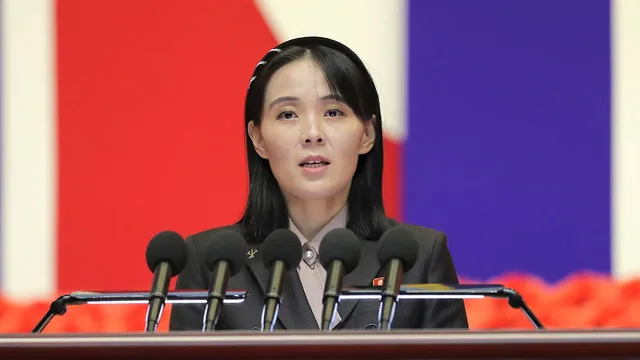
North Korean leader's sister warns of terrible consequences over joint drills
North Korean leader's sister warns of terrible consequences over joint drills
- Kim Yo Jong criticized the US and South Korea for their Freedom Shield military exercises that began on March 9, 2026.
- The drills are perceived by North Korea as potential invasion rehearsals and contribute to regional instability.
- Kim warned of terrible consequences for any threats to North Korea's safety, emphasizing the need for military readiness.
Story
In South Korea, North Korea's influential leader Kim Jong Un's sister, Kim Yo Jong, issued a sharp criticism of the United States and South Korea over their joint military exercises, which commenced on March 9, 2026. These exercises, named Freedom Shield, entail complex operational capabilities and incorporate new war scenarios, having significant implications for regional stability. The exercises coincide with escalating tensions in the Middle East, as Washington is involved in military operations there. Kim Yo Jong's statement highlights the perceived threat posed by the drills, indicating that North Korea views them as rehearsals for invasion, suggesting that they undermine the delicate security balance in the region. Kim emphasized the dire consequences for any perceived threats to North Korea's safety, arguing that the ongoing drills mobilize international actors irresponsibly amidst a world where conflicts are intensifying, and global stability is under strain. North Korea has continually bolstered its military capacities, including expanding its nuclear arsenal, as part of its strategy to deter perceived aggressors. The drills seem to act as a catalyst for North Korea to enhance its military readiness, which it asserts is necessary for deterrence against external threats. Amid a backdrop of strained diplomatic relations characterized by a lack of engagement with the United States and South Korea, Kim Jong Un's administration has sought to unite with allies like Russia and China to create a perception of strength against U.S. interests. This has led to closer military collaborations and a narrative framing North Korea as part of a broader resistance against Western influence in the region. Additionally, there have been rising concerns about potential North Korean military support for Russia in its ongoing war in Ukraine, demonstrating a willingness to strengthen ties despite isolation from the global community. In light of these developments, South Korean President Lee Jae Myung acknowledged the possibility of relocating certain U.S. air defense systems from South Korea without compromising national security, further complicating the regional dynamics. He mentioned that while opposing such movements, it is vital to recognize the complexities of the geopolitical environment. In summary, the latest military exercises by the U.S. and South Korea have led to heightened tensions, with North Korea warning of severe repercussions, signaling a potential escalation in military posturing in the region that may have broader implications for international security.
Context
North Korea has been a focal point of international concern due to its military capabilities and nuclear program, characterized by aggressive rhetoric and ongoing development initiatives. Since the 1990s, North Korea has pursued nuclear weapons as a means of ensuring regime survival and deterring external threats, particularly from the United States and South Korea. The country conducted its first nuclear test in 2006, marking a significant milestone in its nuclear ambitions and setting the stage for a series of escalating tensions on the Korean Peninsula and beyond. Subsequent tests and advancements in missile technology have demonstrated North Korea's determination to establish itself as a nuclear power, leading to a complex interplay of diplomacy and sanctions aimed at curbing its aspirations while managing regional security concerns. The North Korean military is one of the largest standing armies in the world, with a significant investment in conventional forces as well as asymmetric warfare capabilities, including cyber warfare and special operations. The Korean People's Army (KPA) consists of over a million active personnel, supported by a large reserve force. North Korea's military strategy has focused on the “Byungjin” policy of simultaneously developing its nuclear arsenal and economic capabilities, reinforcing its military-first doctrine. The regime continues to prioritize military readiness, with regular exercises and frequent missile launches intended to demonstrate its capabilities and resolve. The development of intercontinental ballistic missiles (ICBMs) capable of reaching the United States has further escalated tensions, leading to increased sanctions and diplomatic efforts to manage the potential for conflict. International responses to North Korea's military advancements have varied, encompassing diplomatic negotiations and economic sanctions imposed by the United Nations. While there have been moments of engagement, such as the historic summits between U.S. President Donald Trump and North Korean leader Kim Jong-un in 2018 and 2019, tangible progress towards denuclearization has been limited. Despite these dialogues, North Korea has continued its missile tests and military exercises, raising questions about the effectiveness of diplomatic efforts. The regime has often used negotiations as a means to gain economic concessions while simultaneously striving to advance its nuclear capability. This strategy presents a formidable challenge for international actors seeking to establish a sustainable security framework in the region. The situation remains fluid, with North Korea's military capabilities and nuclear program continuing to evolve in response to both domestic imperatives and external pressures. The regime's focus on technological advancements in its missile programs indicates a long-term commitment to maintaining a credible deterrent. Moreover, North Korea's operational secrecy complicates efforts to assess the full extent of its capabilities and intentions. As regional dynamics shift, particularly with the involvement of neighboring countries like China and Russia, the international community must remain vigilant in monitoring North Korea's developments while pursuing avenues for constructive dialogue and potential denuclearization initiatives.


