

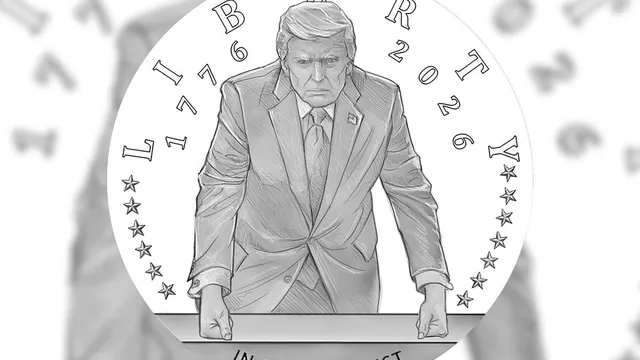
Trump's image to feature on commemorative gold coin amid controversy
Trump's image to feature on commemorative gold coin amid controversy
- The U.S. Treasury plans a commemorative coin for the 250th anniversary of America in 2026, featuring President Trump.
- The design received unanimous approval from the Commission of Fine Arts, composed of Trump appointees.
- This decision sparks controversy as it breaks the precedent of not featuring living presidents on U.S. currency.
Story
In March 2026, the United States Mint received approval from the U.S. Commission of Fine Arts for a new 24-karat gold commemorative coin to celebrate the 250th anniversary of the country. The design of the coin features President Donald Trump with a stern expression, leaning over his desk. This is notable because federal law has traditionally prohibited living presidents from appearing on U.S. currency, which adds a controversial element to this decision. The coin's approval comes after a vote by a commission composed entirely of Trump appointees and supporters. They expressed that the image of the sitting president is fitting for the nation’s milestone anniversary. Treasury Secretary Scott Bessent invoked specific legal authority that allows for such minting, emphasizing that this is a commemorative coin rather than standard currency, which has more rigid restrictions. Despite the approval, there has been significant backlash from various stakeholders, including Democratic senators, who have protested the proposal and suggested legislation to further prohibit living presidents from being featured on U.S. coins. They claim this breaks the long-standing American tradition of not placing living individuals on currency, citing concerns over turning the presidency into a monarchy-like figure exemplified by coins bearing a ruler's likeness. The final size and production details of the coin are still being discussed, with the commission suggesting it should be grand in scale. The coin itself will commemorate the nation’s founding date of July 4, 1776, up to its 250th anniversary in 2026, incorporating symbols like a bald eagle along with the phrases 'In God We Trust' and 'E Pluribus Unum.' As the project progresses, further scrutiny from the Citizens Coinage Advisory Committee could impact the final issuance, but the approval by the Commission of Fine Arts clears a significant hurdle for the coin’s production.
Context
The history of commemorative coins in the United States is a fascinating reflection of the nation's cultural and historical journey. Commemorative coins are produced by the United States Mint to honor significant events, anniversaries, or notable individuals. The tradition began in the late 19th century, with the first official commemorative coin produced in 1892 to honor the Columbian Exposition in Chicago. This initial coin sparked interest among collectors and the public alike, leading to the creation of other commemorative coins that celebrated milestones such as statehood, national parks, and significant historical figures. Throughout the 20th century, the issuance of commemorative coins became more frequent, especially during times of national pride or significant anniversaries. For instance, the 1950s and 1960s saw a surge in commemorative releases, including the famous D-Day coin in 1944 to honor the troops of World War II. These coins not only served as a means of remembrance but also became highly sought after by collectors due to their limited mintage and unique designs. The popularity of these coins can be attributed to their dual purpose: they act as tangible pieces of history while also serving as investment opportunities. In modern times, the commemorative coin program has evolved to include a wide array of topics that reflect contemporary interests and values. The United States Mint began offering new commemorative coins almost every year, often linked to specific events or themes. For example, recent coins have celebrated the contributions of women in history, the legacy of civil rights leaders, and the conservation of natural resources. The process of determining which events or individuals to commemorate often involves public input and legislative approval, making it a democratic process that showcases the values and interests of American society. In conclusion, the history of commemorative coins in the U.S. is not merely about currency; it is intrinsically tied to the nation's identity and collective memory. From their inception to the present day, these coins have captured significant moments in American history and provided a way for the public to engage with their heritage. As the Mint continues to innovate and produce new commemorative coins, they will undoubtedly remain a vital part of the nation's numismatic legacy, celebrating both the past and the promise of America’s future.


