

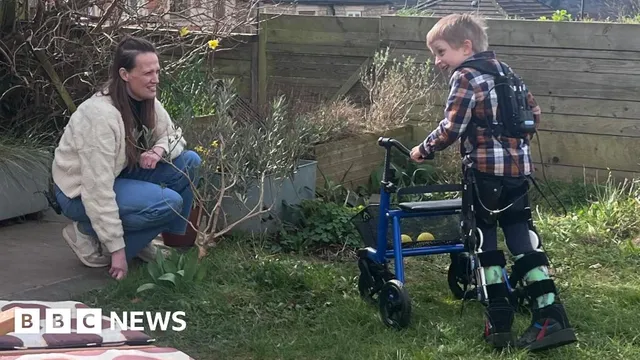
First boy trials life-changing exoskeleton technology in UK
First boy trials life-changing exoskeleton technology in UK
- Asger Walmsley, a seven-year-old with cerebral palsy, successfully trialed a bionic exoskeleton at home.
- The Agilik orthosis costs £72,000, presenting an affordability challenge for many families.
- The trial's success indicates potential for wider access to similar technologies in the future.
Story
In a significant breakthrough, a seven-year-old boy named Asger Walmsley has become the first individual in the UK to trial a bionic exoskeleton at home. This pioneering event occurred recently, marking a milestone in assistive technology for children with disabilities, specifically those affected by cerebral palsy. Asger's parents, Holly and Sam Walmsley, expressed excitement over their son successfully walking to school using the powered technology, which has been described as potentially 'life-changing.' The Agilik orthosis, created by Bionic Power, is a cutting-edge, powered exoskeleton designed to assist individuals with limited mobility. However, the high cost of the device, priced at £72,000, presents a barrier for many families. To continue utilizing the exoskeleton after the trial period, the Walmsleys must engage in fundraising efforts, highlighting the financial challenges faced by disabled families. Sam Walmsley stated, 'If it's the right thing for him, we'll make it happen because we have to.' This sentiment underscores the determination of parents to secure the best possible outcomes for their children, despite financial constraints. Sam Walmsley also highlighted that beyond the purchase price, ongoing servicing and adjustments to the exoskeleton will incur additional costs. The challenges of accessing affordable technology are compounded by the fact that disabled households require an average of £1,000 more per month to maintain the same standard of living as non-disabled households, according to the charity Scope. This increasing gap in financial necessity is alarming and underscores the urgency of addressing the needs of families with disabled children. Amanda Richardson, founder of Action Cerebral Palsy, stressed the anxiety faced by families when barriers to accessing necessary technology and experts exist. She stated, 'Children with cerebral palsy are one of the groups that wait the longest for referral and interventions.' The trial of the bionic exoskeleton may pave the way for broader access to similar technologies, potentially transforming lives, but it remains clear that significant work is needed to overcome the systemic challenges that these families face.
Context
Assistive technology plays a crucial role in the lives of disabled children, providing them with enhanced opportunities for independence, mobility, and communication. The provision of such technology can significantly improve their quality of life, enabling them to engage more fully in educational, social, and recreational activities. However, many families face barriers in accessing necessary assistive devices due to high costs, lack of awareness, and insufficient funding. Addressing these issues is essential to ensure that all disabled children can benefit from the appropriate technologies that cater to their unique needs. Funding for assistive technology for disabled children comes from various sources, including government programs, non-profit organizations, and private insurance. However, the availability of such funding can be inconsistent and inadequate. Many families often struggle to navigate the complex systems of healthcare and education to secure the financial assistance they need. Additionally, there are disparities in access based on geographic location, socioeconomic status, and the type of disability, which can exacerbate existing inequalities in access to critical support services. To improve funding for assistive technology for disabled children, it is important to advocate for policies that prioritize the allocation of resources specifically targeted at this vulnerable population. This includes increasing federal and state funding for assistive technology programs and promoting awareness among policymakers about the impact of these technologies on children's development and well-being. Collaboration between various stakeholders, including families, educators, healthcare providers, and community organizations, is necessary to create a comprehensive support system that ensures equitable access to assistive technology. In conclusion, enhancing funding for assistive technology for disabled children is not only a matter of supporting individual needs but also a pivotal aspect of promoting social inclusion and equal opportunities. By addressing the barriers to access, advocating for increased funding, and fostering collaboration among stakeholders, we can make significant strides in ensuring that all disabled children have the tools they need to thrive. Furthermore, ongoing research, data collection, and sharing best practices will contribute to informed decision-making regarding funding allocation and the development of innovative assistive technologies. Ensuring that resources are targeted where they are most needed will empower disabled children and their families, ultimately leading to improved outcomes and a more inclusive society.


