

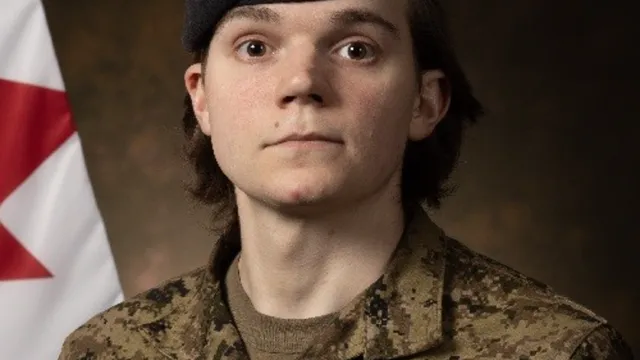
Canadian soldier dies during NATO operation in Latvia
Canadian soldier dies during NATO operation in Latvia
- Sebastian Halmagean, a gunner in the Canadian Armed Forces, died while on duty in Latvia on January 31, 2026.
- He was part of Canada’s Operation REASSURANCE, which aims to deter Russian aggression by maintaining a multinational troop presence.
- The death is under investigation, and officials from both Canada and Latvia have expressed their condolences.
Story
Latvia has been hosting a multinational deployment of NATO troops, including Canadian forces as part of Operation REASSURANCE, to bolster deterrence against Russian aggression. On January 31, 2026, Canadian soldier Sebastian Halmagean, a gunner from Hamilton, Ontario, died while on duty near the capital city, Riga. The Canadian Department of National Defence stated that circumstances surrounding his death are currently under investigation by Canadian Forces Military Police, in collaboration with Latvian State Police. Details surrounding the incident remain limited, indicating that authorities will not release further information at this time. Sebastian Halmagean had served in the Canadian Armed Forces for nearly three years and was deployed for the first time overseas. He was a member of the 4th Artillery Regiment (General Support), Royal Canadian Artillery, and was posted to the 6 Canadian Combat Support Brigade based in Oromocto, New Brunswick. His contributions were part of an extensive commitment involving 3,000 Canadian troops as NATO seeks to enhance collective defense in Central and Eastern Europe. This operation is regarded as the largest reinforcement of NATO's defenses in decades. The death of Gunner Halmagean has drawn reactions from officials, with General Jennie Carignan, Chief of the Defence Staff, expressing her condolences, acknowledging the significant loss for the Canadian Armed Forces. Canada's Prime Minister Mark Carney also voiced his sorrow, emphasizing the strength of the nation thanks to soldiers like Halmagean. Latvia’s President Edgars Rinkēvičs extended condolences on behalf of the Latvian people, honoring Halmagean’s service and sacrifices. As investigations continue, Canada’s Armed Forces stated there is no indication that the incident poses an increased threat to other deployed personnel. Halmagean’s commitment to serving his country, along with the heartfelt tributes from leaders, underscores the sacrifices made by members of the military during overseas operations. While the investigation unfolds, the impact of his loss resonates deeply with his comrades and the community he served.
Context
policy market policy analysis policy global market analysis global market global analysis shift market global trends data strategic impact data trends insight economic global strategic policy trends market policy data market shift strategic policy policy analysis trends insight geopolitical policy analysis strategic data trends trends global impact analysis economic global insight analysis insight impact insight impact impact trends policy policy data trends geopolitical strategic global insight geopolitical impact insight policy insight strategic analysis geopolitical impact economic shift strategic analysis data...


