

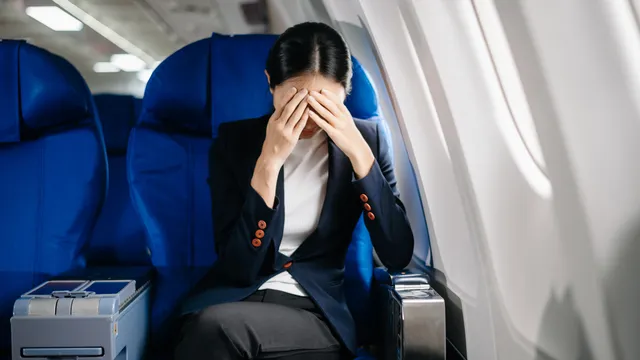
United Airlines enforces mandatory headphone rule on flights
United Airlines enforces mandatory headphone rule on flights
- United Airlines has revised its policies to require headphones for audio content during flights.
- Failure to wear headphones can lead to removal from flights or even a permanent ban.
- This move is in response to increased reports of unruly passenger behavior and aims to enhance the flying experience.
Story
In the United States, United Airlines implemented a new policy requiring passengers to wear headphones when listening to audio or video content on personal devices. This decision was quietly incorporated into their contract of carriage under the 'Rule 21 Refusal of Transport' section, explicitly stating that passengers who refuse to comply could be removed from flights. The policy arises amid rising concerns over unruly passenger behavior, prompting increased fines issued by the Federal Aviation Administration (FAA). The airline's decision reflects feedback from travelers, who prefer not to hear others' content during flights. The FAA revealed it had received numerous complaints regarding disruptive behaviors on flights. In 2023 alone, it documented a significant number of unruly passengers, resulting in significant fines totaling $200,000. Such incidents often lead to interventions by law enforcement, highlighting the seriousness of maintaining safety and comfort on flights. The recent actions by United Airlines are seen as steps towards enhancing the flying experience, addressing noise annoyance that can disrupt passenger enjoyment and safety. The airline's statement emphasized their long-standing encouragement for customers to utilize headphones when consuming audio-visual content. The updated policy aligns with their existing Wi-Fi rules, which remind passengers to use headphones as a common courtesy. To ensure all passengers can comply, United Airlines allows passengers who forget their headphones to request a complimentary pair during the flight, should availability permit. In light of these changes and the ongoing issues with unruly passengers, it is evident that airlines are striving to create a more controlled environment to ensure a positive and safe travel experience for everyone onboard. By mandating headphone use, United Airlines hopes to foster respect and consideration among passengers while addressing the significantly growing concern regarding disturbances in-flight.
Context
The impact of noise complaints on airline policies has become a significant area of concern for airlines, regulatory authorities, and communities adjacent to airports. As air traffic continues to grow, the volume of complaints regarding noise pollution has also increased, prompting airlines to review and adjust their operational policies and practices. Noise complaints not only affect the quality of life for residents living near airports but also impact airlines' operational efficiency and public relations. In this context, it is essential to understand the relationship between noise complaints and the decision-making processes involved in airline policies to address these challenges effectively. Airlines are now operating in an environment where public scrutiny is heightened, and regulatory frameworks regarding noise emissions are becoming stricter. Governments and local authorities are increasingly responding to community concerns by establishing noise abatement procedures and implementing curfews that restrict flight operations during certain hours. This has prompted airlines to adapt their flight schedules and aircraft choices to minimize noise pollution. Consequently, airlines are investing in quieter, more advanced aircraft technology and optimizing flight paths to align with regulatory standards while also attempting to maintain operational efficiency and profitability. Moreover, the frequency of noise complaints can affect an airline's reputation and customer satisfaction. Airlines are aware that failure to address community concerns about noise can result in negative publicity and impact their brand image. As a result, they are more likely to engage in proactive measures such as community outreach programs, noise reduction initiatives, and transparent communication strategies to alleviate residents' concerns. By doing so, airlines can improve their social license to operate, enhance relationships with local communities, and create a more favorable operational environment in the long run. In summary, noise complaints exert a considerable influence on airline policies, prompting changes in operational practices and regulatory compliance. The relationship between community noise concerns and airline behavior highlights the need for an integrated approach to address noise pollution effectively. Given the growing importance of environmental sustainability and community well-being, airlines must remain cognizant of the impact of their operations on nearby residents and be prepared to implement innovative solutions that balance operational needs with the legitimate concerns of the communities they serve.


