

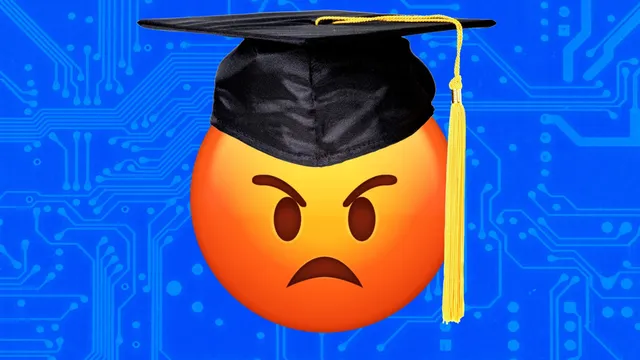
Students boo speakers praising AI during graduation events
Students boo speakers praising AI during graduation events
- Students at several colleges nationwide expressed discontent with AI during commencement ceremonies.
- Many students formed anti-AI groups in response to concerns about job security and creative freedom.
- The growing divide in perceptions of AI highlights the need for a balanced approach to technology in education.
Story
In May 2026, across various campuses in the United States, numerous college students demonstrated their growing unease regarding artificial intelligence (AI). At several commencement ceremonies, students openly booed speakers who spoke positively about AI, reflecting a broader sentiment of anxiety surrounding its implications for their futures. These expressions of discontent were further amplified by the formation of anti-AI groups among students on at least five campuses, who convened to advocate for a more cautious approach to AI development. Students expressed concerns about the technology's potential threats to job security, creative processes, and critical thinking skills, leading to feelings of chaos and uncertainty about their career prospects. A significant poll conducted by Gallup and the Lumina Foundation in October revealed that over half of U.S. college students utilize AI for academic purposes weekly. However, this heavy reliance on AI for tasks such as checking homework answers and assisting with coursework has led to a backlash in some circles, where students seek to uphold values of traditional academic integrity. Concerns about being forced to utilize AI resources, combined with a pervasive sense of being overwhelmed by its rapid integration into education, has fueled a desire for regulation that prioritizes human cognitive processes over technology. In addition to activism against AI, students are also engaging in discussions surrounding responsible AI development. Numerous clubs focused on AI safety have cropped up at various universities, emphasizing the need for transparency and ethics within this rapidly evolving field. Advocacy efforts emphasize that while AI can potentially offer benefits, its growth should not come at the expense of critical human functions within the educational and professional spheres. As a response to these pressures and anxieties, students are calling for their institutions to find a balance between innovative technology and conventional learning practices that promote moral standards regarding the use of AI. Amidst the backdrop of unrest and skepticism on campus, the responses of educators have varied. Some, like Daniel Liddle, associate professor of English at Western Kentucky University, noted that students are fatigued by discussions about AI and long for a focus on learning their respective disciplines. This contrasting viewpoint underscores a division in perception towards AI, where educators advocate for embracing technology while some students remain resistant to what they view as a threat to their academic freedoms and future job markets. Thus, the issue of AI adoption in education not only stands as a technological advancement but also as a complex intersection of trust, productivity, and ethical considerations regarding student welfare.
Context
global insight geopolitical analysis strategic policy global insight analysis insight shift strategic analysis global data data trends impact trends impact data analysis global analysis economic policy global insight economic analysis strategic analysis economic strategic global impact trends impact global insight policy policy data market economic global global economic data insight strategic insight shift data strategic insight strategic trends market strategic analysis economic data impact shift policy trends analysis strategic shift strategic strategic analysis global strategic geopolitical geopolitical trends shift trends...


