

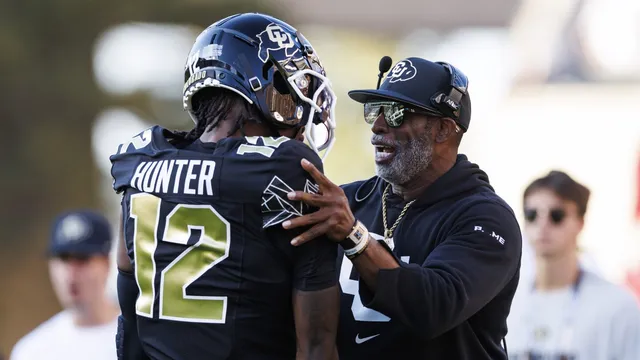
Deion Sanders criticizes Jaguars for ignoring his coaching advice on Travis Hunter
Deion Sanders criticizes Jaguars for ignoring his coaching advice on Travis Hunter
- Travis Hunter was drafted by the Jaguars in 2025 and looked to make an impact as a two-way player.
- He suffered a season-ending knee injury during his rookie season, raising concerns about his development.
- Deion Sanders criticized the Jaguars for not consulting him on coaching Hunter, highlighting the importance of communication.
Story
In early November 2025, Travis Hunter, a two-way talent drafted by the Jacksonville Jaguars with the No. 2 overall pick in the NFL Draft, suffered a season-ending knee injury. Before this injury, Hunter exhibited moments of promise in his rookie season, as he aimed to continue playing both wide receiver and cornerback, a goal supported by the Jaguars’ initial willingness to utilize him in dual roles. Despite their intentions, the team faced challenges in determining the optimal way to deploy Hunter, raising questions about their strategy. A significant factor cited was the lack of communication with Deion Sanders, Hunter's former head coach at the University of Colorado, who had developed him as a standout player over three seasons. Sanders openly expressed his disappointment in not being consulted, emphasizing that he could provide valuable insights into coaching Hunter effectively. He argued that understanding Hunter's motivations and how to manage him should have warranted at least a phone call. This lack of engagement compounded the difficulties for the Jaguars as they sought to maximize their investment in Hunter. As the Jaguars navigated his deployment on both offense and defense, the conversation surrounding their approach highlighted the importance of collaboration between coaching figures and the insights of those who have previously worked with top-tier talent. Ultimately, the decision-making process regarding Hunter's development has underscored a broader conversation within the league about the necessity of communication between coaches and organizations. Sanders' commentary suggests that there remains a missed opportunity that could have been beneficial for both the player and team, especially given the substantial resources attached to the draft investment. The conversation is a reminder of how crucial effective communication is in professional sports, particularly when it comes to developing high-potential players consistently and efficiently.


