
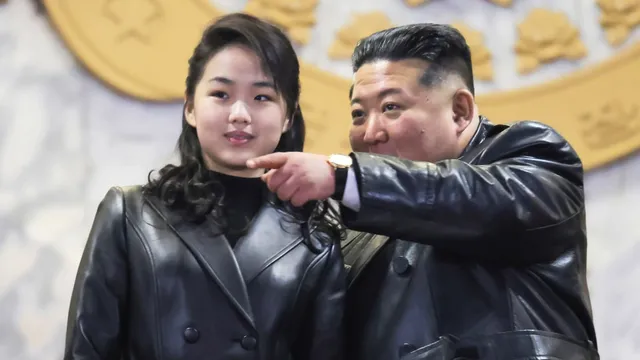
Kim Jong Un asserts control with significant political restructuring in North Korea
- The Ninth Congress of the Workers’ Party of Korea in February 2026 introduced significant institutional changes, marking a move away from hereditary rule.
- The political police's transformation reflects heightened social control and fear among the populace concerning regime security.
- Kim Jong Un's restructuring aims to establish his authority while simultaneously preserving strict internal discipline and public sentiment management.
Story
In February 2026, North Korea's Workers' Party of Korea held the Ninth Congress, where significant changes in the political structure were established under Kim Jong Un's leadership. This Congress marked a shift from a hereditary dictatorship to a governance model centered exclusively on Kim Jong Un, which aimed to solidify his authority independent of his family's legacy. The party's operational nerve center, the WPK Secretariat, expanded from eight to 12 secretaries, removing older figures and promoting a new cadre of loyal officials, intensifying the party's ideological framework around Kim Jong Un’s thoughts. The Congress also reaffirmed the 'Five-Point Party-Building Line for the New Era,' focusing on organizational discipline and management of public sentiment. This plan reflects a governing strategy that combines heightened ideological enforcement with stringent social controls. The regime has codified legislation such as the Reactionary Ideology and Culture Rejection Act, criminalizing the consumption of foreign media and instituting systematic information control as a permanent governance feature—a significant shift from previous periodic crackdowns. The public has faced stringent scrutiny, exemplified by recent cases where students were publicly punished for consuming foreign media. Additionally, North Korea's political police underwent a rebranding, changing the name of the Ministry of State Security to the State Information Bureau, a move that intensified fears among the populace. Many North Koreans associate the new term 'information department' with South Korea's notorious intelligence agency known for brutality. The name change is perceived as an attempt to project a more normalized image of state security; however, analysts caution that the functions remain focused on internal control and regime security. Amid these internal developments, North Korea continues to assert itself on the international stage, demanding recognition as a nuclear state and the easing of sanctions from Washington. With Beijing, there have been moves to restore trade and ties severed during the pandemic, reflecting the regime’s ongoing efforts to manage foreign relations while maintaining strict internal order. The current political climate highlights the deliberate design of Kim Jong Un's regime, aiming to restructure governance while keeping tight control over the populace's fears and ideologies.
Context
In 2026, the consolidation of power by Kim Jong Un in North Korea showcases a strategic maneuvering that reflects his ambitions to solidify not only political authority but also a firm grip on the military and economic spheres of the country. Following the tumultuous years under his leadership, which included international sanctions and economic challenges, Kim has navigated through profound changes both domestically and abroad. His regime's focus on strengthening the economy through state-controlled measures, alongside a robust defense strategy, illustrates a dual approach to governance that prioritizes control while attempting to reduce foreign dependency. Observers note a marked increase in resource allocation towards the military, reinforcing North Korea's stance in regional geopolitics as it seeks to assert its sovereignty in a complex international landscape. With an eye on fostering national pride and demonstrating resilience in the face of external pressures, Kim has successfully garnered loyalty from top military officials, thereby reinforcing his centralized authority. The political landscape in North Korea as of 2026 further indicates that Kim's strategies have included a calculated purge of potential rivals within the Party and military ranks, aimed at eliminating dissent and fortifying his hold on power. This consolidation is evident in the reshuffling of key leadership positions where loyalists have been placed in critical roles, ensuring a governance structure that is tightly aligned with Kim's vision and policies. While domestic stability appears to be prioritized, Kim's growing isolationist policies suggest a reluctance to engage in meaningful negotiations with global powers, particularly with the United States and South Korea. Instead, his administration has increasingly emphasized a narrative that champions national self-reliance and the importance of sovereignty over foreign intervention or assistance. Economically, Kim's leadership has been characterized by a push towards self-sufficiency, particularly in light of crippling sanctions that have exacerbated the nation’s economic problems. The emphasis on agricultural reform and advancing domestic manufacturing capabilities signifies his commitment to transforming North Korea into a more resilient economy, although challenges remain given the country's reliance on external inputs and the effects of natural disasters. State propaganda has heralded these efforts, portraying them as proof of Kim's effective governance despite widespread food insecurity and the persistence of poverty among the citizenry. Furthermore, the regime continues to portray itself as the bulwark against foreign aggression, a narrative that resonates deeply in a population that has been systematically conditioned to view external entities with skepticism and distrust. Internationally, Kim Jong Un's posture in 2026 reflects both a desire to maintain sovereignty and a strategic ambivalence that complicates diplomatic relations. Military parades and missile tests have showcased advancements in the North Korean arsenal, aiming to deter perceived threats while demonstrating capability to the international community. The regime's strategic communication has also evolved, as it seeks to project power while subtly engaging with select nations that might be open to dialogue. However, with ongoing sanctions and limited economic ties, the regime's internal focus on power consolidation may well serve as a double-edged sword, potentially leading to further international isolation. Ultimately, as Kim consolidates his power amid these dynamics, North Korea stands at a critical juncture, the impact of which will resonate not only within its borders but across the geopolitical landscape.
