

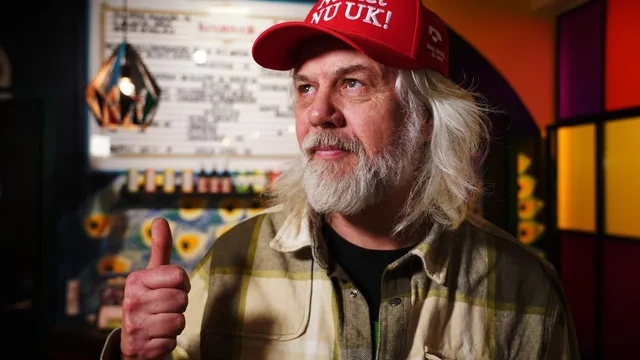
Massive protests erupt against Trump's Greenland acquisition plans
Massive protests erupt against Trump's Greenland acquisition plans
- Protests erupted in August 2019 in Denmark and Greenland against President Trump's proposal to acquire Greenland, with thousands participating.
- Demonstrators wore hats saying 'Make America Go Away' to signal their opposition to Trump's intentions.
- The protests indicated widespread support for Greenland's self-governance and highlighted concerns about U.S. military intervention.
Story
In August 2019, large protests unfolded in Denmark and Greenland against President Donald Trump's pursuit of acquiring Greenland. The protests drew significant crowds, particularly with around 10,000 Danes gathering in Copenhagen's City Hall Square, showing solidarity with Greenlanders. Many of the demonstrators wore parody MAGA hats reading 'Make America Go Away,' a clear expression of opposition to Trump's controversial plans. Similar support rallies in Nuuk, the capital of Greenland, highlighted the island's struggle for greater autonomy and resistance to any U.S. control, drawing nearly a quarter of the population of Nuuk against Trump's approach. This situation was exacerbated by Trump's announcement of new tariffs against several European countries, aiming to exert economic pressure and push for negotiations over Greenland's future. The tariffs, starting at 10%, were aimed at goods imported from Denmark and other European nations opposing his proposals. Foreign policy experts noted that the tariffs could alter the dynamics of international relations, especially considering military implications and the strategic location of Greenland in the Arctic region. These developments raised concerns among demonstrators, as many felt their right to voice opposition could jeopardize their ability to visit the United States. Interestingly, the protests also surfaced a common sentiment among demonstrators—that they would not consider visiting the U.S. as long as Trump remained in office. This sentiment was echoed by protesters who conveyed a strong desire for Denmark and Greenland to maintain their independence rather than acquiescing to U.S. pressure. Supporters of Greenland's self-governance noted that the island has the legal framework for a referendum on independence from Denmark, further complicating the dialogue regarding Greenland's status. The protests also encompassed concerns about Trump’s potential to employ military force in securing Greenland due to its strategic significance for U.S. defense and security interests. Politicians in the U.S. faced a divided opinion, with significant numbers of Democrats and Republicans opposed to the use of military force in this endeavor. This growing discord and fear of U.S. intervention prompted a rallying cry for unity among the Danish and Greenlandic people, reflecting a deep-rooted distrust of Trump’s motives in pursuing Greenland.
Context
Greenland's relationship with Denmark has been intricate and multifaceted, shaped by historical events, cultural exchanges, and geopolitical considerations. Initially, Denmark began its colonization of Greenland in the early 18th century, when Hans Egede established the first permanent settlement in 1721. This marked the beginning of an enduring Danish influence in Greenland, which endowed the island with a unique status within the Kingdom of Denmark. Throughout the following centuries, Denmark implemented policies that affected the economic, political, and social structures of Greenland, balancing interests between indigenous populations and European settlers. These early colonial efforts laid the groundwork for a relationship marked by both dependency and resistance, as Greenland increasingly sought greater autonomy amid Danish governance. The 20th century was a significant period for Greenland, particularly during and after World War II. The strategic location of the island was recognized by the United States, leading to the establishment of military bases during the war. Following the conflict, the post-war period saw a growing national consciousness among Greenlanders, pushing for rights and representation. In 1953, Denmark officially incorporated Greenland as part of the Kingdom, granting Greenlanders Danish citizenship. However, this development also raised tensions, as many Greenlanders felt their voices and rights were overshadowed by Danish political decisions. The desire for self-determination thus became a rallying point for various Inuit groups, often fueled by frustrations over socio-economic inequalities and governance issues. In the late 20th century, the push for autonomy gained momentum, culminating in the Home Rule Act of 1979, which granted Greenland self-governance. This legislative change marked a pivotal moment in Greenland's relationship with Denmark, as it allowed for the establishment of a local government and greater control over various policy areas, including education and natural resources. However, Denmark retained authority over foreign affairs and defense, maintaining a degree of control that would create ongoing discussions about sovereignty and governance. The interplay of economic interests, such as mining and fishing, would further complicate this relationship, raising questions about environmental sustainability and the rights of indigenous populations in decision-making processes. In recent years, debates surrounding independence and further autonomy have intensified, particularly as global issues such as climate change and geopolitical strategy draw attention to Greenland's vast natural resources. The melting ice and changing climatic conditions have positioned Greenland as a focal point in discussions on resource extraction and environmental stewardship. Additionally, the growing presence of foreign powers seeking influence in the Arctic adds another layer of complexity to its relationship with Denmark. As of 2026, the discussions around Greenland's future continue, reflecting a dynamic interplay of cultural identity, self-determination, and strategic importance within a rapidly changing global landscape. This evolving relationship serves as a testament to the resilience and agency of Greenlanders while highlighting the complex legacy of colonialism and contemporary aspirations for political and economic self-sufficiency.


