

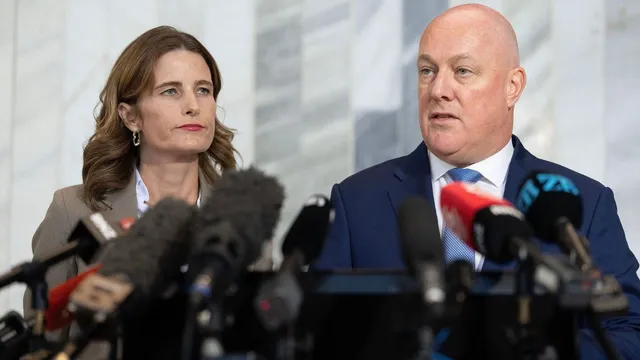
New Zealand helps families cope with rising fuel prices amid conflict
New Zealand helps families cope with rising fuel prices amid conflict
- New Zealand is set to start cash payments to 150,000 families due to rising fuel prices.
- The payments will be NZ$50 per week starting April 1, targeting low-to-middle-income households.
- Criticism indicates that further support is needed by other demographics outside the selected families.
Story
New Zealand has announced a significant relief package aimed at assisting nearly 150,000 low-income families grappling with rising petrol prices, a situation exacerbated by the conflict involving Israel and the United States against Iran that began in late February 2026. Prime Minister Christopher Luxon confirmed this initiative on March 24, 2026, aimed particularly at the low-to-middle-income families with children. These families will receive an additional NZ$50 per week starting April 1, as a response to the global fuel crisis, targeting those deemed to be part of the 'squeezed middle' who are experiencing financial pressure due to escalating living costs brought about by this ongoing conflict. The financial package is set to last for a year or until the average price of petrol falls below NZ$3 per litre for four consecutive weeks. The country's petrol prices have seen an increase of roughly 40 to 50 cents a litre since the onset of military actions against Iran, causing average prices to rise above NZ$3. This surge in fuel prices has led to widespread concern among the populace, prompting long lines at petrol stations as residents attempt to stock up on fuel. The New Zealand government has reported that the country has only 47 days of combined petrol, diesel, and jet fuel stocks remaining, indicating immediate potential supply issues. Despite the government’s actions, there has been criticism from opposition parties, who argue that the relief package falls short of addressing the broader needs of many New Zealanders, including students and superannuitants. Critics such as Labour leader Chris Hipkins and Green co-leader Marama Davidson have pointed out the insufficiency of the measures taken. Hipkins labeled the support as a necessary 'start' but expressed concern that a significant number of New Zealanders would ultimately miss out on this assistance. In light of this criticism, it is evident that while the government aims to provide relief, its efforts may not entirely alleviate the hardships faced by all affected citizens, revealing divisions in how the effects of global events are felt across different demographics. Moreover, the fuel crisis has broader implications beyond New Zealand, especially within Asia, where countries heavily reliant on oil from the Gulf are experiencing similar difficulties. The effective closure of the Strait of Hormuz due to the conflict has affected the flow of oil that primarily supplies Asian countries, leading to widespread fuel shortages and increased prices across numerous nations. Countries like Thailand and Sri Lanka are reporting challenges as citizens and businesses alike struggle with high fuel costs, underscoring the global ramifications of this specific conflict on everyday life in various regions. Understanding these interconnected issues offers deeper insight into how geopolitical tensions can result in tangible hardships on the ground.
Context
The impact of the Iran war on global fuel prices has been a subject of intense scrutiny and concern among economists, policymakers, and energy market analysts since the onset of the conflict. As one of the leading oil-producing nations, Iran's geopolitical stability is crucial not only for its economy but also for the global oil market. The production and export of oil can be significantly disrupted in the event of military action or destabilization. This report examines the implications of such disruptions on fuel prices worldwide, providing an overview of the mechanisms at play and the potential long-term consequences of prolonged conflict in the region. Historically, conflicts in the Middle East, particularly involving Iran, have led to immediate surges in crude oil prices on the global market. This is largely due to fears of supply disruptions, as the Strait of Hormuz, a vital chokepoint for oil shipments, is located in proximity to Iran. During instances of heightened military activity, market speculation often drives prices upwards even before any physical supply disruptions occur. The general principle here is that any threat to the flow of oil from a key producing region results in anticipatory actions by traders and investors, often leading to increased prices at the pump around the globe. Furthermore, the response of key global players and organizations can intensify or mitigate these price fluctuations. When conflict arises, nations that rely heavily on Iranian oil may seek alternative sources, thereby increasing demand for oil from other regions, which can lead to an overall tightening of global supplies. Conversely, panic selling can also occur among traders, causing temporary price drops, although this is usually short-lived. Additionally, sanctions imposed by the international community on Iran can have a compounded effect on prices by further restricting supply and altering trade relationships. The long-term impact on global fuel prices depends on the duration and intensity of the conflict. Prolonged instability in Iran could lead to sustained periods of high prices if significant amounts of oil production are lost or if shipping routes remain threatened. Furthermore, this instability could cause broader economic ramifications, such as inflation in oil-dependent economies, changes in consumer behavior, and potential shifts to alternative energy sources. It is critical for policymakers and stakeholders within the oil sector to remain vigilant and responsive to developments in the region to mitigate the potential adverse effects on global fuel prices.


