

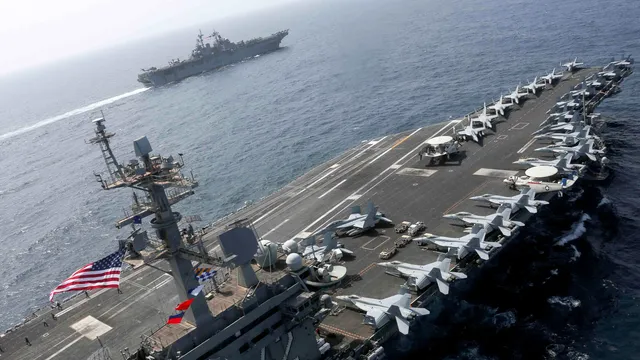
Navy takes action against bureaucratic inefficiency with new office
Navy takes action against bureaucratic inefficiency with new office
- The U.S. Navy has launched its Rapid Capabilities Office to streamline the procurement process.
- The initiative aims to eliminate bureaucratic inefficiencies that have historically hampered naval operations.
- This reform marks a significant turning point for the Navy, enhancing its capability to meet future maritime challenges.
Story
On December 9, 2025, the U.S. Navy announced the launch of its Rapid Capabilities Office during a kickoff event at the Capital Turnaround in Washington. This initiative is designed to enhance the procurement process for critical capabilities essential for maintaining American maritime dominance. Secretary of the Navy John Phelan emphasized the importance of disrupting bureaucratic inertia, which hinders the effectiveness of the Navy, and indicated that reforms would allow for taking calculated risks and embracing innovation. Vice Admiral Seiko Okano, appointed as the director of the new office, signaled that reporting directly to the Secretary of the Navy demonstrates the importance of this initiative. The office's structural changes aim for a more efficient delivery of capabilities to sailors and marines. This move signifies a commitment to revamping the entire Navy procurement process to expedite capability delivery, thereby addressing operational challenges sooner rather than later. Alongside the establishment of the Rapid Capabilities Office, the Navy also announced a partnership with Palantir Technologies to implement
Context
The history of U.S. Navy procurement processes is a complex narrative that reflects the evolving needs of the Navy, advances in technology, and shifts in political and economic circumstances. Throughout its history, the U.S. Navy has had to adapt its procurement strategies to meet the demands of both wartime and peacetime operations. In the early years of the Navy, procurement was largely ad hoc, relying on local shipbuilders and craftsmen to meet immediate needs. However, as the Navy expanded and the industrial capability of the United States grew, more formalized procurement practices began to emerge, particularly in the 19th century with the establishment of the Bureau of Construction and Repair in 1862, which aimed to standardize and streamline shipbuilding processes. The World War I and World War II eras marked pivotal moments in the procurement processes of the U.S. Navy. During these times, the Navy had to rapidly increase its shipbuilding capacity and innovate to meet the logistical challenges posed by global conflicts. The establishment of agencies like the War Production Board during World War II facilitated a more coordinated approach to procurement, which included securing materials and managing contracts more effectively. This era also saw the increased involvement of the private sector, as numerous defense contractors emerged to fulfill the Navy's expanding requirements for ships, aircraft, and other technologies. Post-war periods brought about significant changes in procurement practices, particularly as the U.S. Navy entered the Cold War. The focus shifted to developing advanced technologies, such as nuclear submarines and aircraft carriers. By this time, the Navy adopted a more systematic and bureaucratic approach to procurement, characterized by long-term planning and collaboration with military contractors. Reforms in the 1960s and 1970s began to address issues of cost overruns and delays in delivery, leading to the implementation of better project management practices and investment in research and development to foster innovation. In recent decades, the U.S. Navy has faced new challenges in procurement as it navigates a rapidly changing geopolitical landscape, budget constraints, and technological disruptions. The adoption of more agile procurement processes, including the use of Other Transaction Authorities (OTAs) and partnerships with commercial entities, aims to stimulate competition and encourage innovation while ensuring that the Navy remains capable of fulfilling its strategic missions. Overall, the history of U.S. Navy procurement processes illustrates a continuous evolution, underscoring the importance of adaptability and responsiveness to both internal and external pressures.


