

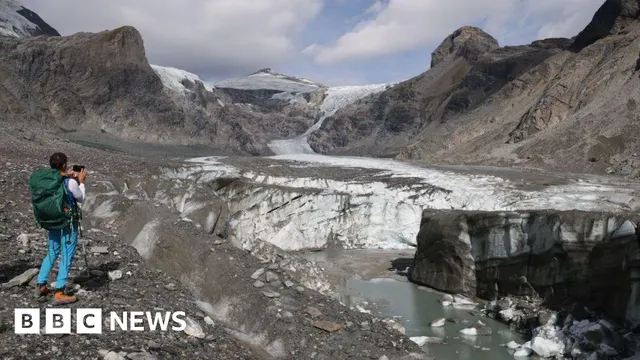
Austria's glaciers in peril as climate change drives dramatic retreat
Austria's glaciers in peril as climate change drives dramatic retreat
- Monitors report that the vast majority of glaciers in Austria have retreated significantly.
- The two glaciers experiencing the greatest losses are Alpeiner Ferner and Stubacher Sonnblickkees, both shrinking by over 100 meters.
- The situation calls for immediate action to address the consequences of climate change, stressing the urgency of the matter.
Story
Austria has witnessed a significant retreat of its glaciers, with reports indicating that all but two out of the nation's 96 glaciers have receded over the last two years. This alarming trend has drawn attention from the Austrian Alpine Club, which declared this development a stark indicator of the escalating effects of climate change. Recent measurements revealed that significant losses occurred in specific glaciers, such as the Alpeiner Ferner in Tyrol and the Stubacher Sonnblickkees in Salzburg, both retreating over 100 meters. The report emphasizes a continued decline in glacier length, area, and volume, highlighting that this retreat is not only limited to Austria but is also evident in neighboring countries like Switzerland. The steep decline of glaciers creates broader implications for crucial resources including drinking water, agriculture, energy generation, and recreation, fundamentally altering the alpine landscape. This situation underscores the urgent need for policymakers and the public to reconsider their actions regarding climate change, as experts insist that it is no longer feasible to save the glaciers in their traditional forms. The report concludes that while the current level of retreat is slightly lower than in previous years, it still ranks among the top retreats recorded in the past 135 years of observation. The worsening condition of glaciers has been attributed to poor weather patterns characterized by low snowfall and high temperatures, which have persisted in recent years.


