
politics
uplifting
provocative

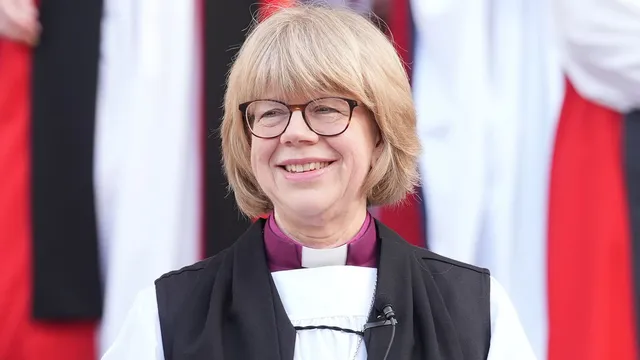
Dame Sarah Mullally makes history as first female Archbishop of Canterbury

Jan 28, 2026, 9:53 AM60
(Update: Jan 28, 2026, 3:51 PM)
Bishop of London
cathedral city in Kent, England

Dame Sarah Mullally makes history as first female Archbishop of Canterbury

  • Dame Sarah Mullally was confirmed as the first female Archbishop of Canterbury during a ceremony at St Paul’s Cathedral.
  • Her appointment follows Justin Welby’s resignation due to safeguarding failures related to an abuser case.
  • Mullally aims to address misogyny and create an inclusive environment, marking a significant advancement for women in the church.
Share your opinion
6

Story

In a historic ceremony held at St Paul’s Cathedral in London, Sarah Mullally was confirmed as the 106th Archbishop of Canterbury on January 28, 2026. This confirmed her position as the first woman to lead the Church of England in its nearly 500-year history. The event, attended by a diverse congregation including clergy, schoolchildren, and representatives from the Anglican Communion, highlighted the significance of this moment, marking a significant advancement for women in the church. During the ceremony, a heckler briefly interrupted the proceedings, shining a light on the controversies surrounding her appointment and the broader issues within the Anglican community. Prior to her confirmation, Mullally, who has held the role of Bishop of London, expressed her commitment to confronting misogyny in the church and emphasized her dedication to creating an environment where all can prosper. Throughout her ministry, she has faced personal experiences of misogyny, which she aims to address openly. Mullally's appointment comes in a time of turmoil within the Church of England, where the role of women and LGBTQ rights are contentious issues. Her predecessor, Justin Welby, resigned over safeguarding failures related to the case of a notorious abuser, leaving a complex heritage for Mullally to navigate. As she assumes her new role, there is considerable scrutiny regarding her stance on safeguarding and her past actions while serving as Bishop of London. Mullally intends to utilize her position to foster conversations about institutional barriers women face in the church, demonstrating a commitment not only to her congregation but to the church's future. Mullally’s confirmation is seen as a double-edged sword, both a significant step toward inclusivity and a potential flashpoint for those who oppose the inclusion of women in such high-ranking positions. The Anglican Communion, comprising roughly 100 million members globally, grapples with fragmentation on various issues, including women's roles in clergy and rights for LGBTQ individuals. While Mullally's appointment signifies progress, it may also exacerbate divisions in an already polarized environment. As she prepares for her formal installation in March, Mullally aims to lead with compassion and understanding, ready to face the multifaceted challenges ahead in her groundbreaking new role.

Context

The history of women in the Church of England is marked by a gradual progression from exclusion to inclusion, reflecting broader societal changes regarding gender roles. Initially, women held no formal positions in the Church, which was a prominent institution male-dominated since its formation. Throughout the 19th century, as the feminist movement gained momentum, women began advocating for their rights within religious contexts. This shift was rooted in the desire for greater spiritual participation and leadership roles, as women increasingly sought to express their faith and contribute to ecclesiastical life. One of the foundational moments in this history was the creation of the Women’s Auxiliary to the Church Missionary Society in 1857, which marked a significant step toward involving women in church activities and mission work. The first major breakthrough came in the 20th century when the Church of England started to formally recognize women's contributions, allowing them to serve in various capacities. The 1928 Act of Parliament, which allowed women to serve as clergy, was pivotal in granting women access to leadership roles. However, it wasn't until the late 20th century that the Church began ordaining women as priests in 1994, with the landmark decision reflecting societal changes in attitudes towards gender equality. This decision was not without controversy, as debates surrounding the ordination led to divisions within the Church, yet it ultimately paved the way for women to assume pastoral and leadership roles previously reserved for men. Subsequent developments continued to shape the involvement of women in the Church. The Church of England witnessed the ordination of the first female bishops, with Libby Lane being consecrated as the Bishop of Stockport in 2015. This event was a historical milestone, highlighting the ongoing transformation within the Church regarding the role of women. Today, women actively participate at nearly all levels of church life, from local congregations to national leadership roles, reflecting a significant departure from earlier centuries of exclusion. The presence of women in clerical positions has not only changed the landscape of the Church but has also influenced the spiritual lives of congregants, providing new perspectives on theology and pastoral care. Despite these advancements, challenges remain. Issues such as gender pay disparity, the balance of power within church structures, and representation at higher echelons continue to provoke discussion. Many women in the Church of England face obstacles related to traditional gender roles and expectations embedded in ecclesiastical culture. Furthermore, tensions regarding the intersection of gender, sexuality, and ecclesiastical authority continue to provoke debate, highlighting ongoing struggles within the institution. Nevertheless, the evolving role of women in the Church of England underscores a broader narrative of change, resilience, and advocacy for equality that truthfully reflects the transformative power of faith and community in shaping society.

2026 All rights reserved
