

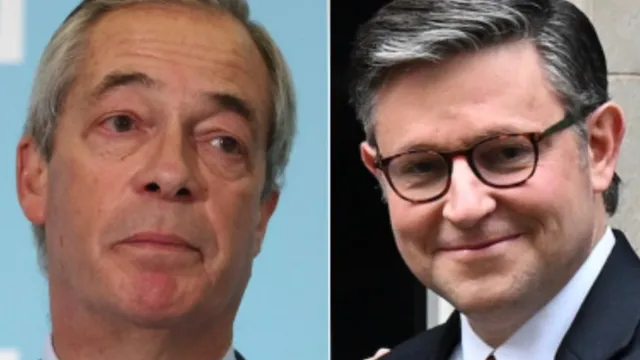
Mike Johnson aims to calm US-UK tensions over Greenland
Mike Johnson aims to calm US-UK tensions over Greenland
- U.S. House Speaker Mike Johnson addressed the British Parliament to mark the 250th anniversary of U.S. independence.
- His visit was overshadowed by rising tensions due to President Trump's threats regarding Greenland and criticisms of the U.K.
- Johnson aimed to calm these tensions and reinforce the U.S.-U.K. special relationship.
Story
In January 2026, in the United Kingdom, U.S. House Speaker Mike Johnson made a historic address to the British Parliament. His visit marked the 250th anniversary of American independence and aimed to address rising tensions between the United States and its European allies, primarily caused by President Donald Trump's threats regarding Greenland. During his trip, Johnson focused on reinforcing the 'special relationship' between the U.S. and U.K., emphasizing that both nations have always managed to resolve their differences calmly. He was in London to assure British leaders that despite current political strife, the foundational ties remain strong and enduring. On the eve of his speech, tensions escalated after Trump criticized the U.K. for its decision to cede the Chagos Islands to Mauritius, calling it a sign of "great stupidity." This aggressive rhetoric against allies left many in Britain concerned about the implications for NATO and the transatlantic alliance. Johnson attempted to counterbalance this by expressing confidence that the U.S. and the U.K. could work through their disagreements, particularly regarding Greenland's status, without deteriorating bilateral relations. During his address, Johnson praised Britain's contributions to global security and hinted at America’s commitment to find a resolution to disputes with European partners. He reiterated the necessity of cooperation among allies in light of growing aggressive posturing from rival nations, reinforcing that threats posed by countries like China and Russia require a unified response from Western nations. However, his speech carried with it the weight of ongoing disputes, and while he sought to calm the waters, the controversies surrounding Trump’s diplomatic strategies loomed large. As Johnson left Parliament, the backdrop of strained relations between the U.S. and the U.K. reminded observers that nurturing the alliance would require diligent efforts amid unpredictable political landscapes.
Context
strategic shift data shift analysis insight data trends data data trends shift market impact market shift global data analysis economic analysis policy strategic economic economic geopolitical trends policy policy shift global trends analysis insight insight insight policy market global shift strategic economic geopolitical strategic market strategic shift shift global strategic trends market geopolitical global trends data data economic trends economic insight global economic strategic policy impact data trends shift shift trends policy trends impact global market insight economic global policy...


