

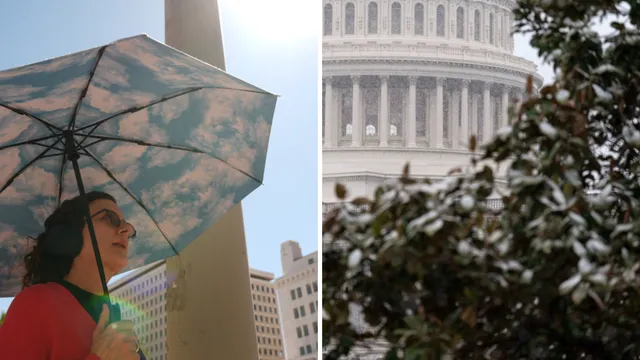
Extreme weather hits all 50 states as polar vortex clashes with heat dome
Extreme weather hits all 50 states as polar vortex clashes with heat dome
- The clash between a powerful polar vortex and an early heat dome is causing extreme weather shifts across the United States.
- Meteorologists forecast extreme conditions affecting all 50 states, with temperatures ranging from record lows to unprecedented highs.
- The current weather patterns raise concerns about preparedness and the implications of fluctuating climate conditions.
Story
The United States is currently facing a complex mix of weather extremes that is unprecedented for this time of year. A powerful polar vortex is pushing frigid air deep into the Midwest and portions of the East, resulting in dangerously low temperatures, with Minneapolis expected to dive near zero and Chicago experiencing single-digit lows. Concurrently, a heat dome is establishing over the Southwest, leading to abnormally high temperatures for March, with Phoenix experiencing unprecedented highs nearing 107 degrees Fahrenheit. This clash of extreme weather patterns is made more severe by a jet stream that has taken on an erratic trajectory, pushing storm fronts originating from the Pacific into a path where they interact with the heat dome. Such an extreme range in weather is creating conditions described by meteorologists like Marc Chenard and Ryan Maue as 'weather whiplash,' as temperature shifts from cold to warm — or vice versa — rapidly affect different regions of the country. This phenomenon is not merely regional, as both meteorologists predict that every state will experience some form of extreme weather this year. Specific forecasts indicate that after this current stretch, a bomb cyclone may form due to the unique interaction between frigid air masses and warmer air rising from the heat dome. Meanwhile, places like Oahu face flash flood warnings, and parts of Alaska will be experiencing temperatures significantly colder than usual, highlighting the extent of climate variability affecting the nation. The states' most affected will continue to be those in the Midwest and East, finding it hard to adjust as residents cope with sudden changes and unseasonal extremes. As the meteorological community observes these developments, it raises questions about long-term climate patterns and public readiness for an unusual frequency of extreme weather events.
Context
Climate change has increasingly become a dominant factor influencing weather patterns in the United States, with profound implications for both natural ecosystems and human societies. Over the past few decades, a significant rise in global temperatures has been observed, directly correlated with an increase in greenhouse gas emissions. This warming has led to notable alterations in precipitation patterns, with some regions experiencing heavier rainfall and flooding, while others face prolonged droughts. These changes disrupt traditional weather cycles, resulting in a higher frequency of extreme weather events such as hurricanes, tornadoes, and heatwaves. The shifting climate is not only a challenge for meteorologists but also poses serious risks to agriculture, infrastructure, and public health across the nation. The impact of climate change on weather patterns has been particularly evident in the form of increased variability. Regions such as the Midwest have reported record-setting rainfall events that contribute to severe flooding, making it difficult for farmers to manage crops effectively. Conversely, the Southwest has faced extended periods of drought, exacerbating water scarcity issues and impacting food supply chains. Moreover, coastal areas are experiencing more intense hurricanes and rising sea levels, endangering communities and requiring substantial investments in adaptive infrastructure. As the climate continues to evolve, the capacity of these regions to adapt becomes crucial, with policymakers challenged to develop effective strategies that mitigate the adverse effects of these weather changes. The frequency and intensity of extreme heat events is another troubling consequence of climate change. The U.S. Southwest and Southeast have experienced some of the hottest temperatures recorded in history, leading to an uptick in heat-related health issues, energy demand, and increased mortality rates, particularly among vulnerable populations. Meteorological studies indicate that the urban heat island effect, exacerbated by climate change, contributes to localized temperature rises in metropolitan areas, further complicating public health efforts. Furthermore, rising temperatures can lead to more heatwaves, which in turn stresses power grids and water supplies as demand surges, challenging the resilience of communities. In conclusion, the effects of climate change on weather patterns in the United States are far-reaching and multifaceted. These transformations have not only created challenges in terms of severe weather events and health risks but also spotlighted the need for urgent and cohesive action. Understanding and addressing the ongoing changes in climate is essential for developing adaptive measures that will protect both the environment and society as a whole. The integration of scientific research with policy initiatives on local, state, and federal levels will be imperative to combat the impending consequences of a changing climate.


