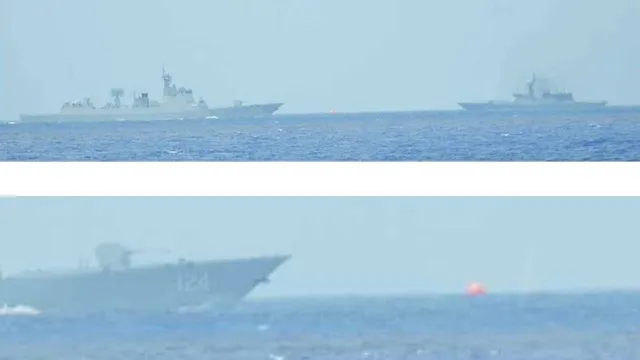
Japan protests against Chinese live-fire drills in its waters
military conflicts
controversial
impactful

Japan protests against Chinese live-fire drills in its waters

21
(Update: )
country in East Asia
island country in East Asia
  • A Chinese destroyer conducted live-fire military drills inside Japan's exclusive economic zone near Okinotorishima island.
  • Japan lodged a formal protest with China, citing potential dangers to navigation for nearby vessels.
  • The incident highlights escalating tensions between Japan and China, as well as growing military collaboration between China and Russia.
Share opinion
2

Story

Japan has recently expressed its concerns over live-fire military drills conducted by a Chinese destroyer within its exclusive economic zone (EEZ) near Okinotorishima island. This incident, which occurred over the weekend, marks the first time that Tokyo has publicly acknowledged such drills by the Chinese military in its EEZ. The drills were observed by Russian warships, indicating a growing defense collaboration between China and Russia. Japan's Defense Minister Shinjiro Koizumi announced the drills during a speech at the Farnborough International Airshow, highlighting the increasing military activities in the region. The live-fire exercises took place approximately 180 kilometers southwest of Okinotorishima, a location that China disputes as being an island, arguing instead that it is merely a rock. This dispute is significant because it underpins China's claim that Japan is not entitled to the waters surrounding Okinotorishima as part of its EEZ. The Japanese government has taken diplomatic steps to protest these activities, citing potential dangers to navigation for nearby vessels. Japan's top government spokesperson, Minoru Kihara, confirmed that the government lodged a formal protest through diplomatic channels. The incident is part of a broader pattern of escalating tensions between Japan and China, particularly following remarks made by Japanese Prime Minister Sanae Takaichi regarding Taiwan, which drew sharp criticism from Beijing. The relationship between the two nations has been strained, and this latest military exercise could further exacerbate those tensions. In response to the increasing military presence of both China and Russia in the region, Japan has been enhancing its surveillance and defense capabilities, particularly in its southwestern island chain. The Japanese military reported that it had detected several vessels, including a Chinese Renhai-class guided-missile destroyer and a Russian Steregushchiy-class frigate, approaching its EEZ shortly before the live-fire exercise commenced. Prior to the drills, nearby vessels were informed via radio about the live-firing activities, which were deemed not to violate international regulations. However, the situation remains delicate, as Japan continues to navigate its security concerns amid growing military cooperation between China and Russia in the waters surrounding Japan.

Context

Japan and China have a complex and often contentious relationship, shaped by historical grievances, territorial disputes, and differing political ideologies. The recent live-fire drills conducted by both nations highlight the ongoing tensions in the region, particularly concerning maritime security and territorial claims in the East China Sea. These drills serve not only as a demonstration of military capability but also as a signal of resolve in the face of perceived threats from the other side. Japan, under its pacifist constitution, has been increasingly proactive in enhancing its defense posture, while China continues to assert its claims over disputed territories, leading to a precarious balance of power in the region. The live-fire drills conducted by Japan and China are indicative of a broader trend of military posturing in East Asia. Japan's Self-Defense Forces have been engaged in joint exercises with allies, including the United States, to bolster their readiness and deterrence capabilities. Conversely, China has been expanding its military presence and conducting its own exercises, often in response to Japan's actions. This tit-for-tat approach raises concerns about the potential for miscalculations that could lead to conflict. The drills are not merely routine military exercises; they are strategic maneuvers aimed at showcasing strength and readiness, which can escalate tensions further. Diplomatic efforts to ease tensions have been ongoing, but they often face significant hurdles. Historical issues, such as Japan's wartime actions and China's perception of Japan's military resurgence, complicate dialogue. Additionally, nationalist sentiments in both countries can hinder constructive engagement. While there have been attempts at high-level talks and confidence-building measures, the underlying issues remain unresolved. The international community watches closely, as stability in the region is crucial for global trade and security. In conclusion, the live-fire drills between Japan and China are a reflection of the intricate and often fraught dynamics of their relationship. As both nations continue to assert their interests in the region, the potential for conflict remains a pressing concern. It is essential for both countries to engage in meaningful dialogue and seek diplomatic solutions to their disputes. The future of Japan-China relations will depend on their ability to navigate these challenges while maintaining peace and stability in the region.