

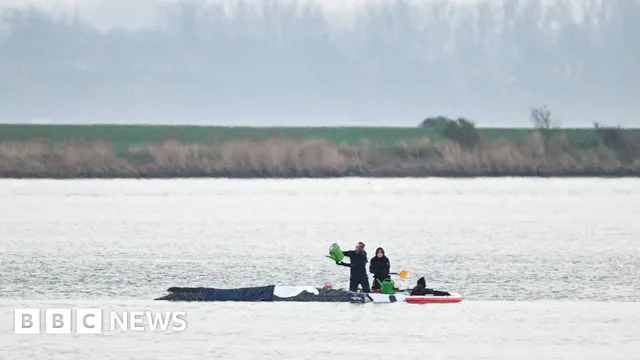
Timmy the stranded whale faces grim rescue attempt
Timmy the stranded whale faces grim rescue attempt
- Timmy the whale has been stranded in the Baltic Sea since early March.
- Rescuers plan to use air cushions to try to lift the whale back to safety.
- The prognosis for Timmy is critical, but a chance of survival exists.
Story
In the Baltic Sea, a humpback whale, known as Timmy, has been stranded off the northern coast of Germany for several weeks. The whale was first sighted in early March, far from its natural habitat, and has ended up trapped in a shallow coastal area near the island of Poel. Rescue efforts have been complicated by the whale's weakened state and previous attempts to guide it to deeper waters have failed. Local officials and wildlife experts have expressed concern about the animal's critical prognosis, with many believing its chance of survival is low. Despite several interventions, such as an excavation operation to create a channel for the whale to swim back to open water, rescuers were unable to guide Timmy towards the North Sea. It’s believed that entanglement in fishing nets contributed to the whale's inability to navigate away from the shallow area. A private company is now attempting a new rescue method using air cushions, designed to gently lift the whale and transport it away from the sandbank. This minimally invasive strategy aims to pull Timmy back to the surface and eventually facilitate its journey towards the Atlantic. Greenpeace Germany has voiced its disapproval of the latest rescue attempt, citing concerns over the whale's deteriorating health and potential internal injuries inflicted by extended periods of being stranded. The organization highlights that Timmy likely has considerable internal injuries that resulted from pressure on its body due to its own weight while trapped. They characterize the rescue efforts as ill-advised given the whale's condition. Public interest in Timmy's plight has soared, leading to global attention and support, accompanied by significant internet discussions, including misinformation and conspiracy theories. Authorities are calling for respect towards rescue efforts and caution against unauthorized interactions, as evidenced by an incident where a woman jumped into the water in an attempt to reach the whale. As efforts continue, the fate of Timmy remains uncertain, but it reiterates the challenges faced by marine life in the Baltic Sea, particularly concerning pollution and habitat disruption.
Context
Rescuing stranded whales is a critical task that requires immediate and well-coordinated action to enhance survival rates for these magnificent marine mammals. When a whale strands itself on a beach or in shallow water, it faces numerous threats including dehydration, organ damage from the weight of its own body, and exposure to environmental conditions. Furthermore, the innate response of sea mammals to be in water necessitates rapid intervention to prevent suffering and to optimize the chances of a successful rescue. Engaging trained personnel is paramount for ensuring that these rescues are executed with utmost care and expertise. The first step in rescuing stranded whales involves assessing the situation accurately to formulate an effective response. It is essential to ascertain the species of the whale, its size, and the number of individuals involved. Documenting the condition of the whale is crucial, such as its breathing rate, physical injuries, and behavior. These observations help in determining whether the whale is healthy enough to return to sea or if further assistance is needed. The use of dedicated marine mammal stranding networks and trained responders is vital. These professionals follow established protocols, which include minimizing stress on the animal and ensuring its safety throughout the rescue process. Once the rescue team is on site, they should work swiftly yet carefully to move the whale back to deeper waters. Techniques often employed may include, but are not limited to, the use of specialized equipment such as slings, stretchers, and even boats designed to transport large animals. In cases where relocation to deeper waters is not possible due to injury or the whale's condition, rehabilitation efforts may be initiated. Such efforts may involve providing hydration, cooling, and medical treatment as needed. Keeping the whale calm and moist with wet blankets or by continuously pouring water on it is crucial in this phase. Finally, after the initial rescue and rehabilitation processes are complete, monitoring the whale post-release is an essential component of ensuring its recovery and reintegration into the wild. Organizations involved in whale rescue often employ satellite tracking or observation to follow the whale's movements and health, gathering important data for future conservation efforts. Public awareness and education about the importance of not disturbing stranded marine mammals and reporting sightings to relevant authorities can further enhance the effectiveness of rescue operations. In sum, rescuing stranded whales is not only a complex but also a vital process that underscores our responsibility towards safeguarding these iconic creatures.


