

Two dead and several missing after landslides devastate New Zealand
Two dead and several missing after landslides devastate New Zealand
- Severe weather resulted in landslides across New Zealand's North Island, with multiple sites affected.
- Rescue operations are currently underway, with several people reported missing and two confirmed dead.
- Community members are actively assisting in recovery efforts as the region grapples with recovery from this tragic event.
Story
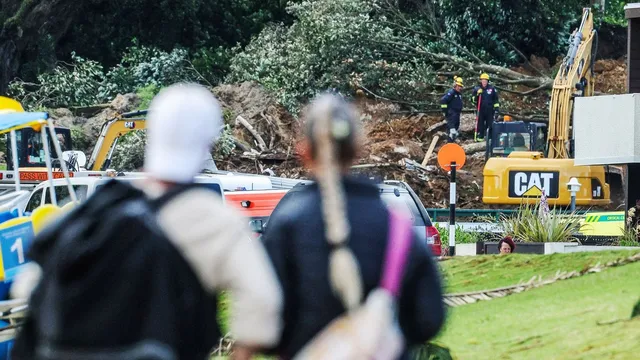
In New Zealand, severe weather conditions led to devastating landslides that resulted in multiple casualties. On January 22, 2026, heavy rain battered the North Island, culminating in significant landslides that struck a popular campground at the base of Mount Maunganui and a residential area in Welcome Bay. Rescue operations commenced as local authorities and emergency services worked tirelessly to recover those trapped and locate the missing. Initial reports confirmed the tragic loss of two lives in Welcome Bay, with the bodies of a grandmother and her grandchild recovered. In total, six additional individuals are unaccounted for following the landslide at the campground, where families had gathered for the summer school holidays. Emergency management officials indicated that the situation is critical, with the risk of further landslides posing a threat to search and rescue teams as they navigate the rubble. The response from the community has been commendable, with neighbors assisting in cleanup efforts amid the ongoing emergency. The New Zealand government declared a state of emergency in the affected regions, further highlighting the serious nature of the disaster. The aftermath of this weather event left thousands without power, with significant infrastructure damage across the region, impeding rescue efforts and access to isolated communities. Meteorological services warned residents of additional thunderstorms and potential flooding as the weather system moved across the eastern parts of the North Island. Authorities are continuing to monitor the situation closely to ensure safety and coordinate support for those impacted. The cultural significance of Mount Maunganui as a sacred site for the Māori community adds an emotional layer to the tragedy, as they deal with both community loss and the preservation of their heritage site amidst these unfortunate events.
Context
New Zealand is a nation well-versed in the realities of natural disasters, due to its geographical position along the Pacific Ring of Fire. This location renders the country susceptible to earthquakes, volcanic eruptions, tsunamis, and severe weather events. The country's emergency response systems are constantly evolving in an effort to mitigate the impact of these natural disasters on its population and infrastructure. New Zealand's approach emphasizes a balance of preparedness, response, recovery, and resilience, engaging local communities and utilizing advanced technology to improve effectiveness in emergency situations. The New Zealand government has established comprehensive frameworks and established agencies like New Zealand's Ministry of Civil Defence and Emergency Management (MCDEM) to oversee disaster response operations. Key to their success is the preparedness measures adopted by communities, which are often tailored to local risks. Training exercises, public awareness campaigns, and community-based emergency plans are crucial components. Education and training initiatives encourage residents to develop individual and collective readiness for emergencies, significantly increasing their resilience to disasters. Furthermore, there is a strong focus on real-time monitoring and the implementation of early warning systems which play a vital role in mitigating the effects of natural events. In the event of a disaster, the response strategy relies on a multi-agency coordination model that includes local authorities, government departments, non-government organizations (NGOs), and volunteers. This coordinated approach allows for a more efficient distribution of resources and timely responses to evolving situations. The recent major earthquake in Kaikōura in 2016 served as a model for leveraging such coordination, allowing rapid assessments and rehabilitation efforts to take place, highlighting both strengths and areas for improvement within the system. The experiences learned from past disasters are crucial for continuous improvement and adaptation of the response framework. Recovery processes in New Zealand are equally important, focusing not only on the immediate aftermath of disasters but also on long-term community resilience. Efforts involve rebuilding critical infrastructure, restoring public services, and providing psychological support to affected individuals. The integration of local knowledge and community involvement in recovery planning fosters a sense of ownership and accountability, which is essential for long-term success. Continuous investment in research, innovation, and community engagement remains vital for enhancing New Zealand's emergency response capabilities, ensuring that the country can respond effectively to future natural disasters.


