

Matrix Renewables secures £245 million for battery energy storage project
Matrix Renewables secures £245 million for battery energy storage project
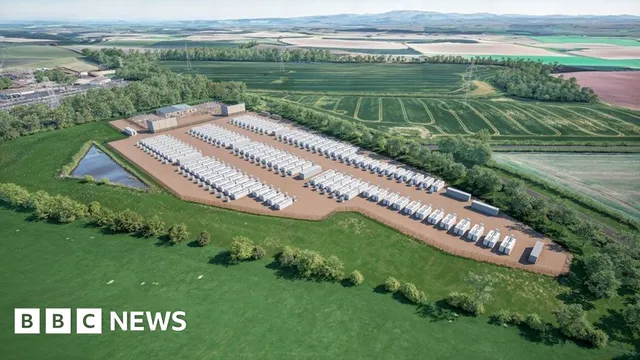
- Matrix Renewables has secured a £245 million funding package for the Eccles battery energy storage project.
- The project aims to meet the energy needs of about 270,000 homes and began construction in November.
- Community concerns have arisen about the industrialization of rural landscapes, prompting engagement with local stakeholders.
Story
In Scotland, a significant financial backing has been obtained for a major battery energy storage system project in the Borders. This £245 million deal was finalized recently to support the construction of the facility located near the Eccles substation, which commenced in November. It reflects not only a commitment to renewable energy storage but also a recognition of the potential benefit to the local economy through job creation during the construction and operational phases. The funding was provided by banking giants including CIBC, MUFG, and NatWest, indicating strong investor confidence in this energy sector. The project is anticipated to have a substantial impact by supplying energy to approximately 270,000 homes when operational. This undertaking is part of a broader trend of battery storage system developments in the region, which has seen a surge in proposals. However, the influx of projects has raised concerns among local residents about the transformation of their predominantly rural landscape into more industrialized settings. In particular, residents in the nearby village of Leitholm have voiced their fears regarding the potential loss of community character and environment. To address these concerns, Matrix Renewables has actively collaborated with local stakeholders to ensure the project aligns with environmental standards and community interests. Agreements have been signed with the local community council to initiate local programs that aim to benefit residents and maintain a sense of community amidst ongoing development. Overall, as the global focus on renewable energy intensifies, projects like the one near Eccles not only aim to fulfill energy needs but also highlight the importance of balancing renewable infrastructure development with community sentiments and environmental stewardship. The future of the Eccles Battery Energy Storage System stands as a hopeful example of sustainable energy solutions providing local economic opportunities while navigating community concerns. It is expected to commence operation next year in partnership with the energy firm EDF.
Context
The deployment of battery storage technologies in rural communities has the potential to transform energy accessibility and reliability. In many rural areas, the existing energy infrastructure is often underdeveloped, leading to frequent power outages and limited access to clean energy sources. Battery storage systems can act as a buffer, capturing excess energy generated from renewable sources, such as solar and wind, and storing it for later use. This ensures a more stable energy supply, reduces dependence on fossil fuels, and aids in the integration of renewable energy sources into the local grid. Moreover, these systems can provide ancillary services that help stabilize the grid and improve energy resilience against extreme weather events or other disruptions. Economic benefits also arise from the implementation of battery storage in rural communities. By investing in local energy storage, communities can reduce energy costs, create job opportunities, and enhance their energy autonomy. Rural areas often experience higher energy prices due to transport costs and lack of competition among suppliers. Battery storage can diminish these costs by allowing communities to store energy when prices are lower and use it during peak demand times. Additionally, as battery technology continues to advance, the cost of batteries has been decreasing, making them more accessible for smaller communities and promoting local investments in energy infrastructure. Community engagement and education are crucial for the successful implementation of battery storage systems. Local stakeholders, including residents, government bodies, and energy companies, must work collaboratively to design and deploy these systems in ways that meet community needs and preferences. This can involve training programs to educate the community on the benefits and operation of battery storage, as well as ongoing support to maintain and monitor the systems. Understanding local energy consumption patterns and involving the community in decision-making processes can ensure that the systems deployed are efficient, effective, and accepted by residents. Challenges remain in the integration of battery storage solutions, particularly regarding the need for regulatory frameworks that accommodate such technologies. Policymakers must establish guidelines that encourage investment, streamline permitting processes, and provide financial incentives for rural battery storage projects. Furthermore, addressing environmental concerns related to battery production and disposal is essential to ensure that the deployment of battery technologies contributes to a sustainable future. Overall, the positive impact of battery storage on rural communities can be substantial, fostering energy independence, promoting economic resilience, and enhancing overall quality of life.


