

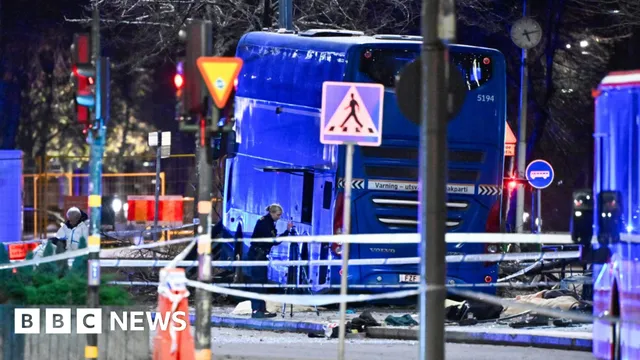
Driver released after deadly bus crash into bus stop in Stockholm
Driver released after deadly bus crash into bus stop in Stockholm
- A double-decker bus crashed into a bus stop in central Stockholm, resulting in several fatalities and injuries.
- Authorities have initiated an investigation into the crash, treating it as involuntary manslaughter.
- The bus driver has been released after questioning, as investigations into the circumstances continue.
Story
On the afternoon of Friday, a bus crash occurred in central Stockholm, Sweden, resulting in multiple fatalities and injuries. The incident was reported at around 3:23 p.m. on Valhallavägen street, close to the Royal Institute of Technology. Eyewitnesses described a scene of chaos as the double-decker bus collided with a bus stop, impacting a queue of people waiting for transportation. Authorities quickly responded with large numbers of police cars and ambulances to assist the injured. Initial reports indicated that three individuals lost their lives, with others sustaining serious injuries. Observations from witnesses reflected the emotional aftermath, with bystanders seeking refuge in nearby shops, crying and distressed by the unfolding tragedy. Immediately upon the incident, police spokesperson Nadya Norton confirmed that a manslaughter investigation had been launched as a precautionary measure, noting that the driver of the bus was arrested but clarified this was routine protocol following such occurrences. There were conflicting reports regarding the presence of passengers; however, authorities later confirmed that the bus was not in service at the time of the collision, and only the driver was aboard. The details surrounding how the crash transpired remained under investigation, with a particular focus on whether it was caused by mechanical failure or driver error. Local government officials, including Prime Minister Ulf Kristersson, expressed their condolences and highlighted their concern for the victims' families and the community impacted by this tragic event. Deputy Prime Minister Ebba Busch also showed support and maintained that the government was closely monitoring the investigation. As rescue teams worked diligently to help those involved, police cordoned off the area to aid in their investigation, emphasizing that no information suggested the crash was intentional. On Saturday, following a thorough questioning related to the crash, authorities released the bus driver from custody. The prosecutor’s office stated that while they were continuing to investigate the circumstances of the incident, no charges had been formally pursued at that stage. The tragic accident drew attention to public safety considerations concerning transportation infrastructure in busy urban areas and prompted discussions about the protocols in place for emergency response and liability in such situations.
Context
Public transportation in Sweden has long been recognized for its efficiency and reliability, but safety measures are paramount to ensuring the well-being of passengers and preventing accidents. The Swedish government has implemented a series of robust safety protocols aimed at minimizing risks within the public transport system. From comprehensive training programs for drivers and operators to the installation of advanced surveillance systems in buses and trains, these initiatives reflect a commitment to maintaining a secure travel environment. Moreover, the regular maintenance of vehicles, adherence to speed regulations, and the use of modern technologies, such as collision avoidance systems, further enhance the safety of public transportation avenues across the country. In addition to vehicle safety, pedestrian and passenger safety is prioritized through the design of transport infrastructure. Many cities in Sweden have invested in clearly marked crosswalks, well-lit waiting areas, and accessible stations that cater to individuals with disabilities. The integration of safety features such as emergency call buttons and information displays about real-time schedules contributes to an effective communication system that keeps passengers informed and secure while waiting for transportation. Furthermore, public transportation authorities actively promote awareness campaigns that educate the public regarding safety protocols, such as staying behind the safety line on platforms and being vigilant about personal belongings. Collaboration between different sectors also plays a crucial role in enhancing transport safety. Local police forces work in tandem with transit authorities to establish a visible presence in public transport hubs. This partnership not only deters potential criminal activity but also provides immediate assistance in case of emergencies. Additionally, the advent of technology has facilitated the use of mobile applications that allow passengers to report incidents, track buses or trains in real-time, and receive immediate updates on safety issues or service disruptions. This digital approach ensures that safety measures are not only reactive but also proactive in managing potential risks. Lastly, the continuous assessment and improvement of safety measures are vital to adapting to changing circumstances within public transportation. By conducting regular safety audits and gathering feedback from passengers and operators alike, Swedish authorities can identify areas for enhancement and innovate accordingly. These steps ensure that the public transport system remains one of the safest in the world, providing a model for other nations to emulate. Through diligent efforts in policy-making, infrastructure development, and community engagement, Sweden upholds the highest standards of safety in its public transportation system, contributing to the overall quality of life and well-being of its citizens.


