

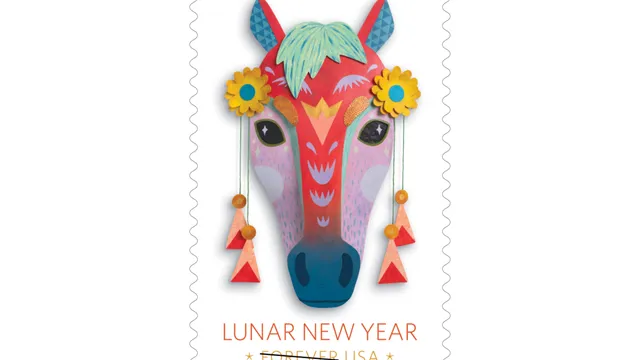
USPS unveils new stamp celebrating Year of the Horse
USPS unveils new stamp celebrating Year of the Horse
- The United States Postal Service is releasing a new stamp to celebrate the Lunar New Year focusing on the Year of the Horse.
- A first-day-of-issue event will occur at the Chinese Community Center in Houston on February 3, 2026.
- This stamp continues the USPS's tradition of honoring cultural celebrations and zodiac animals through its ongoing series.
Story
On February 3, 2026, the United States Postal Service (USPS) will host a first-day-of-issue event for the new Lunar New Year: Year of the Horse Forever stamp at the Chinese Community Center in Houston. The stamp honors the cultural heritage of the Lunar New Year, widely celebrated by various East and Southeast Asian communities in the U.S. The Year of the Horse begins on February 17, 2026, and will last until February 5, 2027. The stamp has been designed by USPS art director Antonio Alcalá, featuring original artwork by Camille Chew, which incorporates traditional paper-cut crafts into a vibrant, three-dimensional horse mask, hand-constructed from various materials and photographed for the final design. This release is the seventh forever stamp in an ongoing series dedicated to the Lunar New Year, which commenced in 2020 and is expected to continue through 2031 as it honors all 12 zodiac animals. Future stamps will feature the Years of the Ram, Monkey, Rooster, Dog, and Boar. In addition to the USPS announcement, Singapore Post also introduced a new set of stamps for the Year of the Horse, set for purchase beginning January 23, 2026. These stamps will include various designs and denominations, aimed at collectors and those celebrating the Lunar New Year.
Context
The Lunar New Year, also known as the Spring Festival, holds profound significance across various Asian cultures, prominently celebrated in countries such as China, Vietnam, Korea, and Singapore. This festival marks the beginning of the lunar calendar and typically falls between January 21 and February 20. The Lunar New Year is not just a cultural event but a time to honor deities and ancestors, bridging the past with the present. Each culture has its unique customs and traditions associated with the celebration, yet they all share common themes of family reunion, gratitude, and renewal. Chinese New Year, for instance, is characterized by family gatherings, exchanging of red envelopes (hongbao), and vibrant dragon and lion dances, which symbolize good luck and prosperity. In Vietnamese culture, the Lunar New Year is called Tet and emphasizes family togetherness, with traditional foods decorated to invite good fortune. Vietnamese families often create altars with offerings to their ancestors, showcasing the respect and reverence for lineage. Similarly, in Korea, the holiday is known as Seollal, with families engaging in ancestral rites (charye), performing traditional games, and preparing tteokguk, a rice cake soup that signifies the arrival of a new year and increased age of its eaters. Each of these cultural expressions underscores the universal importance of family, respect for elders, and hope for the future that defines the Lunar New Year. The Lunar New Year is also a time for reflection and setting intentions for the year ahead. Many people use this occasion to tidy their homes, symbolizing a fresh start and the removal of bad luck. Colorful decorations featuring auspicious symbols such as the dragon, phoenix, and the zodiac animal of the year are commonly displayed. Fireworks and traditional music accompany festive gatherings, creating a joyful atmosphere aimed at scaring off evil spirits. The festival inspires acts of kindness and generosity, with many participating in community service and charitable giving, extending the spirit of celebration beyond personal celebrations. As globalization continues to impact cultural practices, the Lunar New Year has gained recognition worldwide, celebrated not only in Asia but also in various communities globally. This spread reflects the enduring significance of the festival, providing an avenue for cultural exchange and understanding. In contemporary society, young generations often blend traditional customs with modern practices, creating a dynamic expression of their heritage. Ultimately, the Lunar New Year embodies much more than the changing of the calendar; it is a vital celebration of cultural identity, community bonds, and the continual pursuit of renewal and hope for a better future.


