

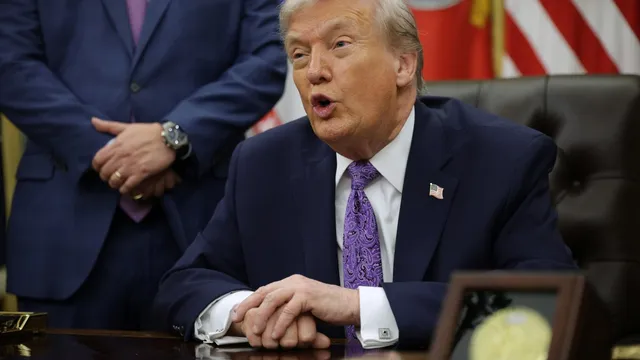
Donald Trump's approval ratings plummet in key Republican states
Donald Trump's approval ratings plummet in key Republican states
- Polling indicates President Trump's approval rating is now negative in both Ohio and Iowa.
- These states are pivotal for GOP electoral strength, especially in the upcoming midterms.
- The decline in approval ratings highlights potential challenges for Trump and the Republican Party.
Story
In December 2025, polling revealed that President Donald Trump's approval rating dropped below water in two Republican-leaning states, Ohio and Iowa. This analysis showed that Trump's net approval rating in both states was -1 percentage point, with 48% approval and 49% disapproval. These findings are significant because Trump previously secured victories in both states during the presidential elections, indicating a shift in voter sentiment. The importance of these states cannot be overstated as they are fundamental to Republican electoral prospects, particularly ahead of the upcoming November 2026 midterms. The Morning Consult polling, which tracks Trump’s approval ratings on a weekly basis, reflected a broader trend of declining support for Trump, even among his traditional Republican base. Overall, findings indicated that Trump's net approval rating remained positive in 22 states at that time, a slight improvement from earlier in his term, when he had a positive rating in 21 states. Despite this, the steep declines in states like Iowa and Ohio suggest an erosion of support that could jeopardize GOP efforts to maintain control of the House of Representatives. Recent polls from other organizations, such as The Economist/YouGov, also indicated significant challenges for Trump. His overall approval rating dropped to 39%, while 58% of respondents expressed disapproval of his job performance. This decline raises concerns as voters' perceptions of the economy have negatively influenced Trump's standing, with a Fox News survey revealing that 76% of voters viewed the economy unfavorably. Trump's handling of various issues, including crime and immigration, has also seen significant downturns in approval, compounding the pressure he faces as he prepares for the upcoming election cycle. Despite the worrying headlines, there remains a core of Republican support for Trump. While his approval ratings faced downturns, a significant portion of Republicans still expressed satisfaction with his performance on several issues. Nevertheless, the decline in his approval ratings raises alarm for the GOP as they consider the potential implications for elections ahead, particularly with many voters expressing dissatisfaction not only with Trump's performance but also with the state of the economy under his administration. This environment signifies a tumultuous period leading into the midterm elections, where maintaining voter support is critical for the Republican Party's future success.
Context
The approval ratings of Donald Trump, the 45th president of the United States, have been a subject of intense scrutiny and analysis throughout his presidency and beyond. His approval ratings have exhibited significant fluctuations influenced by various factors including policy decisions, political events, and public perception during crises. Initially, Trump began his presidency in January 2017 with relatively high ratings, driven by strong Republican support and a robust economy. However, as his term progressed, challenges such as his handling of immigration, health care, and the Russia investigation began to impact his ratings negatively. Throughout his presidency, the media coverage of his administration and personal behavior also played crucial roles in shaping public opinion, contributing to an increasingly polarized political landscape. A critical moment for Trump's approval ratings came during the COVID-19 pandemic which began in early 2020. His administration's response to the health crisis faced significant criticism, which led to a notable decline in his approval ratings. Americans expressed growing dissatisfaction with the handling of the pandemic, and as a result, Trump's ratings fell to some of the lowest levels recorded during his presidency. Despite his attempts to shift focus to the economic recovery and the development of vaccines, the damage to public perception from the handling of the early stages of the pandemic was profound. The approval ratings fluctuated in response to economic indicators and public health guidelines, with Trump experiencing both slight rebounds and further declines throughout 2020. As the 2020 presidential election approached, Trump's approval ratings remained a critical element of analysis for political analysts and strategists. Following his election loss to Joe Biden, approval ratings were largely viewed through the lens of his departure from office and the subsequent events, including the Capitol riot on January 6, 2021. The aftermath of these events led to a significant reevaluation of Trump's overall approval and support, even among some of his core base. After leaving office, there were ongoing discussions about his influence within the Republican Party, which continued to affect his approval ratings as he remained a significant figure in politics. In sum, the history of Donald Trump’s approval ratings is marked by considerable volatility influenced by a complex interplay of political, social, and economic factors. His time in office saw both high and low points, revealing the shifting sentiments of the American electorate. Overall, Trump’s approval ratings not only reflect his performance as president but also serve as indicators of broader societal trends and divisions within the United States. Analysts continue to study these ratings, particularly as they relate to future elections, party dynamics, and the evolving political landscape.


