

Appeals court allows Trump's ballroom construction to proceed despite judge's ruling
Appeals court allows Trump's ballroom construction to proceed despite judge's ruling
- A federal judge sanctioned a halt on Trump's White House ballroom project, emphasizing the lack of congressional approval for such a large undertaking.
- While underground security work can continue, construction of the visible ballroom structure must be stopped until legal procedures are followed.
- The appeals court's recent decision permits construction to resume temporarily, highlighting ongoing disputes over national security claims related to the project.
Story
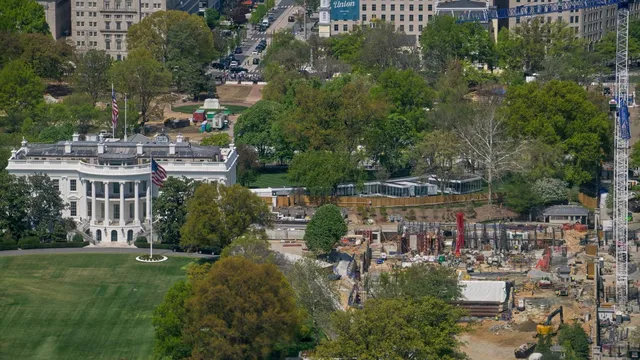
In the United States, a federal judge recently ruled to halt construction of President Donald Trump’s ambitious White House ballroom project, citing legal concerns about the administration's failure to secure congressional approval. U.S. District Judge Richard Leon emphasized that while security work beneath the venue could continue—particularly for underground bunkers and other critical installations—the above-ground ballroom construction violates legal procedures. Trump’s administration claimed the entire project is essential for national security and sought to bypass legal requirements by reclassifying it as a safety measure. This ruling was challenged by the Trump administration who filed an appeal to allow construction to proceed. A U.S. appeals court responded by temporarily granting permission to continue construction, pending further hearings set for June, which has crucial implications for the ongoing legal battle surrounding the project. The ballroom, planned to accommodate significant political events and meetings, was intended to replace the East Wing of the White House, which had been recently demolished to make way for this extensive renovation. The controversies surrounding this massive construction project are exacerbated by associated funding issues, with claims of private contributions contrasted against publicly funded security enhancements. The conflicts have raised questions about authority and legal processes while stirring up considerable public debate regarding the legitimacy of actions taken by the Trump administration in their pursuit of this significant expansion at the White House, which they argue is critical for national security. As the legal arguments unfold, attention continues to center on the future of the ballroom and what it signifies for executive power and construction policy in the U.S.


