

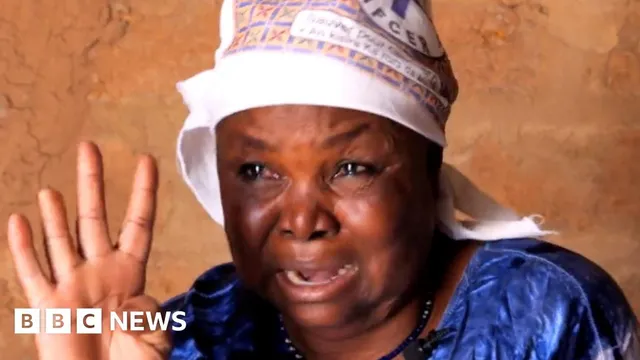
Mother loses four sons to jihadists in Burkina Faso
Mother loses four sons to jihadists in Burkina Faso
- Yameogo Aminata fled to a refugee camp after experiencing a violent attack in her home country.
- She saved the bloodied clothes from the day her four sons were murdered by jihadists.
- The ongoing insurgency in Burkina Faso has resulted in over 10,000 deaths and massive displacements.
Story
In Burkina Faso, ongoing Islamist insurgencies have led to significant human suffering and mass displacements. Yameogo Aminata, a 57-year-old mother, recently recounted the harrowing experience of losing her four sons to jihadists in her home country. This tragic event forced her to flee to a refugee camp in neighboring Ivory Coast in 2023, where she now lives in constant distress, haunted by memories of the attack and the brutal murder of her children. During the violent raids, Aminata bravely attempted to defend her family with a knife but was overpowered by the attackers. In the ensuing chaos, she suffered serious injuries and was separated from her daughter, who has been missing ever since. Yameogo describes her harrowing experience in a camp near the Burkina Faso border, where she and thousands of other refugees have sought safety from the escalating violence back home. The camp, established by the UN and Ivorian authorities, is now home to over 80,000 displaced individuals from Burkina Faso as the insurgency grips neighboring countries. As violence escalates in Burkina Faso, leading to military takeovers in both Burkina Faso and neighboring nations, civilians continue to bear the brunt of the conflict. The dire situation has led to alarming death tolls and widespread displacement, with at least 10,000 fatalities reported. Refugees fleeing from Mali have also faced perilous journeys to escape the violence, indicating a broader regional crisis fueled by extremist groups and instability. Moreover, humanitarian resources are under severe strain as the UN Development Programme has highlighted. Despite the efforts made to assist refugees in camps, the challenges of providing adequate aid are immense. The ongoing conflict and persistent fears of violence have created a complex situation for those, like Aminata, who have lost everything yet remain hopeful amidst despair. The conflict in the Sahel region not only poses a threat to the safety and livelihoods of those living there but also challenges the international community's ability to respond effectively to a growing humanitarian crisis.
Context
The humanitarian crisis in Burkina Faso has reached alarming levels, prompting urgent responses from international organizations, including the United Nations. The crisis is characterized by a severe deterioration in the living conditions of millions of people due to ongoing violence from non-state armed groups, which has led to widespread displacement and significant food insecurity. According to recent statistics, over 3 million people in the country require urgent humanitarian assistance, with over 1.5 million people forcibly displaced from their homes. The UN has recognized the multifaceted challenges in addressing the crisis, which includes providing shelter, food, healthcare, and protection for vulnerable populations, especially women and children who are disproportionately affected by the violence and instability. The UN response has also emphasized the need for national and international collaboration to address the underlying causes of the crisis effectively. In response to the growing humanitarian needs, the United Nations has coordinated efforts with various humanitarian agencies to deliver essential aid. Programs have been set up to distribute food assistance, provide medical support, and ensure access to clean drinking water and sanitation facilities. Furthermore, the UN has been engaged in advocacy efforts to gather funding and resources to support humanitarian operations, launching appeals aimed at attracting contributions from member states and other partners. These initiatives are crucial to alleviating the impacts on the ground, ensuring that displaced families receive the necessary assistance to survive during these dire conditions. Moreover, the UN has focused on enabling local actors and community-based organizations to participate actively in the response, enhancing the capacity to deliver aid in a context where access is often limited due to insecurity. In addition to immediate relief efforts, the UN has called for a comprehensive approach to address the root causes of the crisis. This includes encouraging dialogue among local communities and investing in development initiatives aimed at fostering stability and resilience. The situation in Burkina Faso requires not only humanitarian responses but also long-term solutions to ensure that communities can rebuild and recover. The UN has highlighted the importance of restoring basic services and infrastructure, promoting education, and facilitating livelihoods support to empower affected populations. Addressing these challenges is vital to achieving a sustainable resolution to the crisis, and the UN is committed to working alongside the Burkinabe government and other stakeholders to strengthen peacebuilding and conflict resolution mechanisms. As the crisis unfolds, the international community must remain vigilant and responsive to the evolving needs in Burkina Faso. The UN's efforts are centered on ensuring that aid reaches the most affected populations and that their voices are heard in the planning and implementation of humanitarian actions. Although the challenges are immense, the commitment to uphold human rights and humanitarian principles remains a guiding force in these endeavors. Continued support from the global community is crucial to reinforce these efforts and to safeguard the dignity of millions of Burkinabe citizens facing extraordinary hardships.


