

Ford faces $11.1 billion loss as EV demand falters
Ford faces $11.1 billion loss as EV demand falters
- Ford reported its largest quarterly loss since 2008, totaling $11.1 billion.
- Losses in the electric vehicle division accounted for $4.8 billion, and the company expects ongoing losses in that sector through 2026.
- CEO Jim Farley stated that the company is adjusting strategies based on customer demand as a response to these financial challenges.
Story
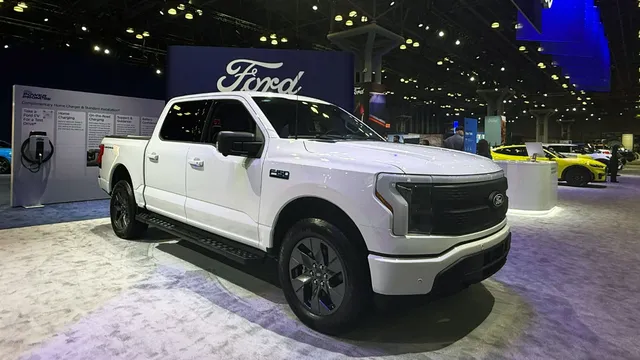
In the fourth quarter of 2022, Ford Motor Company experienced a significant financial setback, reporting a net loss of $11.1 billion. The key factors contributing to this loss were heavy financial drain from the electric vehicle (EV) segment, which alone accounted for losses of $4.8 billion, compounded by unexpected tariff costs and a fire at an aluminum supplier. This marked Ford's largest quarterly loss since 2008, highlighting the challenges faced by traditional automakers as they navigate a rapidly changing market landscape focused on electrification. Ford had previously disclosed substantial writedowns on its EV endeavors, prompting a realignment of strategies to address the declining consumer interest in EVs and the shifting federal subsidies that once offered support to the sector. CEO Jim Farley addressed the financial situation during the company's earnings call, indicating that the wants of consumers were now clearer, stating, "The customer has spoken." In contrast to earlier forecasts, Ford now anticipates losses in its EV sector will continue through 2026, with projections estimating a range of $4 billion to $4.5 billion in losses for that year alone. The company also identified a more substantial financial toll from tariffs than initially predicted, losing an additional $900 million due to changes in tariff relief guidelines following decisions made by the Trump administration. Ford's total tariff expenses for last year neared $2 billion, with similar costs anticipated for the current year. Supply chain issues owing to a fire at an aluminum plant further compounded the automaker's operational difficulties. This incident disrupted their access to crucial aluminum supplies, which are significant for vehicle manufacturing and are not expected to resume full operations until late in 2023. In an effort to curtail losses and readjust resources, Ford announced its strategic shift toward the production of hybrid and more affordable EVs, beginning with their plans for a new $30,000 EV platform and an electric pickup set to be introduced next year. This pivot towards profitability involves reducing production of the electric F-150 Lightning while reinforcing investment in traditionally profitable models like trucks and vans. In summary, Ford is fortifying its focus on areas that promise better margins while adjusting its EV strategies. This transformative phase in Ford's approach underscores the mounting pressures from fluctuating consumer demand and evolving industry standards, forcing them to rethink their trajectory in an increasingly polarizing automotive landscape. Analysts will be observing Ford's path forward closely as the firm attempts to stabilize its financial foundation amid these challenging economic conditions.
Context
The impact of tariffs on Ford Motor Company has been an evolving issue that greatly influences its operational strategies, production costs, and market competitiveness. Tariffs, which are taxes imposed on imported goods, can significantly affect the automotive industry as it relies heavily on a global supply chain for both parts and finished vehicles. Ford, as one of the largest automobile manufacturers in the United States, is particularly sensitive to changes in tariff policies, especially those that affect steel, aluminum, and auto parts, which are crucial components for manufacturing vehicles. In recent years, the introduction of tariffs has led to increased costs for Ford, which, in turn, may impact consumer pricing, profit margins, and the overall financial health of the company. The effects of tariffs are not uniform and can vary based on several factors including the extent of the tariff, the material or component affected, and the geographic origin of the products involved. For Ford, tariffs on imported steel and aluminum have escalated operational costs due to the increased prices of these essential materials. As a response, Ford has been dealing with higher production costs and is faced with the challenge of passing these costs onto consumers without diminishing demand for their vehicles. This strategic balancing act is critical as Ford continues to navigate consumer preferences in the automotive market, which has been transitioning towards more affordable and electric vehicles. Additionally, tariffs can affect Ford's competitive positioning in the global market. As global automakers compete for market share, any increase in production costs due to tariffs can place Ford at a disadvantage compared to foreign competitors who may not be subjected to the same tariffs. This has led Ford to consider various strategies, from localized production to adjustments in sourcing materials, in order to remain competitive. Moreover, the company's ongoing efforts to invest in domestic manufacturing and innovation may mitigate some of the adverse effects of tariffs while enhancing its reputation as a domestic producer during a time when many consumers are prioritizing local sourcing. In recent assessments, it has become clear that the continuation or escalation of tariffs could result in long-term strategic shifts for Ford. The automotive industry thrives on predictable regulatory environments, and changes in tariff policy can lead to uncertainty that inhibits planning and investment. For Ford, the evolving tariff landscape necessitates agility in its supply chain management and strategic decision-making capabilities. As they adapt to these challenges, the overarching goal remains to sustain profitability, protect market share, and enhance product offerings that align with consumer trends, ensuring the company remains a leader in the automotive sector amidst turbulent trade dynamics.


