

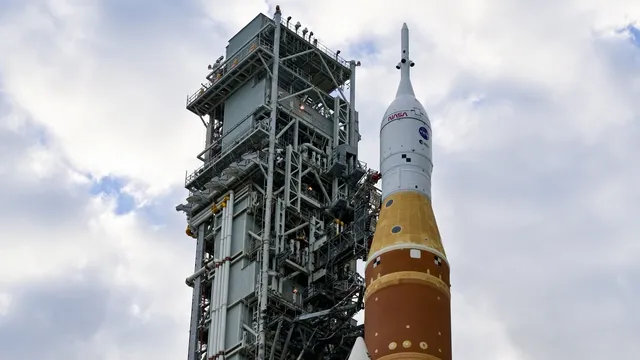
NASA prepares to send astronauts around the moon for the first time in 50 years
NASA prepares to send astronauts around the moon for the first time in 50 years
- NASA is planning to launch the Artemis II mission involving four crew members to orbit the moon.
- The launch could occur as early as March 6, 2026, following successful testing after a previous hydrogen leak.
- This mission represents a significant step in human space exploration, being the first trip to the moon since 1972.
Story
NASA is gearing up for a significant milestone in space exploration with its Artemis II mission, which aims to send astronauts around the moon. Scheduled for launch as early as March 6, 2026, the mission will involve four crew members who will embark on a journey to orbit the moon and return to Earth. This mission marks the first time since the Apollo 17 mission in 1972 that humans will travel to the lunar vicinity, although it does not include a lunar landing. The preparations for this mission have included extensive testing of a new rocket and spacecraft designed for deep space travel. The crew’s mission serves as a crucial stepping stone for NASA, symbolizing America's renewed commitment to lunar exploration. Jared Isaacman, an administrator at NASA, emphasized that this mission represents a big step toward returning humanity to the lunar environment, highlighting the importance of these endeavors for future exploration beyond the moon. The Artemis II mission is part of NASA's broader plans to establish a sustainable presence on the moon and develop new technologies for missions to Mars. Recent testing procedures have been extensive, aiming to ensure safety and reliability for the launch. Earlier this month, a rehearsal for the launch faced a setback due to a hydrogen leak. However, a subsequent test was completed successfully after technicians addressed the issue by replacing seals, allowing engineers to conduct a full 50-hour rehearsal that included fueling the rocket with approximately 730,000 gallons of propellant. The Artemis program is not just about returning to the Moon, but also lays the foundation for NASA’s long-term vision of a Lunar Gateway. The Gateway aims to provide a base for astronauts to live and work in lunar orbit and prepare for future scientific missions to Mars. As NASA moves closer to its launch date, the excitement builds for what the Artemis II mission will mean for human space exploration.
Context
The history of NASA lunar missions is a rich narrative that begins with the agency's establishment in 1958 and has evolved through several critical phases, highlighting humankind's desire to explore the moon. The most well-known missions occurred during the Apollo program, which aimed to land humans on the lunar surface and safely return them to Earth. The Apollo 11 mission in July 1969 marked a significant milestone, as astronauts Neil Armstrong and Buzz Aldrin became the first humans to walk on the moon, famously declaring, "That's one small step for man, one giant leap for mankind." This mission underscored not only technological advancements but also the intense geopolitical competition of the Cold War era, as the United States sought to demonstrate its superiority over the Soviet Union in space exploration. Following Apollo 11, NASA conducted five more successful Apollo lunar landing missions, with Apollo 12, 14, 15, 16, and 17, each contributing valuable scientific data and lunar samples. These missions helped to increase our understanding of the Moon's geology, providing insights into its formation and the history of the solar system. Apollo 15, for instance, introduced the use of a Lunar Roving Vehicle, expanding the exploration range on the Moon's surface and further enhancing scientific research capabilities. The program concluded with Apollo 17 in December 1972, the last time humans set foot on the lunar surface until plans for future missions were initiated. In the years following the Apollo program, NASA shifted its focus to other aspects of space exploration, although the Moon remained a subject of interest through various robotic missions, such as the Lunar Reconnaissance Orbiter (LRO), launched in 2009. The LRO has provided extensive data about the Moon's surface and has played a crucial role in identifying potential landing sites for future missions. Furthermore, the agency's scientific research continued through partnerships with international space agencies and universities, contributing to a deeper understanding of the Moon's resources, such as water deposits, which are essential for future long-term lunar exploration. As of 2026, NASA's efforts toward returning humans to the Moon are embodied in the Artemis program, which aims to establish a sustainable human presence on the lunar surface by the end of this decade. The Artemis missions are not only intended to facilitate scientific discovery but also to prepare for future missions to Mars. This new era of lunar exploration seeks to advance human knowledge and capabilities beyond Earth while forging international collaborations to inspire new generations of scientists and engineers. The historical context and the drive behind lunar missions reflect humanity's enduring quest for exploration and the desire to extend our reach beyond our planet.


