

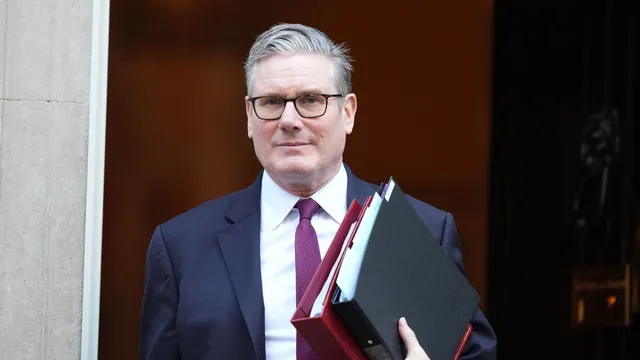
Starmer holds urgent COBRA meeting amid economic crisis from Iran war
Starmer holds urgent COBRA meeting amid economic crisis from Iran war
- The UK Prime Minister, Sir Keir Starmer, convened an emergency COBRA meeting to address the economic fallout from the Iran war.
- Significant rises in energy prices and inflation forecasts have prompted discussions on capping fuel retailer profits.
- The ongoing conflict and its impact on the Strait of Hormuz continue to disrupt global oil supplies, indicating a need for immediate action.
Story
In the United Kingdom, Prime Minister Sir Keir Starmer convened an emergency COBRA meeting on Monday to tackle the financial repercussions of the escalating conflict in Iran. This meeting was called in response to rapidly climbing energy costs and inflation due to the war, which has severely disrupted global oil supplies, notably through the vital shipping lane of the Strait of Hormuz. Economists have raised concerns that inflation rates might soar to 5% this year, a significant rise from previous predictions that anticipated a return to the 2% target before the outbreak of hostilities. Throughout the past weeks, the situation has intensified, with notable predictions from forecasters indicating that household energy price caps may surge from £1,641 to £1,973 annually, illustrating an alarming rise in energy bills spurred by the conflict. Starmer's meetings aim to explore strategies to mitigate these rising costs and the resulting impacts on everyday life for citizens, including discussions about potential government intervention such as capping profits for fuel retailers. Furthermore, the Prime Minister's discussions post-meeting with US President Donald Trump highlighted the international dimension of the crisis, with both leaders agreeing on the necessity of reopening the Strait of Hormuz to stabilize the global energy market. This strategic waterway is essential for oil supplies, and its closure due to Iranian threats has resulted in significant price fluctuations and market volatility. Financial markets in the UK and Europe registered a notable downturn corresponding with these events, reflecting investor concerns surrounding the conflict. As the UK government scrambles to respond to the ongoing situation, Starmer emphasized the importance of utilizing all available levers to combat cost-of-living pressures emerging from the war. The urgency of the COBRA meeting reflects broader anxiety regarding energy security, business operations, and the socio-economic well-being of citizens amid the turmoil in the Middle East. With rising concerns over potential profiteering amid the crisis, government officials are working to avoid public panic while ensuring that citizens feel supported and informed during this challenging period.
Context
The economic measures related to fuel prices in the UK have been a focal point for the government as it seeks to balance consumer protection with the imperatives of economic stability and environmental sustainability. In recent years, fuel prices have fluctuated significantly due to various factors including global oil market dynamics, geopolitical tensions, and changes in taxation policies. Understanding these influences is crucial for evaluating the effectiveness of government measures aimed at managing fuel price volatility and its impact on the economy and consumers. The UK government has implemented several strategies in response to rising fuel prices, including direct financial assistance to low-income families and investments in renewable energy sources. These measures are aimed at mitigating the financial burden on consumers while encouraging a transition to more sustainable energy solutions. One notable approach has been the introduction of fuel duty freezes, which have been adopted as a means to keep fuel prices in check. However, such measures also raise concerns about long-term fiscal sustainability and environmental impacts as they may inadvertently encourage continued fossil fuel dependence. Additionally, the government has explored the introduction of alternative fuel initiatives, aiming to diversify the energy mix in the transportation sector. This includes incentives for electric vehicles (EVs) and the development of infrastructure for charging stations. By promoting the adoption of EVs, the government seeks to reduce dependence on traditional fuel sources, thus contributing to a reduction in carbon emissions in line with climate change goals. The balance between immediate consumer relief measures and long-term environmental objectives remains a complex challenge for policymakers. As fuel prices continue to be a contentious issue, ongoing research and public engagement are essential for the government to fine-tune its approach. Understanding consumer behavior in relation to fuel consumption patterns and the impact of pricing policy on broader economic indicators will be crucial for future policy success. As the UK navigates these challenges, the effectiveness of its economic measures on fuel prices will ultimately depend on the ability to adapt to changing dynamics in the energy market and the broader commitments to a sustainable economic future.


