

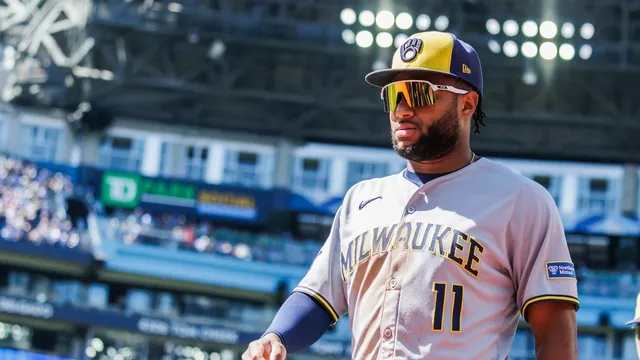
Milwaukee Brewers lose contact with players amid US military strikes in Venezuela
Milwaukee Brewers lose contact with players amid US military strikes in Venezuela
- The U.S. military conducted strikes in Venezuela, capturing President Nicolás Maduro, early Saturday morning.
- The Milwaukee Brewers expressed concern for their players in Venezuela, citing a lack of information.
- Current military actions have heightened fears and uncertainties regarding the safety of individuals in the region.
Story
Venezuela experienced a significant military operation by the U.S. military that occurred on Saturday morning. The strikes targeted alleged drug-smuggling boats and resulted in the capture of Venezuelan President Nicolás Maduro and his wife. The operation, which involved U.S. Army helicopters, caused widespread explosions in Caracas, alarming residents in the capital and surrounding states including Miranda, Aragua, and La Guaira. As a consequence, local airports were shut down, complicating the situation further. The Milwaukee Brewers organization is especially concerned as they currently have several players in Venezuela, including Jackson Chourio, Andruw Monasterio, and Jeferson Quero. Their president of baseball operations, Matt Arnold, stated that the team is trying to gather information regarding the players but is largely in the dark on their current status. The Venezuelan government has condemned the U.S. actions, labelling them as imperial aggression aimed at exploiting the nation’s resources and violating its sovereignty. The situation has raised fears not only for the wellbeing of the players but also highlights the broader implications of U.S. involvement in Venezuela’s political struggle. Given the closure of airports and ongoing military actions, communication with local residents, let alone international connections, has become incredibly difficult, leaving families and organizations in a state of uncertainty.
Context
The history of U.S. intervention in Venezuela is marked by a series of political, economic, and military actions that have significantly influenced the country's trajectory since the early 20th century. The roots of U.S. involvement can be traced back to its strategic interests in the region, particularly after Venezuela became a significant oil producer in the 1920s. The United States sought to protect its investments and maintain political stability, leading to a series of diplomatic maneuvers and covert operations aimed at supporting friendly regimes and undermining those perceived as hostile. The most notable early intervention occurred in the 1900s when the U.S. intervened to settle a dispute between Venezuela and European creditors, reinforcing its interests in the Caribbean and establishing the precedent for future interventions in Latin America under the guise of protecting democracy and stability. The Cold War era further complicated U.S. relations with Venezuela as fears of communism spread throughout the region. The U.S. supported the 1958 overthrow of the Marcos Pérez Jiménez dictatorship, which had initially enjoyed American support. Following this, the U.S. faced a complex relationship with Venezuelan governments, particularly with policies around oil nationalization in the 1970s. This led to tensions, with the U.S. perceiving the nationalization moves as a threat to its economic interests. Subsequently, the political landscape continued to change as leftist movements gained traction, leading to the rise of Hugo Chávez in the late 1990s. Chávez's government was characterized by its anti-U.S. rhetoric and redistribution policies, which further strained relations between the two nations. The post-2000s era saw U.S. intervention take a more active and controversial form as the Chávez government increasingly faced domestic challenges and international isolation. In 2002, an unsuccessful coup attempt against Chávez, with alleged U.S. support, intensified hostilities between Venezuela and the U.S. Subsequently, with the election of Nicolás Maduro following Chávez’s death in 2013, the situation further deteriorated. The U.S. condemned the alleged erosion of democratic norms in Venezuela while imposing economic sanctions aimed at curtailing the Maduro government's power. These actions sparked debates over the efficacy and ethical implications of U.S. foreign policy, as well as discussions on the extent of its responsibility in Venezuela's current humanitarian crisis. In recent years, the U.S. has increased its support for opposition groups seeking to overthrow the Maduro regime, recognizing Juan Guaidó as the interim president in 2019. This escalated tensions and prompted responses from allies of the Maduro government, most notably Russia and China, complicating the geopolitical landscape. The situation remains volatile, with an ongoing humanitarian crisis in Venezuela exacerbated by economic mismanagement, U.S. sanctions, and the COVID-19 pandemic. While the U.S. continues to call for democratic reforms and humanitarian support, its long history of intervention and involvement raises critical questions about its role in fostering genuine change in Venezuela as opposed to prioritizing its strategic interests in the region.


