

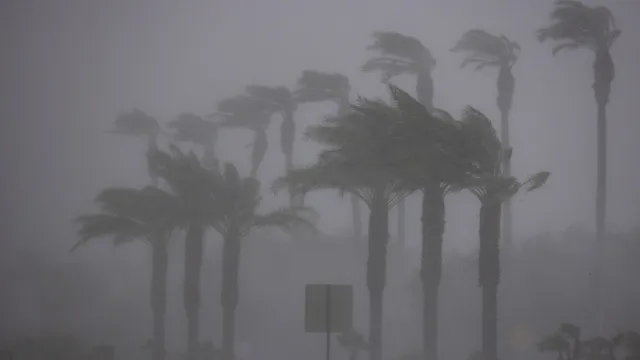
El Niño could bring significant weather changes this summer
El Niño could bring significant weather changes this summer
- NOAA predicts a 61% chance of El Niño developing between May and July 2026.
- An El Niño pattern could lead to increased rainfall in the Midwest and drought in other regions.
- Forecasters emphasize the need for preparedness due to the potential impacts on weather and agriculture.
Story
In the United States, the Climate Prediction Center has reported a significant likelihood of El Niño developing within the next few months, specifically between May and July 2026. This climatic phenomenon is noteworthy as it may evolve into a rare and intense 'super' El Niño, which has broad implications for weather patterns and climate conditions in various regions. During previous instances of El Niño, the western U.S. has experienced hotter and more humid summer conditions, while the eastern regions have seen a reduction in prolonged heat. Notably, weather forecasting experts, including those from AccuWeather, have emphasized the potential consequences of this event. There is a strong historical context that accompanies such weather patterns, as El Niño conditions can directly influence rainfall, with typical patterns showing an increase in precipitation across the Midwest and portions of the West. This is expected to lead to favorable conditions for agricultural production in areas like the Corn Belt. Outcomes from El Niño also extend beyond the U.S., indicating a disrupted climate on a global scale. Reports suggest increasing drought risks in regions such as Central Africa, and parts of Australia and India may face challenges from weaker monsoon rains. This variability in climate can lead to significant impacts on agricultural yields and water resources, emphasizing the need for preparedness in affected areas. Experts highlight that the unpredictability of seasonal climate forecasting becomes more pronounced during the 'spring predictability barrier,' with average forecasts showing increased uncertainty. As we transition closer to the summer months, monitoring these changes will be imperative for timely preparation and response strategies.
Context
El Niño, a climate pattern characterized by the warming of ocean surface waters in the central and eastern Pacific, has significant historical impacts on global weather patterns, ecosystems, and human activities. The phenomenon typically occurs every two to seven years, with varying intensity, and influences weather conditions around the globe. For instance, during strong El Niño events, regions such as the western coasts of South America experience heavy rainfall and flooding, while countries in Southeast Asia may suffer from droughts and wildfires. These changes are attributed to the alteration of atmospheric circulation patterns, which disrupt normal climatic conditions and create widespread socio-economic and environmental consequences. Historically, the effects of El Niño have been observed since the 19th century and documented in various studies. Notable occurrences, such as the El Niño of 1982-1983, led to unprecedented weather extremes, including devastating flooding in Peru, which caused significant damage to infrastructure, agriculture, and fisheries. Conversely, this event triggered severe drought conditions in Indonesia and the Philippines, exacerbating food security issues. The 1997-1998 El Niño was one of the strongest recorded, leading to global temperature increases and an array of climatic anomalies, with impacts that reverberated from agriculture to human health. During these events, disease outbreaks often surged due to increased rain and humidity that create favorable conditions for pathogens. Moreover, the influence of El Niño on weather patterns is not confined to the immediate vicinity of the Pacific Ocean. Its impacts can be felt as far away as North America, where winters tend to be warmer in the southern U.S. and wetter in the northern regions. This spatial extension of El Niño's effects complicates long-term weather forecasting and highlights the interconnectedness of global climatic systems. Agricultural sectors, particularly in the Americas and Africa, are sensitive to these changes, as fluctuating weather patterns can significantly affect crop yield and livestock production, potentially leading to economic instability. Understanding the historical impacts of El Niño is crucial for preparing for future events and mitigating their adverse effects. Research into past occurrences facilitates the development of predictive models which can help in planning and response strategies for regions vulnerable to extreme weather. By analyzing data from previous El Niño years, governments and organizations can enhance their resilience to the impending changes that this climate phenomenon brings, ultimately aiding in the protection of lives, livelihoods, and the environment on a global scale.


