

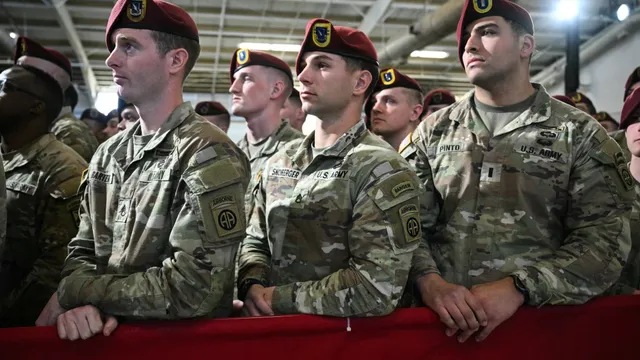
US men will be automatically registered for military draft eligibility
US men will be automatically registered for military draft eligibility
- Eligible men aged 18 to 25 will be automatically registered into the military draft pool by December 2026.
- This new rule shifts the responsibility of registration from individuals to the Selective Service System.
- The automatic registration aims to boost compliance and address declining registration rates.
Story
In an effort to enhance compliance with military registration laws, the United States has proposed a new rule that will change how young men register for the military draft. This initiative, which affects males aged 18 to 25, will shift the responsibility from individual self-registration to automatic registration conducted by the Selective Service System. This change was spurred by Congress's approval of legislation within the fiscal 2026 National Defense Authorization Act, marking a significant update to the military registration process that has been in place for decades. The proposed rule was submitted for review on March 30, and the Selective Service System plans to implement it by December 2026. This development not only aims to streamline the registration process but also addresses declining registration rates among eligible individuals, which have historically posed challenges for compliance with the law. The current requirement mandates that all male U.S. citizens and immigrants self-register within 30 days of their 18th birthday. The transition to automatic registration is seen as a way to integrate federal data sources to efficiently identify and register eligible young men without relying on individual initiative. This move comes amidst changing military and political dynamics, including a two-week ceasefire with Iran announced by President Donald Trump. However, it also raises concerns among certain segments of the population regarding the potential reintroduction of a military draft. Historically, the U.S. has implemented conscription during times of war or national crisis, with the last draft occurring during the Vietnam War. Since then, the armed forces have transitioned to an all-volunteer system, although conscription remains a contingency measure. Officials acknowledge that these legislative changes may incite fears of an impending military draft should international conflicts escalate, such as tensions with Iran. Defense Secretary Pete Hegseth has emphasized the need for preparedness, stating that options regarding conscription may remain available depending on future circumstances. Overall, the automatic registration proposal reflects a shift in both the administrative process for the Selective Service and a broader consideration of military preparedness in response to evolving national security challenges.
Context
The history of the military draft in the United States is a complex and evolving subject that reflects the nation’s responses to various wars and military needs. The concept of conscription dates back to the early days of the Republic, with the first national draft established by the Militia Act of 1792, although it was never fully implemented. The first true draft occurred during the Civil War in 1863, when the Enrollment Act was enacted to meet the Union Army's demand for troop reinforcements. This draft faced significant resistance, leading to protests and riots, notably the New York City Draft Riots of 1863, which underscored the contentious nature of conscription in American society, particularly among those affected by socioeconomic disparities and marginalized communities who bore the brunt of military service. After the Civil War, the draft fell into disuse for several decades, as the military was largely volunteer-based. However, the onset of World War I prompted a reevaluation of this system, leading to the Selective Service Act of 1917, which reinstated the draft. This act required young men to register for military service, and over 24 million men registered, leading to approximately 3 million being drafted into service. The implementation was relatively smooth, with widespread public support largely due to patriotism and the urgent need to support the Allies in the war. The experience of the draft during this time also initiated various debates over equity and fairness in the selection process, as certain groups were often exempted. World War II saw the largest conscription effort in U.S. history, with the Selective Training and Service Act of 1940 establishing the first peacetime draft. This effort mobilized over 10 million men into service, underlining the draft’s critical role in the war effort. The continued success of the draft system solidified it as a permanent fixture in U.S. military policy, leading to the establishment of the Selective Service System, which organized the drafting process and ensured compliance with federal guidelines. Following the war, the draft remained in effect, feeding U.S. involvement in conflicts such as the Korean War and the Vietnam War, during which conscription became increasingly controversial due to the differing societal views regarding U.S. involvement in Vietnam and the perceived inequalities of the draft system. The Vietnam War marked a pivotal turning point in the history of the draft, as growing anti-war sentiment led to widespread protests against conscription, culminating in significant changes. The draft was officially ended in 1973, transitioning the military to an all-volunteer force, but the legacy of the draft continues to influence contemporary discussions about military service and national obligation. The establishment of the Selective Service System remains, requiring young men to register, serving as a reminder that the nation retains the infrastructure to reinstate conscription if necessary. Today, the discourse around the draft includes debates on equity, national service, and military recruitment strategies to meet contemporary security challenges.


