
technology
controversial
update

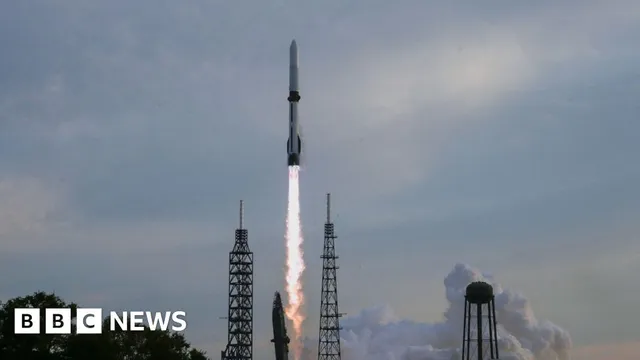
Blue Origin's rocket mishap grounds operations after failed satellite launch

Apr 20, 2026, 9:56 PM10
(Update: Apr 20, 2026, 9:56 PM)
American aerospace developer and manufacturer
American multinational technology company
American business magnate (born 1964)

Blue Origin's rocket mishap grounds operations after failed satellite launch

  • Blue Origin's New Glenn rocket failed to launch AST SpaceMobile's satellite on April 20, 2026.
  • The Federal Aviation Administration ordered an investigation into the mishap and will oversee Blue Origin's response.
  • The incident highlights challenges in the satellite launch sector as competitors like SpaceX expand operations.
Share opinion
Tip: Add insight, not just a reaction
1

Story

On Sunday, April 20, 2026, Blue Origin, an aerospace manufacturer and spaceflight services company founded by Amazon's Jeff Bezos, faced significant setbacks after its New Glenn rocket failed to successfully launch a satellite for AST SpaceMobile. The rocket, intended to place the satellite into low Earth orbit for mobile phone connectivity, could not achieve the necessary altitude, resulting in the mission being deemed unsuccessful. As a consequence, the Federal Aviation Administration (FAA) stepped in to investigate the mishap, mandating that Blue Origin conduct a thorough analysis of the incident and report back with findings and corrective actions. Chief Executive Officer Dave Limp confirmed that the root cause of the failed launch was a deficiency in "sufficient thrust" from one of the rocket's engines. This failure has already impacted AST SpaceMobile, whose share prices dipped by over 6% following the unsuccessful mission. Furthermore, Limp emphasized that their team did not accomplish the intended delivery of the satellite, acknowledging the repercussions of this failure on their customer and their operational expectations for the mission. In light of the mishap, Blue Origin will conduct a comprehensive investigation under ongoing oversight from the FAA, which will be involved at every step before approving any final report from Blue Origin. The FAA's requirement for a mishap investigation illustrates the regulatory body’s commitment to safety and accountability in commercial spaceflight. The determination of when Blue Origin can resume launches will depend heavily on the investigation's findings and the corrective measures implemented by the company. This incident marks only the third flight for the New Glenn rocket, highlighting the challenges that new space technologies face as they seek to become operational. Blue Origin had initially planned for a dozen launches within the year, aiming to establish a robust presence in the burgeoning low Earth orbit satellite market, which is increasingly competitive as companies like Elon Musk's SpaceX with its Starlink project already operate a significant number of satellites in the same domain. The loss of the satellite, which will be covered by insurance, underscores the risks associated with satellite launches and the complexities involved in deploying such technologies for global internet connectivity.

Context

The Federal Aviation Administration (FAA) is responsible for regulating commercial spaceflight activities in the United States, ensuring safety and compliance for both operators and the general public. Since the inception of commercial spaceflight, the FAA has developed a comprehensive framework of regulations aimed at managing risks associated with space launch and reentry operations. These safety regulations are crucial in addressing the unique challenges posed by spaceflights, including but not limited to the design of launch vehicles, operational practices, and emergency response strategies. The FAA's oversight begins during the pre-launch phase, where operators must submit safety review applications, showcasing their risk management plans and safety measures designed to mitigate potential hazards during flight and on the ground. The process ensures that each spaceflight is evaluated on a case-by-case basis, aligned with national safety standards and rigorous assessments of environmental impacts. Moreover, the FAA works in collaboration with the National Aeronautics and Space Administration (NASA) and the Department of Defense (DoD) to ensure a cohesive approach to launch safety and operational integrity, especially in areas where commercial and government space initiatives intersect. In the event of an incident during a commercial spaceflight, the response protocol involves immediate reporting and investigation processes defined by FAA regulations. Operators are required to notify the FAA within a specific timeframe, allowing for swift action in assessing the incident's cause and determining necessary corrections to prevent future occurrences. The FAA also conducts thorough investigations to understand the underlying factors contributing to accidents, enabling lessons learned to be disseminated industry-wide. This regulatory framework aims to not only handle incidents after they occur but also to foster a culture of continuous improvement in safety practices among commercial spaceflight operators. The transparency and accountability mandated by the FAA provide critical insights that enhance operational standards across the burgeoning space sector. The challenges of regulating commercial spaceflight incidents are compounded by the rapid advancements in space technology and the increasing frequency of private space launches. The FAA faces the task of adapting its regulations to keep pace with innovation while ensuring the public's safety remains paramount. As more companies enter the commercial space market, the FAA's role becomes even more crucial in establishing uniform safety protocols and regulatory guidelines that can accommodate a diverse range of launch vehicles and missions. The success of these regulations will depend on ongoing collaboration among industry stakeholders, governmental entities, and international regulatory bodies to harmonize safety practices and facilitate a sustainable commercial space environment. In conclusion, the FAA's regulatory approach to commercial spaceflight incidents reflects a proactive stance in safeguarding lives and property, balancing the need for innovation with the imperatives of public safety. As commercial space endeavors continue to evolve, the FAA remains at the forefront of ensuring that safety standards are not only maintained but also enhanced to accommodate emerging technologies and operational practices. The continuous development of a robust safety culture within the industry is essential, as it will ultimately contribute to the long-term viability of commercial space travel and the overall success of the sector.

2026 All rights reserved
