

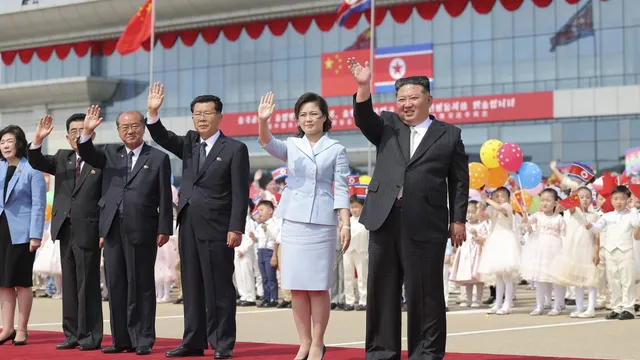
Xi Jinping strengthens ties with North Korea amid succession speculation
Xi Jinping strengthens ties with North Korea amid succession speculation
- Xi Jinping's visit to North Korea in June 2026 aimed to strengthen the friendship treaty and strategic cooperation.
- The visit coincided with the 65th anniversary of the North Korea-China Treaty, highlighting historical ties.
- Media focus on Kim Ju Ae distracts from the critical issues of military cooperation and regional security.
Story
In June 2026, Chinese President Xi Jinping made a significant visit to North Korea, coinciding with the 65th anniversary of the North Korea-China Treaty of Friendship, Cooperation and Mutual Assistance. This visit was marked by elaborate ceremonies, including a 21-gun salute and a warm welcome from Kim Jong Un and his wife. The trip aimed to reinforce the strategic relationship between the two nations, focusing on military cooperation and the One China principle, which links Taiwan's unification ambitions with security on the Korean Peninsula. Despite the pomp, the visit highlighted the complexities of managing North Korea, which has become increasingly difficult for China. Amidst this diplomatic backdrop, South Korean media and analysts have fixated on Kim Ju Ae, the daughter of Kim Jong Un, speculating about her potential as a successor. Observers noted her absence during Xi's visit, leading to discussions about North Korea's hereditary leadership and the implications of her role. While some view her as a princess in the ruling family, others argue that her presence at significant events does not necessarily indicate she is the heir. The focus on Kim Ju Ae detracts from the more pressing issues of military cooperation and the evolving dynamics of North Korea-China relations. Xi's visit underscored the historical ties between China and North Korea, famously described by Mao Zedong as being as close as lips and teeth. However, the visit also raised questions about the extent of Xi's influence over Kim Jong Un, who is known for his unpredictable leadership style. The strategic cooperation discussed during the visit is crucial for both nations, especially in light of the ongoing security crisis on the Korean Peninsula. The emphasis on military exchanges and the One China principle indicates a deeper alignment of interests between the two countries. In conclusion, while the media narrative continues to revolve around Kim Ju Ae's potential succession, the real focus should be on the strategic implications of Xi Jinping's visit. The relationship between North Korea and China is evolving, and both nations must navigate their complex dynamics to address regional security challenges effectively.


