

Saudi Arabia bombs Yemen's Mukalla port over dangerous UAE arms shipment
Saudi Arabia bombs Yemen's Mukalla port over dangerous UAE arms shipment
- Saudi Arabia conducted airstrikes against Mukalla port in Yemen, targeting military assets associated with the Southern Transitional Council.
- The airstrikes were a response to an alleged arms shipment from the UAE intended for separatist forces, raising significant security concerns.
- This escalation indicates a growing rift between Saudi Arabia and the UAE, complicating the already complex landscape of the Yemeni conflict.
Story
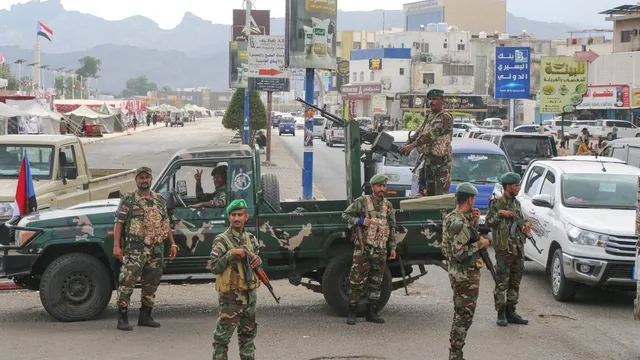
In Yemen, Saudi Arabia escalated its military activity by conducting airstrikes on Mukalla port, targeting a shipment of weapons allegedly sent by the United Arab Emirates for separatist forces, specifically the Southern Transitional Council (STC). This event took place on December 30, 2025, following a buildup of tensions, particularly as the STC advanced on strategic territories in the south, including Hadramout. The strikes were justified by the Saudi-led coalition as a necessary response to an imminent threat posed by these unloaded military supplies, which were believed to comprise weapons and combat vehicles that could destabilize the region further. On December 22, two vessels reportedly arrived at Mukalla without government authorization and deactivated their tracking systems, which raised alarms in Riyadh about possible destabilization efforts aligned with forces opposed to Saudi influence in the region. This military action not only signified a fracture in the once-coherent Saudi-led coalition, which initially included the UAE in its fight against the Houthi rebels but also heightened the conflict dynamics within Yemen as local factions began acting independently. The STC’s recent territorial gains have drawn aggressive responses from Saudi Arabia, perceived as both a threat to its national security and the stability of the region. The conflict has resulted in severe humanitarian consequences, compounding the already devastating impacts of a protracted war that has led to tens of thousands of deaths and displacement. As airstrikes commenced, Saudi Arabia’s foreign ministry publicly condemned the Emirati role, branding it as “extremely dangerous” while demanding a withdrawal of UAE forces from Yemen. Amidst this backdrop, escalating confrontations could intensify rivalries within the coalitions formed initially to combat the Houthi factions, leading to potential fragmentation of alliances in the Middle East. This situation further complicates diplomatic relations and could establish a precedent for future engagements where competing interests overshadow cooperative security efforts. The geopolitical landscape of the Arabian Peninsula is unpredictable, and with both nations being key U.S. allies, their divergence raises questions about the future of American influence and stability in the region, given that forces allied against the Iranian-backed Houthis may soon focus their hostilities on each other instead of a common enemy.
Context
The Yemen conflict is a complex and multifaceted crisis that has been ongoing since 2014, rooted in longstanding political, social, and economic grievances. The conflict escalated when the Houthi movement, an armed group from the north of Yemen, capitalized on widespread dissatisfaction with the government of President Abdrabbuh Mansur Hadi. The Houthi's swift capture of the capital, Sana'a, led to Hadi's government being ousted and resulted in a power vacuum that has given rise to various factions and an increased involvement of regional players, notably Saudi Arabia and Iran. The Saudi-led coalition commenced a military intervention in March 2015 in support of Hadi's government, further complicating an already dire situation and leading to a protracted war characterized by devastating humanitarian impacts. The conflict's humanitarian toll is catastrophic. Yemen is facing one of the world's worst humanitarian crises, compounded by a blockade that restricts vital supplies of food and medical aid. According to the United Nations, millions of people are in urgent need of assistance, with widespread food insecurity threatening to push populations towards famine. The health care system has collapsed due to years of bombing and underfunding, while diseases such as cholera have surged in the absence of clean water and adequate sanitation. Furthermore, children have been disproportionately affected, with many facing malnutrition or being recruited as soldiers, highlighting the tragic consequences of a war that has ensnared the entire population. The international community has struggled to mediate the conflict, with various peace talks taking place but failing to reach a lasting resolution. The situation remains tense, with ongoing skirmishes and sporadic violence preventing stability. While ceasefire agreements have been attempted, they have often been violated, leading many observers to doubt the feasibility of a negotiated settlement without significant pressure from external actors. Moreover, the involvement of regional powers complicates the diplomatic landscape, as proxy wars and competing interests further entrench local factions and inhibit peace efforts. A resolution appears distant, with the risk of the conflict expanding into a wider regional confrontation should tensions continue to escalate. Moving forward, a comprehensive approach that addresses underlying grievances alongside humanitarian needs is essential for peace. The international community must prioritize a unified method to facilitate dialogue among the warring parties while ensuring that aid continues to reach those most in need. It is equally important to support reconstruction efforts and create an inclusive political framework that considers the interests of various factions in Yemen; without this, the cycle of violence is likely to continue, and stability will remain elusive. As discussions regarding the Yemen crisis draw international attention, the emphasis must be on humanitarian relief and a just political resolution to end this catastrophic conflict.


