
politics
controversial
impactful

Trump claims Vance exhibits hesitance about action in Iran

Mar 10, 2026, 1:00 AM60
(Update: Mar 13, 2026, 10:13 PM)
president of the United States from 2017 to 2021
country in Western Asia
American conservative commentator, politician, venture capitalist and author

Trump claims Vance exhibits hesitance about action in Iran

  • President Trump stated that JD Vance holds a different philosophical perspective regarding the Iran operation.
  • Despite initial reservations, Vance has been supportive of Trump and emphasized the need for a clear objective.
  • The differences in opinion reflect broader tensions within the Republican Party over military intervention policies.
Share your opinion
6

Story

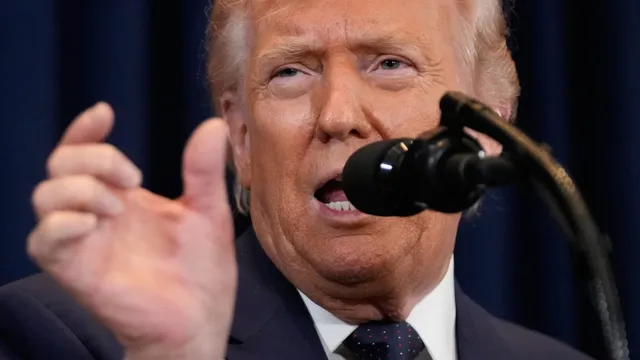
In the United States, President Donald Trump recently made comments regarding his Vice President, JD Vance, during a press conference at his golf club in Doral, Florida. Trump acknowledged that although Vance supported him, he held different views on the military operation against Iran. According to Trump, Vance was 'philosophically a little bit different' and 'maybe less enthusiastic' about the military action. However, the President insisted that launching airstrikes against Iran was necessary due to the perceived threats stemming from Iran's actions. This admission highlights the ongoing discussions and debates within the Republican Party about military intervention and foreign policy, especially in the lead-up to the upcoming elections. Vance, despite his reservations, has been publicly supportive of Trump during this critical moment, suggesting that he believes in the necessity of a clear military objective, which differentiates Trump's strategy from previous administrations. Nevertheless, the situation has sparked conversations about whether U.S. intervention abroad is in alignment with the 'America First' philosophy championed by Trump and his base. As tensions rise, the Republican Party faces a challenging dynamic ahead, with some members voicing concerns about the implications of the Iran conflict for future election prospects and the party's ideological direction.

Context

The Republican Party's opinion on military intervention has been influenced by various historical, political, and ideological factors. Traditionally, Republican leaders have been more inclined towards an assertive foreign policy which often includes the use of military force, especially in the context of combating terrorism and promoting national security interests. This stems from a belief in American exceptionalism, the idea that the United States has a unique role in the world, which can justify intervention when deemed necessary to uphold democracy and human rights, or to protect American interests abroad. Prominent figures within the party, including past presidents like George W. Bush, have advocated for proactive military engagement, which led to significant conflicts in Iraq and Afghanistan, shaping the party's current stance on national defense and military action. However, there is a growing faction within the Republican Party that is advocating for a more restrained approach to foreign military interventions. Influenced by the experiences and consequences of prolonged military engagements, this group argues that military intervention can lead to unintended consequences, including destabilization of regions and a drain on U.S. resources. The rise of this isolationist sentiment correlates with an emphasis on domestic issues, suggesting that military involvement should be recalibrated to prioritize national interests directly relevant to American citizens. These voices often question the efficacy of past interventions and challenge the traditional Republican hawkishness, calling for a reevaluation of commitments abroad. As of March 2026, the Republican Party remains divided on the subject of military intervention. The upcoming elections will likely serve as a platform for these differing views to be debated. Candidates will need to articulate their positions not only on immediate military issues but also on the broader implications of U.S. foreign policy. With considerations such as the rise of China, ongoing conflicts in the Middle East, and the recent shifts in international alliances, the party's perspective on military interventions will be pivotal in shaping its electoral platform. Thus, how the Republican Party reconciles these competing viewpoints will be crucial in determining its future direction regarding military action. Overall, the Republican Party's opinion on military intervention is a complex interplay of historical precedence, evolving foreign policy perspectives, and the realities of contemporary global politics. As debates continue and new challenges arise on the international stage, the party will need to navigate its traditional interventionist stance with the emerging voices advocating for restraint, ultimately impacting its influence on global security and the role of the United States.

2026 All rights reserved
