

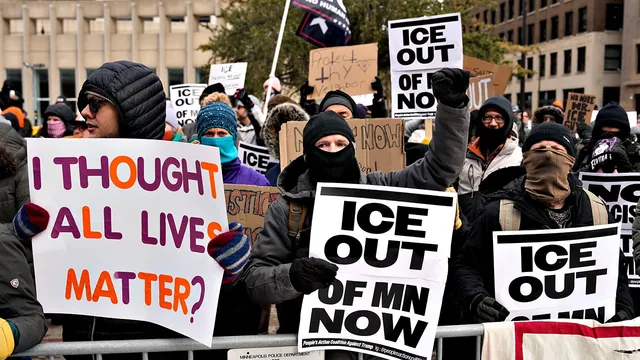
Students demand end to ICE presence after fatal shootings
Students demand end to ICE presence after fatal shootings
- Student groups have organized a nationwide walkout scheduled for January 30 to protest against ICE actions following recent fatal shootings.
- Protest participants call for a complete shutdown of activities, advocating for community safety and opposition to ICE funding.
- The demonstrations are intended to create sustained pressure for change in immigration policies and accountability for ICE.
Story
In the United States, student organizers have initiated a nationwide call for walkouts and protests set for January 30. This action is a direct response to public outrage following the fatal shootings of two U.S. citizens, whom immigration agents killed during enforcement activities in Minnesota. The demand centers around the withdrawal of Immigration and Customs Enforcement (ICE) from the state, highlighting a growing unrest among communities affected by aggressive immigration enforcement. The catalyst for this widespread mobilization stems from the shooting deaths of Alex Pretti, a nurse, and Renée Good, a mother of three, which have sparked debates about the actions of immigration enforcement agents. Activists across the country are rallying in support of the victims and their families, advocating for a halt to practices they view as terrorizing communities. The protests have gained traction, with a significant student-led initiative promoting a day of action that emphasizes
Context
The history of ICE protests in the US reflects a growing movement addressing the role of the Immigration and Customs Enforcement (ICE) agency and its impact on immigrant communities. Protests against ICE have gained momentum since the agency’s establishment in 2003, especially following the intensification of deportations and enforcement actions under various administrations. These protests have often centered around issues such as family separation, the detention of undocumented immigrants, and the broader implications of immigration policies on communities of color across the nation. Notable movements have emerged from grassroots organizations, local communities, and national coalitions over the years, advocating for the rights of immigrants and calling for the defunding or abolishment of ICE as a response to its controversial practices. During the Obama administration, protests and campaigns began to crystallize around the increasing number of deportations, which critics labeled as "deporter in chief" policies. Activists organized rallies, marches, and sit-ins, particularly in urban areas with large immigrant populations. These protests gained further intensity during the Trump administration, which adopted an aggressive approach to immigration enforcement. The administration's policies, including family separations and the expansion of detainment facilities, spurred widespread outrage and mobilization. Protests surged in major cities, as activists fought against mass deportations and rallied for the rights of Dreamers and other vulnerable immigrant populations. In recent years, the Black Lives Matter movement has intersected with the fight against ICE, underscoring the racial injustices that permeate both policing and immigration enforcement. This cross-movement solidarity has brought new dynamics to ICE protests, highlighting the connections between systemic racism, police violence, and the treatment of immigrants. The refusal of some jurisdictions to cooperate with ICE, known as "sanctuary policies," has also become a focal point of these protests, prompting legal challenges and public debates over local versus federal authority. As of early 2026, the landscape of ICE protests continues to evolve in response to ongoing immigration issues and political climates. Activists remain vigilant, employing social media and grassroots organizing to amplify their voices and demands. They advocate for comprehensive immigration reform, an end to family separations, and a reevaluation of the role of ICE in society. The protests speak not only to the immediate concerns regarding immigration enforcement but also to the broader human rights implications entwined with the agency's operations. The history of ICE protests is thus marked by a passionate commitment to justice, equity, and the ongoing struggle for the rights of all individuals, regardless of their immigration status.


