

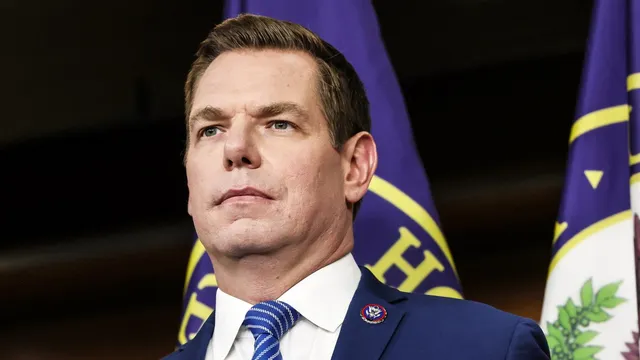
Swalwell files lawsuit against Trump official over alleged mortgage fraud conspiracy
Swalwell files lawsuit against Trump official over alleged mortgage fraud conspiracy
- Rep. Eric Swalwell launched a civil lawsuit against FHFA Director Bill Pulte for alleged misuse of private mortgage records.
- The lawsuit claims that Pulte used these records to launch unfounded criminal referrals against Swalwell.
- Swalwell argues this constitutes political retaliation and harms his reputation as he prepares for his gubernatorial campaign.
Story
In a significant development within the political landscape of the United States, Representative Eric Swalwell, a Democrat from California, filed a civil lawsuit in federal court in Washington, D.C. against Bill Pulte, the director of the Federal Housing Finance Agency (FHFA). The lawsuit, brought to light a few days ago, alleges that Pulte illegally accessed private mortgage records of Swalwell and other Democrats, using this sensitive information to instigate criminal investigations against them, specifically targeting political opponents of former President Donald Trump. This legal action comes as Swalwell has declared his intention to run for governor of California in the upcoming 2026 elections, suggesting he is under scrutiny due to his political ambitions and outspoken criticism of Trump. Swalwell’s complaint also prominently mentions that the alleged actions by Pulte constitute a violation of the Privacy Act and the First Amendment. According to the lawsuit, Swalwell asserts that Pulte utilized government databases to gather private mortgage information without any lawful authority, a move that he claims is indicative of political retaliation for his dissenting views against Trump. Pulte’s referral to the Department of Justice (DOJ) accused Swalwell of mortgage fraud, alleging he misrepresented his D.C. home in a mortgage agreement to secure more favorable loan terms which Swalwell vehemently denies, characterizing Pulte's accusations as a ``gross mischaracterization of reality.`` Furthermore, the civil suit highlights the harmful impact of the leaked information on Swalwell’s personal and professional life, particularly as he gears up for his campaign for governor. It points out that such disclosures have not only tainted his reputation but also exposed his family to security risks and distress. Swalwell claims that the pattern of referrals made by the FHFA, which appear to be directed at critics of Trump, highlights a dangerous precedent of using government power to silence political dissent. He notes that Pulte has not made similar allegations against those who support Trump, a claim that raises concerns about impartiality and abuse of power within federal agencies. As the legal battle unfolds, the ramifications of Swalwell’s lawsuit may extend beyond individual reputations, posing broader questions about the accountability of government officials, particularly concerning their interactions with political adversaries. As such legal disputes increase frequency amid heightened political divisiveness, this case will likely draw significant attention as it unfolds in a country where the distinctions between public service and political self-interest appear increasingly blurred.


