
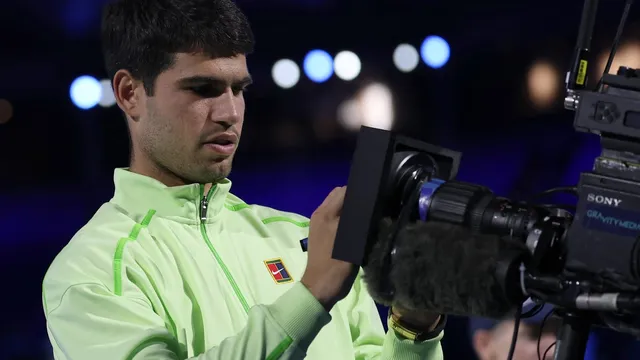
Carlos Alcaraz claims Australian Open title and completes career Grand Slam
- Carlos Alcaraz became the youngest male player to complete the career Grand Slam after winning the Australian Open.
- He defeated Novak Djokovic in the final, marking Djokovic's first loss in 11 Australian Open finals.
- This victory indicates a potential shift in tennis, with Alcaraz emerging as a leading contender for future titles.
Story
In January 2026, Carlos Alcaraz achieved a significant milestone in Melbourne, Australia, by winning his first Australian Open title, thus completing the career Grand Slam. At just 22 years old, he became the youngest male player in history to win all four major singles titles. During the final match, Alcaraz faced off against Novak Djokovic, a formidable opponent, and after dropping the first set, he remarkably came back to win the match with scores of 2-6, 6-2, 6-3, and 7-5. This victory not only marked a personal achievement for Alcaraz but also signified a broader turning point in tennis, as it symbolized the passing of the torch from Djokovic to the younger generation. Djokovic, a historic player himself, praised Alcaraz after the match, acknowledging his skills and potential to surpass even the incredible records set by established legends. Alcaraz, in turn, expressed his gratitude for the opportunity to play against Djokovic and emphasized the importance of enjoying the moment and appreciating his accomplishments. Upon his victory, questions about Alcaraz's next potential achievement arose, specifically regarding the possibility of a calendar-year Grand Slam, which would entail winning all four major titles in a single season—a feat last accomplished by Rod Laver in 1969. While Alcaraz has already received accolades for his astounding progress and skills on the court, he remains focused on one tournament at a time, intending to manage the expectations and pressure surrounding him. His performance at the Australian Open has set a precedent, as he has won three of the last four major tournaments, re-establishing himself as world No. 1. This historic win for Alcaraz places him in a growing discussion about his legacy in tennis. At his young age, he has already achieved significant milestones, and many analysts speculate on his chances to build on this success in the coming years. The entire tennis community is watching closely to see how he will navigate his career moving forward and whether he will live up to the expectations of becoming one of the greatest players in the sport’s history. Alcaraz’s victory not only solidifies his place in tennis history but also adds excitement to the future of men's tennis, with new rivalries and narratives emerging around young players like him and Jannik Sinner, who have started to dominate the majors.
Context
The landscape of professional tennis is experiencing a transformative phase, driven by the emergence of young talents such as Carlos Alcaraz. As of early 2026, Alcaraz and his contemporaries are reshaping the expectations and dynamics of the sport, challenging established norms and altering the competitive field. Their rise signifies not only a shift in athlete capabilities but also a change in the demographic engagement of younger audiences and their perception of tennis as a sport. Young players embody a blend of skill, physicality, and strategic thinking that pushes the boundaries of what is expected on the court, showcasing an intensity of play previously reserved for more seasoned athletes. Alcaraz, in particular, has made a significant impact following his ascent to the top ranks of global tennis. His achievements at pivotal tournaments highlight not only his skill but also his mental fortitude, a characteristic that is crucial in high-stakes matches. The presence of such a dynamic player introduces a new fervor in the competitive scene, engaging both existing fans and attracting a younger generation. This trend is reflected in increased viewership numbers and attendance at tournaments, signifying a broader interest in tennis as an exciting and diverse sport. The successful branding of young players through social media and other platforms amplifies their visibility and enriches the narrative around tennis, making it more relatable and accessible. Moreover, young players like Alcaraz are impacting the professional circuit's ecosystem, including training methodologies and tournament formats. The fast-paced style and relentless training regimes adopted by these young athletes inspire changes in how coaches prepare their students, emphasizing agility, adaptability, and a multifaceted playing style. This ripple effect extends to grassroots levels, where youth academies and training programs are increasingly incorporating innovative techniques to nurture talent, ensuring a pipeline of skilled players for the future. The competitive advantage that these young players hold due to their rigorous physical training and modern strategies can translate into a significant shift in match outcomes and player longevity in the sport. As the narratives evolve around young tennis stars, stakeholders within the sport must adapt to this new reality. Sponsorships, marketing strategies, and media coverage are inevitably influenced by the rise of these players, leading to diversification in player representation and visibility across various demographics. The excitement generated by young talents like Alcaraz promises a thrilling future for tennis, with increased competition, enhanced viewer engagement, and a vibrant community that embraces change and innovation within the sport. The sustained emphasis on cultivating youth talent will play a crucial role in shaping tennis into a more dynamic, inclusive, and global sport.
