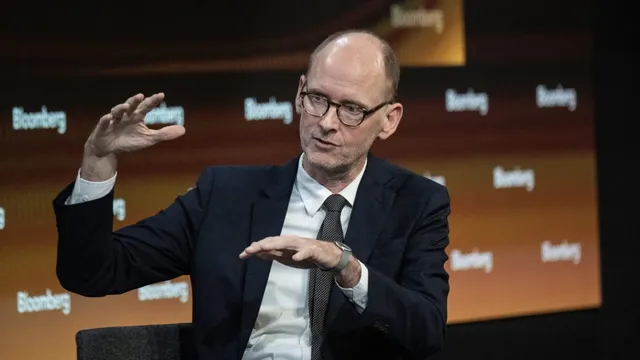
In the United States, Apollo Chief Economist Torsten Slok has raised concerns about the current state of artificial intelligence (AI) and its impact on productivity and market valuations. Despite the hype surrounding AI, Slok argues that the technology has not yet delivered the expected returns on investment, particularly for companies outside the tech sector. He highlights a significant disparity in profit margins between leading tech companies and the broader S&P 493, indicating that while the 'Magnificent Seven' tech firms have seen profit margins rise from 15% to 25% between early 2023 and 2026, the rest of the S&P 493 has remained stagnant at around 10%. This gap raises alarms about potential market corrections as companies may slow their AI investments if they do not see quick returns. Slok emphasizes that the mismatch between current earnings expectations and the time required to realize ROI on AI investments could lead to a painful repricing of markets, threatening the ongoing AI boom. Furthermore, he points out that many companies are struggling with the practical implementation of AI, as evidenced by Ford's decision to hire experienced engineers to train junior staff and improve AI tools. This highlights the need for human expertise in effectively leveraging AI for productivity gains. Slok's analysis is supported by data from Bloomberg and Macrobond, which underscores the challenges faced by industries in integrating AI into their operations. The findings suggest that while AI has the potential to enhance productivity, the initial costs in time and resources are significant, and companies must navigate these challenges carefully to avoid stalling their AI initiatives.