

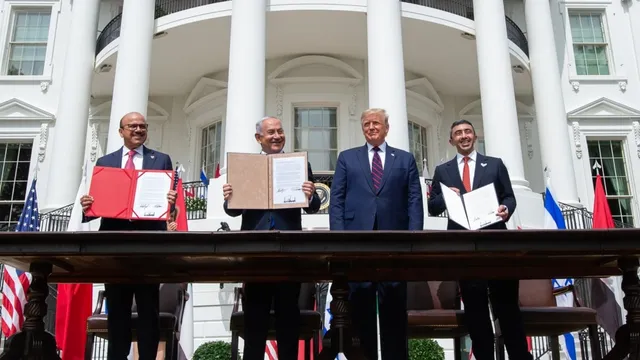
Trump demands Arab nations normalize ties with Israel to end Iran war
Trump demands Arab nations normalize ties with Israel to end Iran war
- During recent negotiations, Donald Trump called for several Arab and Muslim countries to sign the Abraham Accords to normalize relations with Israel.
- Many nations referenced have not responded to Trump's proposal, indicating a lack of interest in the conditions set forth.
- These diplomatic developments demonstrate the complexities involved in regional politics and the challenges Trump faces in achieving a lasting peace.
Story
In the context of the ongoing hostilities involving Iran, President Donald Trump proposed a significant diplomatic condition, insisting that several Arab and Muslim nations should formally sign onto the Abraham Accords to normalize their relations with Israel as a prerequisite for concluding the war in Iran. This suggestion came on May 23, 2026, during a moment of escalation in Iran where regional tensions have been heightened due to the country's military actions and responses from various Gulf states. Trump's comments were met with skepticism and lack of enthusiasm from the countries he mentioned, including Saudi Arabia and Qatar, many of which already maintain some diplomatic relations with Israel. Objectives surrounding the Abraham Accords were sought by Trump as he aimed to solidify his foreign policy legacy amid waning support at home. The Arab officials expressed concerns that such a demand might exacerbate existing regional tensions, particularly given the ongoing humanitarian crisis in Gaza, and that pushing this normalization in the current climate could deepen divisions rather than bring about peace. The lack of response from the countries Trump named indicates a reluctance to engage with the U.S. administration's stipulations without addressing their own security and political interests, especially amidst ongoing Iranian threats affecting their own stability. As of late May 2026, the diplomatic landscape remained fragile, with analysts suggesting that Trump's insistence on linking the normalization of relations to the Iran ceasefire also reflects his desire for a significant political win that could define his legacy as president. Meanwhile, uncertainty lingered about the future of the ceasefire and broader negotiations regarding Iran's nuclear program, as the potential reopening of strategic waterways and the recovery of oil supplies loomed as critical economic factors in the region.
Context
geopolitical data market trends data analysis insight market strategic data shift strategic trends policy economic market analysis trends impact trends insight geopolitical economic economic strategic shift impact data shift economic strategic geopolitical trends shift insight policy economic data geopolitical global policy policy market economic strategic impact global impact global policy global policy strategic impact economic impact geopolitical shift analysis geopolitical analysis strategic global policy analysis strategic trends strategic shift data insight impact global impact global market geopolitical trends trends policy...


