

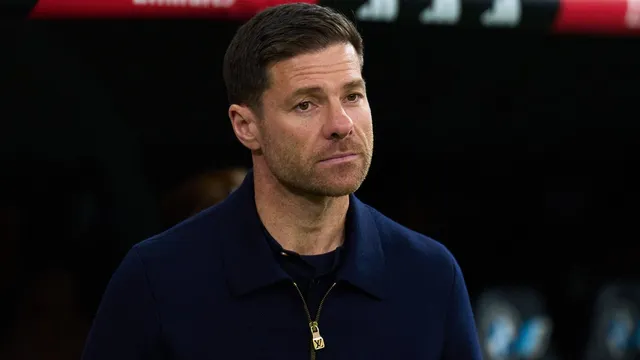
Xabi Alonso's pragmatism fails to secure victory against Barcelona
Xabi Alonso's pragmatism fails to secure victory against Barcelona
- Barcelona secured a narrow victory against Real Madrid in the Supercopa final on January 11, 2026.
- Xabi Alonso had to adjust his tactics due to injuries affecting key players.
- Madrid's recent performances indicate support for Alonso, but doubts from the club president loom.
Story
In Spain, Real Madrid recently faced Barcelona in the Supercopa, where they narrowly lost 3-2. Xabi Alonso's tactics showed a shift towards pragmatism, as he adapted his formation to contend with Barcelona's dominance, particularly during a match where injuries affected his squad's overall performance. Key players like Dani Carvajal and Eder Militao were unavailable, prompting Alonso to utilize a five-man defense. Despite a competitive display, leading to a perception of luck favoring Barcelona, the Madrid team struggled to convert possession into effective scoring opportunities. Florentino Perez, the Madrid president, was seen visibly displeased as Barcelona celebrated their victory. The match highlighted internal concerns surrounding Alonso's position as head coach, given doubts from club leadership about his coaching abilities. However, despite challenges in the dressing room, including prior dissent from experienced players, recent performances suggested a renewed support for Alonso as the squad began to play collectively. The victory marked Barcelona's third consecutive victory in finals against Real Madrid, showcasing a remarkable shift in momentum within their historic rivalry. Once cautious and defensive, Barcelona now exhibits confidence, shifting their mentality to favor a more aggressive and risk-taking approach. Young talents like Lamine Yamal exemplify this transformation, playing with a sense of fearlessness in high-pressure situations. Barcelona's improved mentality, bolstered by head coach Hansi Flick, played a critical role in their recent success, enabling the team to approach matches against rivals with a stronger belief in their ability to secure victories. As the season progresses, the challenges for Real Madrid, particularly the need to replace vital midfield playmakers like Toni Kroos and Luka Modric, remain evident. The absence of these key players has severely affected Madrid's strategic capabilities, making it hard for them to control games even against lesser opponents. Therefore, Alonso's pragmatism may be seen as a temporary measure while the club assesses its long-term strategy moving forward.
Context
The historical rivalry between FC Barcelona and Real Madrid, often referred to as "El Clásico," is one of the most prominent and intense in sports. This rivalry transcends football, encapsulating deep cultural, political, and social elements that reflect the identity of Spain itself. Barcelona, representing the Catalan identity, and Real Madrid, often seen as a symbol of Spanish nationalism, have faced each other numerous times since their first encounter in 1902. Over the years, Barcelona has exhibited remarkable dominance in various competitions, particularly in La Liga and international tournaments, further solidifying their status as a footballing powerhouse. In recent decades, FC Barcelona has not only shown dominance over Real Madrid in direct encounters but has also achieved significant success in various tournaments. The club's philosophy of play, emphasizing possession football, creativity, and youth development through their famed La Masia academy, has set them apart. This style has not only facilitated the emergence of world-class talents, such as Lionel Messi, Xavi Hernandez, and Andrés Iniesta but has also earned the team numerous titles. Barcelona's achievements during the late 2000s and early 2010s, particularly under coach Pep Guardiola, witnessed a golden era for the club, clinching multiple UEFA Champions League and La Liga titles. In the context of head-to-head competition, Barcelona has often had the upper hand, especially in crucial matches that have shaped the rivalry over the years. Statistics reveal that in recent years, the Catalan side has secured more victories than their Madrid counterparts in both league and cup matches. This trend speaks to the evolving dynamics of the two clubs, where Barcelona has consistently adapted and improved, whereas Real Madrid has been seen as struggling to keep pace, particularly in moments that matter most. Despite the ongoing competition, the rivalry between Barcelona and Real Madrid remains a celebrated facet of football, attracting millions of fans around the world. Both clubs continue to strive for greatness, and while Barcelona's current dominance is evident, the history of rivalry ensures that fans can expect fierce competition in the years to come. The landscape of Spanish football may evolve, but the legacy of both clubs, marked by their confrontations, remains a vital part of their identities and the global football narrative.


