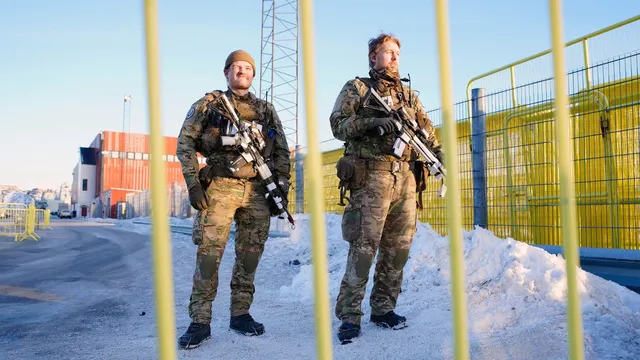
Denmark takes drastic measures to protect Greenland from US takeover threats
- In January 2020, Denmark deployed troops and explosives to Greenland amidst concerns of a potential U.S. military operation.
- Plans included blowing up airstrips to prevent American aircraft from landing, reflecting fears over U.S. President Donald Trump's intentions.
- This military preparation reveals Denmark's commitment to defend its territory and the geopolitical significance of Greenland.
Story
In January 2020, Denmark undertook a significant military operation to defend Greenland, an autonomous territory that is geopolitically vital due to its strategic location. At the time, tensions were high as U.S. President Donald Trump expressed interest in purchasing Greenland, citing national security concerns amid global geopolitical shifts. Danish media reported that troops, medical supplies, and explosives were transported to Greenland in response to fears of a U.S. invasion, especially following American operations in Venezuela that heightened anxieties in Copenhagen. Desperately anticipating what could unfold, Danish officials had devised a plan that included the destruction of crucial airport runways to thwart any potential American air operations as a deterrent against hostile engagements. The operation, shrouded in secrecy, was discussed among a limited number of officials within Denmark's military and government. A significant operational order, issued on January 13, laid out detailed measures to secure Greenland against what they perceived as an imminent threat from the U.S. military. This included joint military exercises dubbed Operation Arctic Endurance, which were opportunistically rebranded to mask the true intent of the mobilization of troops. Danish military sources indicated that other European nations, including France and Germany, were consulted as part of a broader strategy to consolidate European solidarity in the face of Trump’s aggressive stance regarding Greenland. They feared that with the U.S. demonstrating confidence from its actions in Venezuela, a similar approach might follow regarding Greenland. Furthermore, Danish officials worried that Trump's relentless acquisition rhetoric could embolden his administration to act on aggressive military tactics rather than diplomatic solutions. As events unfolded, it became clear that Denmark was ready to commit forces to protect its territorial rights and interests, advocating for political support from European partners to reinforce this stance. The gravity of the situation was underscored by the realization that Greenland plays a pivotal role in global security given the increased presence of Russian and Chinese naval forces in Arctic waters. Trump, during statements at the World Economic Forum in Davos, maintained that he preferred negotiations over force and sought a diplomatic resolution to the contentious issue of Greenland's status. Nonetheless, the military preparations undertaken by Denmark revealed a profound apprehension regarding U.S. intentions and a commitment to safeguarding national interests against external pressures.
Context
The history of United States interest in Greenland can be traced back to the early 20th century, shaped by geopolitical considerations and strategic needs. Initially, the U.S. viewed Greenland primarily as a logistic base for military operations and a site for air routes during World War II. The strategic significance of Greenland surged when the U.S. negotiated the right to build air bases on the island in 1941, amidst the global conflicts of WWII. The establishment of Thule Air Base became a cornerstone of U.S. operations, as it offered a critical point for operations related to both the European theater and as an early warning system against possible Soviet attacks during the Cold War. This marked a turning point in the U.S.-Greenland relationship, transitioning from mere interest to an intricate partnership aimed at bolstering national security and defense capabilities in the Arctic region. Throughout the Cold War, U.S. interests in Greenland continued to grow, driven by concerns about Soviet expansion in the Arctic. The geographical location of Greenland, situated strategically between North America and Europe, made it a vital asset for surveillance and military defense initiatives. The U.S. invested in infrastructure improvements and maintained a significant military presence, which included the construction of advanced radar installations. This military focus persisted post-Cold War, but it was gradually supplemented with broader considerations encompassing scientific research and environmental monitoring, particularly as climate change began to impact the Arctic region. In more recent years, U.S. interest in Greenland has expanded beyond military strategy. With the increasing accessibility of Arctic resources due to melting ice, including oil, gas, and rare minerals, Greenland has become focal to debates about energy security and economic development. The U.S. has sought to engage in cooperative agreements with Greenlandic authorities, emphasizing sustainable development while balancing environmental considerations. This evolving interest has also reflected a growing recognition of the geopolitical dynamics in the Arctic, particularly as nations vie for influence over these newly accessible regions. The perplexing shift in focus on Greenland reached a notable point in 2019 when President Trump proposed the idea of purchasing Greenland from Denmark, which sparked controversy and raised questions about U.S. intentions in the Arctic. Although Denmark firmly rejected the idea, the incident brought to the forefront the ongoing significance of Greenland to U.S. interests, entwining issues of sovereignty, economic opportunities, and regional security. As global attention increasingly turns to the Arctic amid climate change and geopolitical rivalries, the history of U.S. interest in Greenland underscores the complexity of international relations in this vital area. Today, the U.S. continues to navigate its role in Greenland through diplomacy, environmental stewardship, and security cooperation, reflecting the evolving nature of Arctic engagement.