

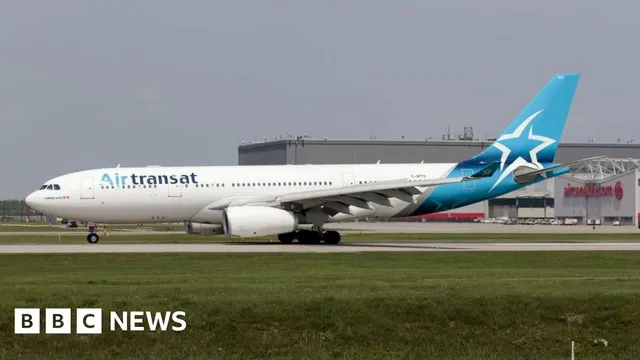
Air Transat pilots strike threats disappear after tentative agreement
Air Transat pilots strike threats disappear after tentative agreement
- Air Transat faced flight cancellations after its pilots' union issued a strike notice due to stalled contract negotiations.
- A tentative agreement was reached that would improve pilots' job security and compensation, averting the strike.
- The situation highlights ongoing labor tensions in Canada's airline industry.
Story
Air Transat, one of Canada's major airlines, faced significant operational disruptions as its pilots' union declared a 72-hour strike notice, set to commence if contract negotiations did not yield results. This strike notice came on December 7, 2025, following nearly a year of negotiations where a staggering 99% of the union's pilots voted to authorize a strike due to dissatisfaction stemming from stalled contract discussions. The pilots sought improvements in pay, benefits, work rules, and job security, asserting that their current contract, established in 2015, failed to meet industry standards. The airline took preventive measures by announcing cancellations beginning on December 8 in anticipation of the potential strike, indicating concerns over operational disruptions and ensuring the safety of crews and passengers amidst such uncertainty. However, amidst these tense negotiations, a breakthrough occurred on December 9, 2025, when Air Transat and the union representing the pilots reached a tentative agreement that effectively averted the impending strike. The proposed deal is set for ratification by pilots, reflecting improvements in job security, compensation, and scheduling flexibility - all crucial elements that the pilots had insisted upon during the lengthy negotiation process. Captain Bradley Small, a key figure in the union, conveyed relief at this consensus, affirming that unity among pilots was instrumental in prompting management to come back to the negotiating table. The airline expressed regret over the disruptions caused during this period and reaffirmed its commitment to resuming normal operations promptly. This incident marks the second significant strike-related event involving major Canadian airlines in the year, with Air Canada's flight attendants also having faced similar struggles in August, underscoring ongoing labor tensions within the aviation industry across the country.
Context
Pilot strikes have a significant impact on air travel, affecting not only airlines and their employees but also millions of passengers worldwide. Such strikes typically arise from disputes over contracts, working conditions, or pay, and can lead to substantial disruptions in flight schedules. When pilots walk off the job, airlines are forced to cancel or delay flights, which can create a cascading effect across air travel networks. This disruption often extends beyond the immediate area of the strike, as connecting flights may be missed and passengers may find themselves stranded at airports. In the event of widespread strikes, airlines can struggle to maintain operational stability, leading to long-term effects on their schedules and profit margins. The economic ramifications of pilot strikes are profound. Airlines face immediate financial losses due to flight cancellations and decreased passenger revenue. Additionally, the cost of compensating affected passengers, which may include refunds, vouchers, and rebooking on alternative flights, can add to the total financial burden. Over time, these strikes can erode customer loyalty and trust, forcing airlines to invest in damage control initiatives. In some cases, repeated strikes by pilots can push airlines to reconsider their business models or to renegotiate labor agreements, which can have lasting implications for the industry. From a passenger perspective, the experience during pilot strikes can be extremely frustrating. Travelers may find their plans disrupted at the last minute, leading to missed events, lost reservations, and increased travel costs. The uncertainty surrounding strikes can also diminish the overall flying experience, creating a sense of anxiety for those needing to travel for personal or business reasons. In striving to minimize disruption, some airlines implement contingency plans, such as hiring temporary pilots or rescheduling flights to accommodate affected passengers, but these measures are not always sufficient to mitigate the backlash from inconvenienced travelers. In conclusion, pilot strikes pose distinct challenges to the air travel industry, with implications that reach far beyond the immediate impact on flight schedules. The interplay between labor disputes and airline operations illustrates the delicate balance that must be maintained in the industry to ensure that both employee grievances and passenger needs are addressed. The repercussions of these disputes can be felt across economic, operational, and customer service dimensions, highlighting the critical importance of effective communication and negotiation between airline management and pilot unions to prevent future strikes.


