

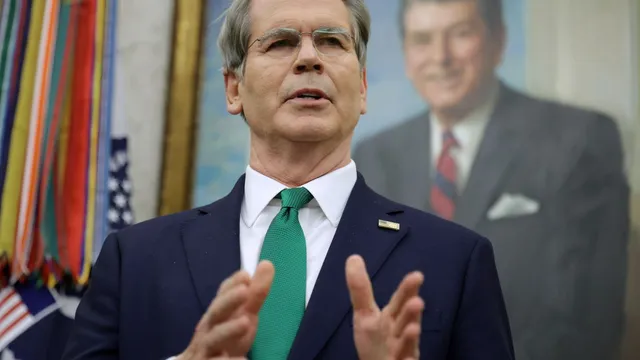
Scott Bessent hints at imminent lifting of U.S. sanctions on Venezuela
Scott Bessent hints at imminent lifting of U.S. sanctions on Venezuela
- U.S. Treasury Secretary Scott Bessent signaled that sanctions on Venezuela might be lifted imminently to support oil sales.
- Venezuela holds $4.9 billion in frozen IMF Special Drawing Rights, which could soon be accessible.
- The hope is that lifting sanctions could pave the way for economic recovery and ultimately revive tourism in the beleaguered nation.
Story
In early January 2026, discussions surrounding the potential lifting of U.S. sanctions on Venezuela gained traction. Treasury Secretary Scott Bessent indicated that certain sanctions might be alleviated 'as soon as next week' amid efforts to support oil sales and facilitate Venezuela's economic recovery. Although specific sanctions were not identified, Bessent revealed plans to meet with officials from the International Monetary Fund and the World Bank to reassess and renew engagement with Venezuela. Currently, Venezuela holds approximately $4.9 billion in frozen Special Drawing Rights (SDRs) from the IMF, which remain inaccessible under prevailing restrictions. Bessent's commentary came in the context of a broader strategy by the Trump administration to stabilize Venezuela following the ousting of Nicolás Maduro. This strategy not only seeks to encourage U.S. investment in Venezuela's oil sector but also aims to restore the nation to a path of recovery. The situation regarding tourism in Venezuela presents a stark contrast to the discussions about economic sanctions. Once an attractive destination for travelers, the nation's tourism industry has significantly declined due to ongoing violence and economic instability. UK travel specialist Journey Latin America, for example, halted holiday packages to Venezuela in 2014 due to concerns over safety. The Foreign Office and the U.S. State Department have consistently advised against travel to Venezuela, citing extreme dangers related to crime and violence. In this grim scenario, the hope remains that as stability returns, tourism could play a vital role in rebuilding the nation. Despite the challenges and current risks associated with traveling to Venezuela, some in the travel industry express optimism about the country's potential for recovery. Prominent figures have expressed the belief that Venezuela, with its rich natural beauty and cultural heritage, deserves to be better known and could once again attract visitors. This interplay between potential sanctions relief and the future of tourism indicates a pivot point for Venezuela, positioning the nation to rebuild once the conditions allow for safer travel and economic growth.
Context
As of January 2026, US sanctions on Venezuela remain a crucial element of American foreign policy, aimed primarily at addressing human rights abuses, corruption, and the ongoing humanitarian crisis under the leadership of President Nicolás Maduro. Originally initiated in 2015, the sanctions have evolved significantly, encompassing a wide range of financial and trade restrictions targeting individuals, state-owned enterprises, and the oil sector. The Biden administration has maintained these sanctions, citing the need for accountability and a return to democratic governance in Venezuela. In response to these pressures, Maduro's government has sought new economic partnerships, notably with Russia and China, to mitigate the impact of US sanctions and sustain its regime. However, the environment remains challenging for ordinary Venezuelans, who continue to face shortages of essential goods and services as the economy struggles under the weight of these restrictions and mismanagement. In addition to individual sanctions targeting specific officials accused of human rights violations and corruption, sectoral sanctions have focused primarily on the Venezuelan oil industry, which is a critical source of revenue for the Maduro government. The United States has blocked oil exports, aiming to reduce the government's financial resources and limit its ability to fund oppressive measures against its population. These measures have had a dramatic effect on the Venezuelan economy, contributing to its contraction and exacerbating the already severe humanitarian crisis, where millions have fled the country in search of better living conditions. Reports indicate that the economy remains in free fall, with hyperinflation, high unemployment rates, and widespread poverty persisting as major challenges. Relief efforts have been hampered by both the sanctions and the Venezuelan government's restrictive policies towards foreign aid. In recent developments, discussions about the potential easing of sanctions have emerged, contingent on significant political changes and improvements in human rights conditions. The US has signaled a willingness to engage in diplomatic dialogues with the Maduro regime, particularly following the elections held in late 2025, which were scrutinized for their fairness and transparency. Analysts remain skeptical, however, arguing that past experiences suggest that the Maduro government may not fully commitments to genuine political reforms, and instead, might engage in diplomatic posturing without substantive change. Consequently, any future adjustments to the sanctions regime will likely hinge on concrete, verifiable actions taken by the Venezuelan authorities to restore democratic norms and comply with international human rights standards. In conclusion, the current status of US sanctions on Venezuela reflects a complex interplay between the need for accountability and the humanitarian considerations arising from the ongoing crisis. Ensuring that sanctions achieve their intended goals without exacerbating the plight of ordinary Venezuelans is a delicate balance that policymakers continue to navigate. The outlook remains uncertain, with significant pressure on the Maduro regime to respond meaningfully to international calls for reform, while the sanctions remain a critical instrument for the US in its pursuit of democratic governance in Venezuela.


