

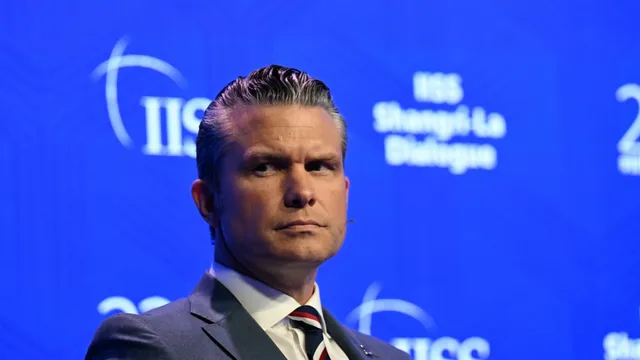
Hegseth urges Asian allies to ramp up defense spending against China
Hegseth urges Asian allies to ramp up defense spending against China
- During the Shangri-La Dialogue in Singapore, U.S. Defense Secretary Pete Hegseth warned of legitimate concerns regarding China's military expansion.
- He called for Asian allies to enhance military investments to ensure regional stability and prevent any single power from establishing hegemony.
- This reflects a strategic approach to balance military readiness with diplomatic communication with China.
Story
In Singapore, U.S. Defense Secretary Pete Hegseth addressed key Asian allies during the Shangri-La Dialogue, calling for a significant increase in military expenditures to counter China's expanding influence and military capabilities. Hegseth highlighted concerns regarding China's military buildup and emphasized the necessity for a more self-reliant network of allies to maintain regional stability and balance of power. His remarks came amid a period of heightened tensions in U.S.-China relations, and they reflect a strategic pivot from previous approaches that openly confronted China on sensitive issues like Taiwan. Hegseth's address marked a shift from his earlier rhetoric at the same forum, demonstrating a more cautious approach influenced by ongoing diplomatic conversations between President Donald Trump and Chinese President Xi Jinping. After Trump's state visit to China, both leaders acknowledged the importance of managing the complexities surrounding Taiwan and other contentious issues. As a result, Hegseth's comments were framed in a way that sought to strike a balance between asserting military readiness and promoting dialogue with Beijing. During the dialogue, he stated that an unchecked Chinese hegemon in the Pacific would be detrimental not only to regional allies but to U.S. interests as well. Hegseth advocated for defense spending among allies to meet targets of 3.5% of GDP, aligning with the U.S.'s own significant military investment plans totaling $1.5 trillion. This call reflects a broader strategy for enhancing deterrence in the region, with a focus on collaborative defense efforts rather than unilateral U.S. dominance. The context of this address comes as the U.S. experiences various geopolitical challenges, particularly concerning arms sales to Taiwan. Hegseth remarked on the ongoing deliberations regarding potential arms packages and indicated that the U.S. would reduce arms to Taiwan depending on threat assessments. Thus, maintaining strong military alliances with Asian partners is crucial for the defense posture in the region. Overall, Hegseth's remarks suggest a renewed commitment to strengthening ties with Asian allies while navigating a complex and evolving relationship with China.


