

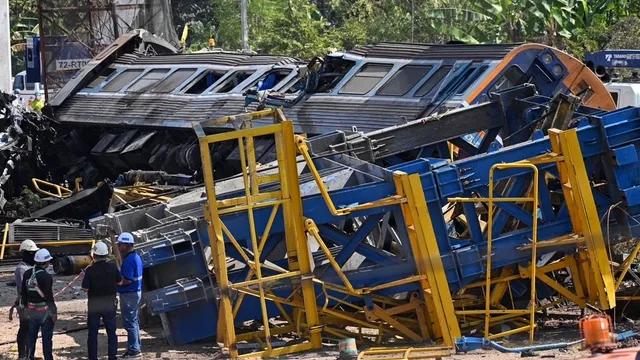
At least 31 killed after crane collapses onto train in Thailand
At least 31 killed after crane collapses onto train in Thailand
- A construction crane collapsed onto a passenger train in Thailand on January 13, 2026.
- The incident resulted in at least 31 fatalities and more than 60 injuries.
- Authorities are investigating the accident, focusing on safety protocols in construction.
Story
On January 13, 2026, a tragic incident occurred in Thailand's Nakhon Ratchasima province, where a construction crane collapsed onto a moving passenger train, killing at least 31 individuals and injuring 64 others. The train was traveling from Bangkok to Ubon Ratchathani when it was struck by the crane while passing between the Nong Nam Khun and Sikhiu stations, causing it to derail and catch fire. Rescue operations began immediately, with all passengers evacuated from the train as authorities worked to control the blaze. The crane was part of a high-speed rail project linking Thailand and China, intended to improve transportation infrastructure in the region. Witnesses reported a loud noise followed by explosions as the crane fell onto the train, resulting in significant damage, particularly to the second and last carriages. According to the deputy prime minister and transport minister, Phiphat Ratchakitprakarn, there were 195 people on board the Special Express Train No. 21 at the time of the accident. Emergency medical services were promptly dispatched, with injured passengers taken to various local hospitals. Despite the initial belief that only a few individuals had been harmed, the death toll rose steeply as rescue teams assessed the scene. Investigations were swiftly launched into the cause of the crane's collapse, with the government aiming to determine if safety protocols were followed during construction. Prime Minister Anutin Charnvirakul has called for accountability in the aftermath of this disaster, highlighting the need for strict adherence to safety regulations in Thailand's construction industry. Previously, the nation had experienced several accidents linked to lapses in safety, leading to public outcry for improved oversight. The grim nature of this incident has caused widespread mourning in Thailand, raising concerns about the ongoing high-speed rail project and its implications for both safety and transport efficiency.
Context
The impact of infrastructure projects on safety in Thailand has been a significant area of focus in recent years as the nation undergoes extensive development. Infrastructure projects, including roads, bridges, and public transportation systems, are crucial for fostering economic growth and enhancing the quality of life for citizens. However, it is imperative to scrutinize how these initiatives influence safety outcomes in urban and rural environments. With population density increasing in cities like Bangkok and a growing number of vehicles on the roads, traffic accidents have become a pressing issue that necessitates attention in the planning and execution of infrastructure developments. By implementing robust safety measures, such as well-designed roadways and pedestrian pathways, the risk of accidents can be minimized, ensuring that infrastructure projects do not inadvertently contribute to an increase in fatalities and injuries on the roads. Furthermore, understanding the demographic variables that contribute to safety risks is essential in creating targeted interventions that address specific local needs. In evaluating the relationship between infrastructure projects and safety, it is necessary to consider the participation of various stakeholders, including government agencies, construction companies, and community members. Collaboration among these parties can yield innovative solutions that prioritize safety during the design and construction phases of infrastructure. For instance, employing advanced technologies such as smart traffic management systems can enhance road safety by improving traffic flow and reducing congestion. Additionally, community engagement efforts can help identify local safety concerns and tailor infrastructure projects to address those issues effectively. Such proactive measures can lead to a more holistic approach to safety that takes into account the needs of diverse populations across Thailand. Moreover, post-construction assessments of infrastructure projects can provide invaluable insights into their safety impacts. Regular monitoring and evaluation of completed projects can help identify potential hazards and guide necessary modifications. This feedback loop is crucial in refining future infrastructure projects and ensuring that they contribute positively to public safety. Implementing evidence-based practices based on collected data will pave the way for more effective safety strategies in Thailand's infrastructure development. Furthermore, as Thailand continues to invest in infrastructure, it is critical for policymakers to balance economic objectives with safety considerations, incorporating lessons learned into future initiatives. In summary, the intersection of infrastructure projects and safety in Thailand highlights a vital concern for public welfare. While infrastructure can undoubtedly promote growth and improve living conditions, it is essential to prioritize safety throughout each phase of development. By fostering collaboration among stakeholders, leveraging technology, engaging communities, and continuously assessing outcomes, Thailand can create safer environments that ultimately support the well-being of its population. As the nation moves forward with its ambitious infrastructure agenda, a comprehensive commitment to safety will be paramount in safeguarding lives and ensuring sustainable progress.


