

Airline CEOs demand Congress fund Homeland Security and pay airport workers
Airline CEOs demand Congress fund Homeland Security and pay airport workers
- Airline CEOs have called for Congress to restore funding to the Department of Homeland Security, affected by a prolonged government shutdown.
- Significant numbers of TSA agents are quitting their jobs due to unpaid work, greatly impacting airport security and travel times.
- Political leaders must address this crisis as the aviation industry anticipates serving millions of passengers this spring.
Story
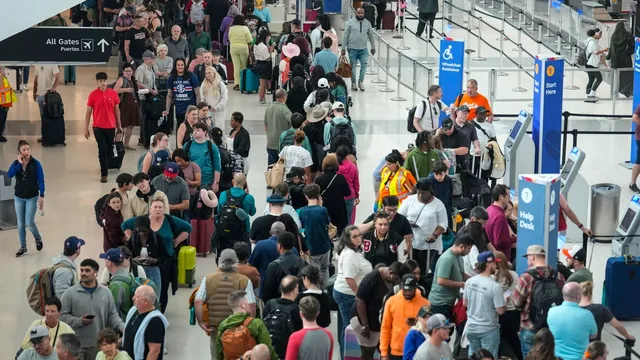
In the United States, a group of CEOs from leading airlines, including American, Delta, Southwest, and JetBlue, wrote an open letter to Congress demanding immediate action to restore funding for the Department of Homeland Security (DHS) amid a partial government shutdown. This shutdown, which has persisted since February, has resulted in Transportation Security Administration (TSA) employees working without pay, worsening their financial instability. Reports indicate that over 300 TSA agents have quit their jobs due to these financial pressures, significantly impacting airport security and leading to increasing delays for travelers. The letter highlighted the urgent need for Congress to pass legislation that ensures air traffic controllers and TSA officers are paid regardless of funding disputes, calling for the Aviation Funding Solvency Act, the Aviation Funding Stability Act, and the Keep America Flying Act. The situation has created longer security lines at various U.S. airports as more aviation staff leave their jobs, resulting in most travelers facing unusually lengthy wait times during a peak travel season, expected to serve around 171 million passengers this spring. The CEOs expressed concern over the current political stalemate, noting that TSA workers are already experiencing severe hardships, such as evictions and extreme financial strain. One TSA officer reported difficulty in affording childcare for a special needs child, illustrating the personal impacts of the budget impasse. As the shutdown continues, travelers are advised to arrive at airports much earlier than usual due to the increased wait times. The agency has stressed that the demand for security staff is already stretched thin, warning that smaller airports may need to shut down if the call rate continues to rise. This ongoing situation not only strains airport operations but also diminishes employee morale, potentially leading to long-term attrition issues once the government reopens and workers receive back pay. The emotional toll on TSA personnel, combined with operational challenges, highlights the urgent need for a political resolution to ensure the safety and efficiency of air travel at a time when millions are expected to fly for upcoming holidays and events.
Context
As of March 16, 2026, discussions surrounding funding for the Department of Homeland Security (DHS) have been at the forefront of congressional agendas. The DHS, established in the wake of the September 11 attacks, plays a critical role in protecting the United States from various threats, including terrorism, cyberattacks, and natural disasters. Funding allocations are essential to ensure that the agency can effectively carry out its mission, particularly in light of evolving threats and challenges. Recent debates in Congress have centered on how much funding to allocate to the DHS, with various factions advocating for differing levels of support based on priorities such as border security, cybersecurity enhancements, and disaster response capabilities. One of the most pressing issues in the current funding discussions is the balance between immediate security needs and long-term investments in infrastructure and technology. Some lawmakers argue that a significant portion of the budget should be directed toward securing the southern border, including increased funding for personnel and physical barriers. Others emphasize the need to invest in technology and cybersecurity measures, particularly in protecting critical infrastructure from potential cyber threats. The challenge for Congress is to reconcile these differing priorities while ensuring that funding levels reflect the urgency of ongoing security challenges. In recent months, there have been visible tensions between bipartisan supporters of the DHS and those who advocate for a reduction in spending. Some representatives have proposed significant cuts to the agency’s budget, citing the need for fiscal responsibility. Conversely, other members of Congress stress that such cuts could undermine national security efforts. The push and pull of these arguments are reflective of a broader debate over government spending generally, as the nation strives to address various other economic concerns. Ensuring adequate funding for DHS is thus not only a matter of security but also one of navigating the complex landscape of fiscal policy and public expectations. As lawmakers continue to negotiate and prioritize budgetary allocations, the process remains dynamic. Upcoming deadlines for budget approvals could spur more urgent discussions, prompting compromises or shifts in strategy. Stakeholders, including advocacy groups, law enforcement agencies, and state officials, are closely monitoring the situation as they advocate for resources that align with their needs. The outcome of these negotiations will ultimately shape the DHS's capabilities moving forward, affecting its ability to respond to both existing and emergent threats effectively. Therefore, the developments in Congress regarding Homeland Security funding will be critical not only for the agency but for national security as a whole.


