

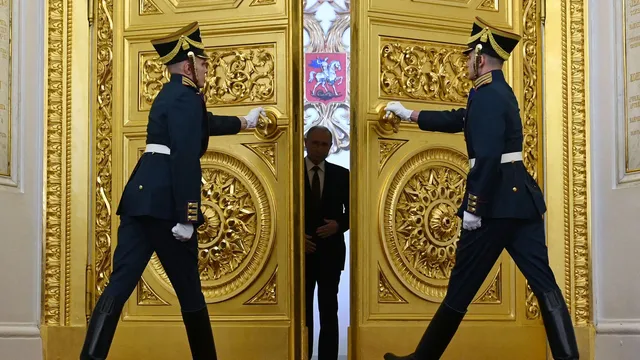
Putin's approval rating sinks to record low amid Ukraine invasion
Putin's approval rating sinks to record low amid Ukraine invasion
- Vladimir Putin's approval ratings have steadily declined, now reaching approximately 73%.
- Internal disagreements among elites regarding wartime censorship and online control have been observed.
- The ongoing war in Ukraine is raising questions about the stability of Putin's regime.
Story
In Russia, the political climate surrounding President Vladimir Putin has shifted significantly in the wake of the ongoing war against Ukraine, which escalated with the all-out invasion that began in February 2022. Recent polls conducted by state-linked organizations indicate a steady decline in Putin's approval ratings, with reports highlighting a drop to around 73%. This marks the lowest approval rating since February 2022, when it was recorded at 71%. Experts suggest that the Kremlin’s strong grip on information and censorship has led to discontent among various factions, including pro-war military bloggers and even influencers, who are vocal against the tightening control over the internet. The polls are seen not only as a reflection of public sentiment but also as an indicator of underlying tensions within the elite ranks of the regime. Figures like Anton Barbashin and Konstantin Sonin argue that diminished approval ratings do not solely indicate a declining popularity but rather reveal internal conflicts between different factions within the government, with the civilian segment signaling criticism towards the stringent censorship measures imposed by the security apparatus. The complexities of public approval dynamics have raised speculation that the regime may be facing cracks due to growing dissatisfaction. Moreover, as the economy struggles with setbacks due to the war, the implications of these declining ratings suggest a potential power struggle among Kremlin elites. This inflection point in Russian politics invites observers to contemplate the future trajectories of Putin’s regime, especially as many locals express frustration about the socio-economic consequences of the conflict, including the online crackdown in response to dissent. The repression of critical voices in Russian society might only exacerbate the situation, stirring discussions about a possible reassessment of strategies both on the ground and within the walls of power. Ultimately, these developments exemplify a precarious balancing act for Putin as he navigates the complexities of wartime governance. The ongoing discontent may open discussions on the durability of his leadership as the ramifications of his decisions continue to create tensions among the populace and the elite. The war in Ukraine, compounded with escalating internal disagreements, forces the government's hand in managing not only military fronts but also public sentiment, making long-term stability increasingly uncertain.


