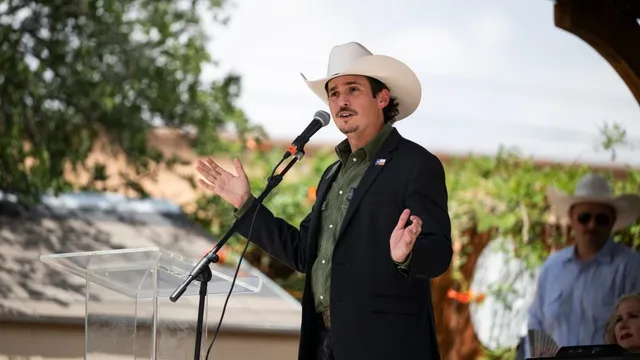
In Texas, the growing concern over data centers has emerged as a significant issue in the political landscape, particularly for the upcoming gubernatorial election. Gina Hinojosa, the Democratic nominee for governor, has made data centers a focal point of her campaign against incumbent Republican Governor Greg Abbott. This shift in focus comes as rural communities express fears about the impact of these energy-intensive facilities on their way of life, including threats to ranchland and water supplies. The backlash against data centers is not limited to Texas; it has also influenced political races in other states, highlighting a broader trend of bipartisan opposition to such projects.
As the election approaches, Hinojosa has been vocal about the need for local communities to have a say in the development of data centers. She argues that these facilities, often owned by wealthy corporations, pose a risk to the environment and local economies. The issue has resonated with voters in rural areas, where water scarcity is already a pressing concern. Hinojosa's campaign events have been filled with discussions about the implications of data centers, indicating that this topic is uniting voters across party lines. Many Republicans in these areas are also expressing their discontent, suggesting that the backlash against data centers could lead to significant political shifts.
Governor Abbott has defended his support for data centers, emphasizing their economic benefits and the investment they bring to Texas. He has proposed measures to address concerns, such as removing tax breaks for data centers and preventing their construction in rural neighborhoods. However, critics, including Hinojosa, have dismissed his promises as insincere and lacking urgency. The debate over data centers has become a defining issue in the election, with both candidates attempting to align themselves with the concerns of their constituents.
The situation in Texas reflects a growing national conversation about the role of data centers in local communities. As these facilities continue to proliferate, the potential consequences for rural areas are becoming increasingly apparent. The combination of environmental concerns, economic implications, and the need for community input is shaping the political discourse in Texas and beyond. With the election just months away, the outcome may hinge on how effectively candidates address the fears and frustrations of voters regarding data centers.