

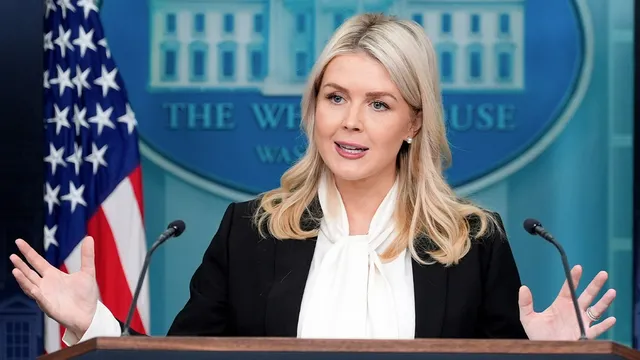
Leavitt confirms ground troops not in plan for Iran operation
Leavitt confirms ground troops not in plan for Iran operation
- The U.S. and Israel have carried out extensive air and naval strikes against Iran as part of Operation Epic Fury.
- Karoline Leavitt stated that sending ground troops is not currently part of the plan but remains a potential option.
- Concerns have been raised about the implications of possible troop deployments amid conflicting opinions from Congress.
Story
Iran has recently been subjected to extensive military strikes by the United States and Israel, which commenced three days ago as part of Operation Epic Fury. The operation's aim is to target the purported military infrastructure of the Iranian regime, particularly focusing on eliminating ballistic missile threats, destroying naval capabilities, and disrupting the production of missiles and drones. In these ongoing military actions, up to 2,000 targets have been reportedly hit, while the death toll among Iranian civilians is significant, with various international reactions and escalating tensions in the region. Despite the absence of American ground troops, U.S. Secretary of War Pete Hegseth noted that the military is gaining operational freedom and demonstrated significant strength against Iranian forces, which has led to concerns about potential casualties among U.S. personnel. In recent press briefings, Leavitt reaffirmed that although ground troops are not part of the present strategy, all military options remain open as situations evolve. Representative James Comer articulated that many Congress members are wary of deploying boots on the ground, but acknowledged it could become unavoidable. Concurrently, President Donald Trump is privately contemplating the possibility of a limited U.S. troop presence in Iran for specific objectives, though he has not mandated any action yet. The political discourse surrounding this issue reflects a deep division in responses, with various factions within Congress expressing different viewpoints on the necessity of military involvement in the Middle East, and particularly in Iran. As the situation develops, many are observing closely how U.S. strategies may alter, particularly with increasing discussions about regime change and the long-term security implications for the region.
Context
policy shift geopolitical market trends strategic economic geopolitical data global trends strategic policy analysis trends geopolitical strategic geopolitical shift market shift strategic economic impact shift economic global trends impact strategic trends insight economic geopolitical analysis policy market analysis strategic market policy geopolitical trends trends insight trends insight policy insight strategic market policy trends global insight analysis analysis strategic impact geopolitical trends global market geopolitical data market market analysis strategic shift trends insight impact geopolitical market impact geopolitical strategic analysis policy...


