

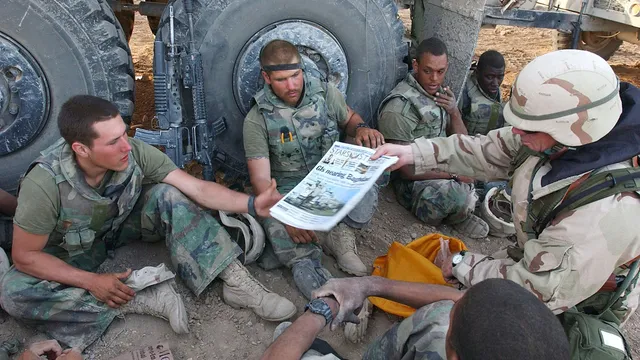
Pentagon disinvites its own newspaper from press conference
Pentagon disinvites its own newspaper from press conference
- Stars and Stripes was disinvited from covering a press conference held by Defense Secretary Pete Hegseth regarding the Iran situation.
- The Pentagon introduced new guidelines for the publication, raising concerns about content control and press freedom.
- The incident points to an increasing tension between military leadership and independent media, questioning the future of press independence.
Story
In recent developments surrounding media coverage of the U.S. military, the Pentagon has taken significant steps that have raised concerns about press freedom. Stars and Stripes, a newspaper established to serve U.S. military members, was barred from attending a press conference held by Defense Secretary Pete Hegseth regarding the situation in Iran. Matthew Adams, a reporter for Stars and Stripes, revealed on social media that the publication was not approved by the Pentagon to attend, despite a previous commitment to editorial independence established by Congress. This incident highlights a growing tension between military officials and independent journalism, particularly concerning content oversight. The situation escalated after the Pentagon released a memo outlining new restrictions on Stars and Stripes, including requirements to maintain "good order and discipline," a term defined by the Department of Defense. Journalists at Stars and Stripes expressed alarm, noting that the publication was designed to retain editorial independence from military leadership and not to serve as a channel for Pentagon propaganda. This incident has drawn criticism from media freedom advocates, who argue that the Pentagon is attempting to exert greater control over the content, which could pose risks to the principles of free speech guaranteed by the First Amendment. Furthermore, the Pentagon's recent decisions seem aligned with a broader push by the Trump administration to reassert influence over military communications. Earlier this year, Chief Pentagon Spokesman Sean Parnell asserted plans to modernize the operations of Stars and Stripes, including a focus away from topics perceived as "woke distractions" that might undermine troop morale. This shift away from providing diverse coverage underscores a willingness to prioritize narratives that align with military leadership objectives over the free flow of varied perspectives essential for balanced reporting. Raising questions about access to military events, only 60 seats were available for journalists at the press conference, and Stars and Stripes was among the 11 outlets denied accommodation. This restriction comes amid ongoing debates about media representation and the role of military-affiliated publications in informing service members and the wider public. As the Pentagon continues to navigate policy changes regarding Stars and Stripes, the future of press independence within the military context remains uncertain, with advocates urging for adherence to traditional values of independent journalism.


